Find defects that emerge over time
With continual use, items that were fine at first can fail: leaking fittings, sealant failure, cracking and air conditioning problems.
RERA Approved · InterNACHI Certified · Apartments & Villas
Your property may look perfect on the day you get the keys. Then, after months of normal use, cracks appear, the air conditioning struggles and plumbing issues surface. Our end-of-warranty snagging inspection documents visible defects and functional concerns before your applicable defect liability period or warranty ends, so you have a clear, photo-supported record to report to the developer or responsible party.
Approaching the end of your property's DLP? Arrange the inspection before the applicable deadline, so you have time to review the findings and report relevant defects. Leaving it to the final week leaves little room to inspect, receive the report and raise formal queries.
A Defect Liability Period is a period set out in the construction contract, sale documents or other agreement during which the responsible party can review reported defects and rectify them.
For Dubai property owners it matters most after taking possession of a newly built home, because some construction and installation defects only become apparent once the property is lived in.
The applicable time frame, reporting procedure and repair responsibilities all depend on your agreement and circumstances. A DLP does not cover every defect, and an inspection alone does not guarantee that a developer will accept a claim. What it does give you is a documented view of the property's condition while reporting may still be possible.
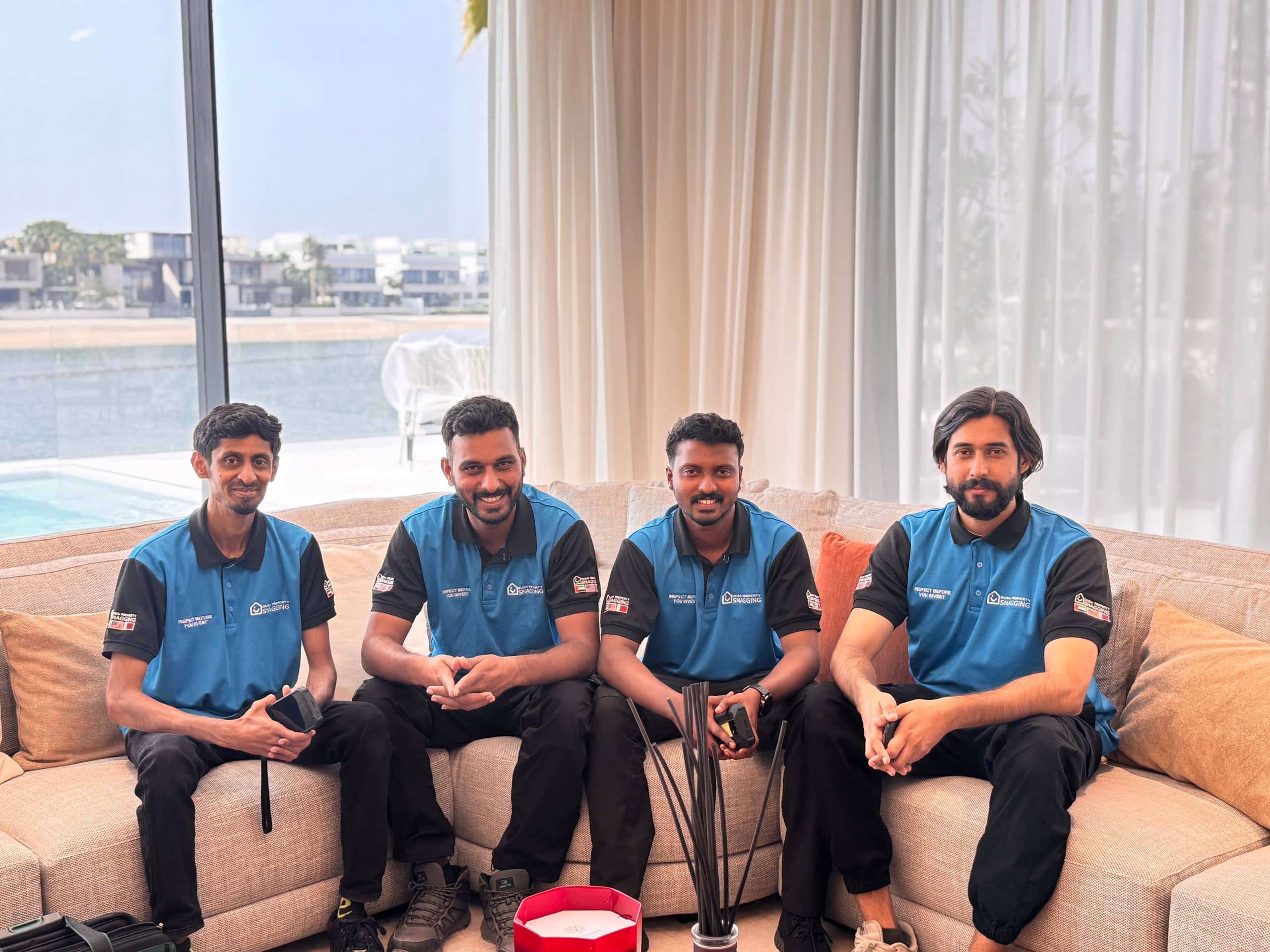
Unlike a pre-handover inspection, which captures the property at delivery, a DLP inspection looks at what has emerged during occupation.
The aim is not just another snagging report. It is an assessment of the property's condition at the point that matters for defect reporting.
Many owners assume that anything wrong would have shown at handover. Some issues only appear after a period of occupation.
With continual use, items that were fine at first can fail: leaking fittings, sealant failure, cracking and air conditioning problems.
Photos and exact locations help the receiving party investigate and respond faster than a written description alone.
Booking in advance leaves room to receive the report, understand it and follow the developer's reporting procedure.
As a homeowner or landlord, the report helps plan future maintenance and catch items that are starting to fail before they become bigger problems.
Cover and obligations are determined separately under your applicable agreement and the developer's requirements.
Defects, functional concerns and deterioration within the agreed scope. We confirm the exact coverage when you book, based on your property's layout.
Visible cracks, peeling or uneven paint, stains, damaged plaster and gaps. Signs of moisture or recurring cracking are recorded for further assessment by a suitably qualified specialist.
Visible condition and operation of taps, sinks, toilets, drainage points, shower fittings and accessible pipe connections. We note dripping, slow drainage, visible leakage and damaged sealant.
Basic operational checks of accessible controls, visible air outlets and the areas around the equipment. We document unusual noise, apparent cooling concerns and visible moisture.
Visible condition and normal operation of locks, handles, hinges and frames. We record damaged seals, misaligned fittings, visible gaps and doors or windows that are hard to open or close.
Cracked or chipped tiles, damaged flooring, uneven transitions, deteriorating grout and loose or damaged skirting. If movement or water ingress is suspected, further technical assessment is recommended.
Cupboards, drawers, worktops, sinks and accessible fittings checked for visible damage and normal operation. Included appliances can be covered if they fall within the agreed scope and can be tested safely.
Where the agreed scope covers it, we examine balconies, terraces and accessible external areas for cracks, worn finishes, staining, drainage problems and signs of water ingress. The inspection does not automatically verify concealed waterproofing, structural integrity or compliance with specialist technical requirements; concerns in these areas may need additional investigation.
Good to know: a visual inspection cannot establish the cause or severity of every crack, stain or leak. Concealed pipework, hidden leaks and technical HVAC performance may need specialist testing. Our thermal imaging and water leak detection services can be discussed when you book.
Different properties have different needs, so we tailor the scope to your property rather than relying on a standard checklist.
Typically focuses on internal finishes, bathrooms, kitchen fittings, windows, doors, air conditioning, flooring, and accessible plumbing and electrical fixtures. Balconies, storage areas and other private facilities can be added when we confirm the scope.
Owners can use the findings to build a documented list of concerns to review before the relevant reporting period ends.
Apartment snagging services →Covers internal living areas plus accessible areas relevant to the property's design. Depending on scope, that can include external walls, terraces, boundary walls, external doors, garages and other features, along with air conditioning, plumbing, visible drainage concerns and installed fixtures.
Areas that need specialist access or testing are identified in advance.
Villa snagging services →A straightforward process with clear documentation, so you understand the findings and your next steps.
Tell us whether you own an apartment or villa, when your defect liability or warranty period is expected to end, and any concerns you have already noticed. Keep your handover documents and developer correspondence ready.
Confirm the address, access arrangements, scope and appointment. Booking well before the applicable deadline leaves time to review and submit your findings.
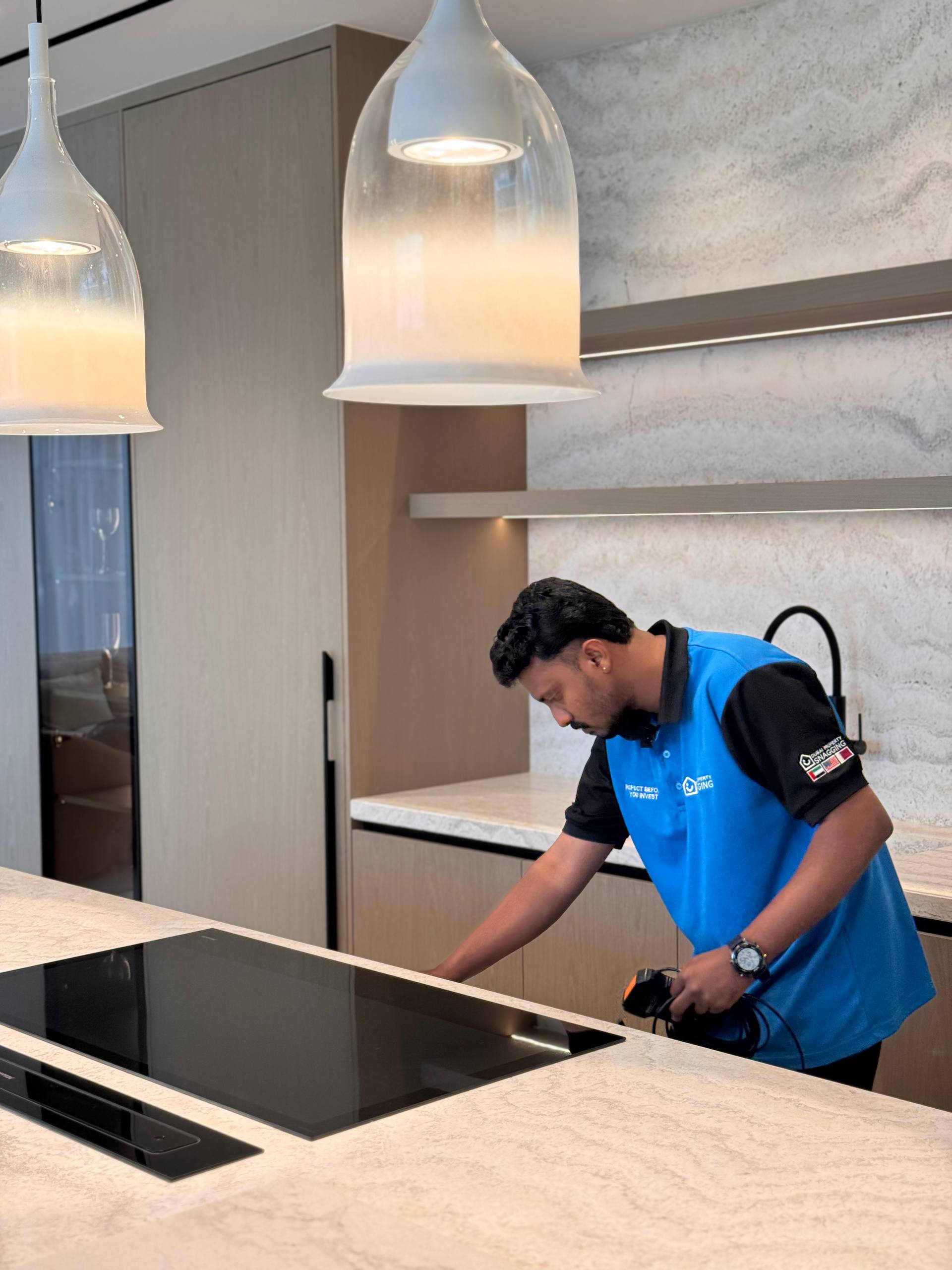
The inspection focuses on visible defects, accessible fixtures and agreed functional checks, with particular attention to areas where problems have been reported or deterioration is visible.
Each observed concern is recorded with a description and, where included in the service, supporting photographs, so it is easy to understand and locate.
Review the findings and follow the developer's or contractual reporting procedure. Submit applicable concerns within the required time frame and keep copies of the report and all correspondence.
If repairs are carried out, check whether the reported items were actually addressed. A follow-up or re-inspection can be discussed separately, if required and available.
The best time depends on your contract, the developer's reporting procedure and the nature of the issues. As a rule of thumb, don't leave it until the last week.
If you have already noticed water leaks, electrical problems or unusual cracks, don't wait for the deadline to approach before reporting them.
Keep these ready for the inspection:
Both identify defects, but they serve different purposes.
| Pre-handover snagging | DLP / end-of-warranty snagging |
|---|---|
| Focuses on the property's condition before or around handover | Focuses on the condition during the applicable defect liability or warranty period |
| Identifies visible defects and incomplete work at initial delivery | Documents defects, deterioration or functional concerns that appeared during occupation |
| Establishes an initial record before moving in | Provides a later record of the property's condition |
| Helps the owner report concerns through the handover process | Helps the owner identify and report relevant concerns before the applicable deadline |
The two reports complement each other. Comparing them may help show how the property's condition has changed, although reports alone do not establish the cause of every defect or guarantee that it is covered. See our handover snagging service.
A DLP inspection is an end-of-warranty snagging inspection carried out during the applicable defect liability or warranty period. It documents visible defects, functional concerns and deterioration that have emerged during occupation, so they can be reported to the developer or responsible party.
Book well before your applicable deadline, not in the final week. That leaves time to receive the report, review the findings and follow the developer's reporting procedure. If you have already noticed leaks, electrical problems or unusual cracks, report them without waiting.
No. Whether a reported item is accepted for rectification depends on your agreement and the circumstances, and the developer or responsible party makes that decision. An inspection gives you a documented record of the property's condition; it does not guarantee that every defect will be identified or accepted.
Pre-handover snagging captures the property's condition before or around handover. DLP snagging assesses the condition during the defect liability or warranty period, including defects and deterioration that appeared during occupation. The two reports can complement each other.
A standard visual inspection records visible and accessible concerns. Concealed pipework and hidden leaks may need additional testing, such as thermal imaging or leak detection, which can be discussed when you book.
Yes. We tailor the inspection scope to the property type. Apartment inspections focus on internal finishes, fixtures and accessible systems, while villa inspections can also cover accessible external areas such as terraces, boundary walls and garages, depending on the agreed scope.
Keep your handover inventory, warranty or defect liability documents, maintenance records, photos of existing issues and developer correspondence ready. Tell us your property type, approximate handover date and expected DLP deadline when you enquire.
Tell us your property type, approximate handover date, expected DLP deadline and any concerns you have already noticed. We will discuss the right inspection scope and available arrangements.
RERA Approved · DED Certified · InterNACHI Accredited · 98,000+ Inspections
Important note: the applicable defect liability period, warranty coverage, notification requirements and responsibility for rectification depend on the relevant contract and circumstances. Owners should verify the applicable deadline and reporting procedure with their developer or responsible party. A property inspection cannot guarantee that every defect will be identified or accepted for rectification, and it does not replace legal advice or specialist testing.