Apartments · Villas · Townhouses · Commercial Units
AC Water Leak & Condensate Drain Inspection in Dubai
Water dripping from an AC grille, a brown stain spreading across the gypsum ceiling, a damp smell every time the cooling runs. In Dubai, the air conditioner is the most common source of ceiling leaks we find. Our certified engineers trace the exact cause, whether it is a blocked condensate drain, an overflowing drain pan, a missing trap or sweating chilled-water pipes, and document it in a clear photographic report within 6 hours.
Why it happens so often in Dubai
Your AC Produces Water Every Hour It Runs
Every air conditioner removes moisture from the air. That moisture collects on the cold coil, drips into a drain pan and is carried away through a condensate drain line. In Dubai's humid summer months, a single indoor unit can produce tens of litres of water a day, running almost non-stop.
When any part of that path fails, the water has only one way to go: down, into your false ceiling, walls and finishes. Most of the system sits hidden above the gypsum ceiling, so a fault can run for weeks before a stain appears.
A plumber or AC technician will usually fix the drip in front of them. We find why it is leaking, how far the water has spread, and whether it will happen again, so you get the right repair the first time.
How the system works
Where the Water Should Go, and Where It Escapes
The six failure points we check on every inspection, from the coil to the drain stack.
- 1 · Pipe insulation Gaps or torn lagging on chilled-water pipes and valves make them sweat and drip.
- 2 · Drain pan Cracked, rusted, sludge-filled or tilted pans overflow before water reaches the outlet.
- 3 · Trap A missing, dry or wrongly sized trap air-locks the drain or pulls sewer odour into the room.
- 4 · Drain line Flat, back-falling or sagging runs hold water; loose joints drip into the ceiling void.
- 5 · Supply grille Water at the grille often means a blocked pan, a dirty coil or air leaking around the plenum.
- 6 · Unit level A unit hung out of level sends water to the wrong end of the pan, away from the outlet.
Warning signs
Signs Your AC Is Leaking Into the Ceiling
If you notice any of these, the water has usually been escaping for some time already.
Water dripping from the AC grille
Drops falling from the supply diffuser or return grille, often worst in the afternoon when the unit works hardest.
Yellow or brown ceiling stains
Rings or patches on the gypsum ceiling near an AC unit, access panel or along the route of the drain line.
Sagging or soft gypsum
A ceiling board that bows, feels soft or shows cracked joints has been absorbing water over a long period.
Musty smell when the AC runs
Standing water in the pan or wet insulation grows mould and bacteria that are blown straight into the room.
Gurgling or sewer odour
A missing or dry trap lets drain air back into the unit, causing gurgling sounds and a sewage smell at the vents.
Bubbling paint on walls
Water travelling down a wall from a leaking drain line or sweating pipe lifts paint and stains skirting boards.
Root causes
The Most Common Condensate Drain Faults We Find
| Fault | What causes it | Typical symptom |
|---|---|---|
| Blocked drain line | Dust, construction debris, algae and bio-slime build up inside the pipe and outlet. | Pan overflows; water at the grille |
| Missing or faulty trap | No trap fitted, wrong trap depth or a trap that dries out during low use. | Air-lock, gurgling, sewer smell |
| Incorrect drain slope | Line laid flat, sagging between hangers or falling back towards the unit. | Slow drainage, standing water |
| Damaged drain pan | Cracks, corrosion or a pan that has shifted during installation or maintenance. | Steady drip directly below the unit |
| Sweating chilled-water pipes | Missing, torn or unsealed insulation on pipes, valves and fittings. | Stains along the pipe route, away from the unit |
| Loose or unglued joints | Push-fit or solvent joints that were never sealed, or have pulled apart. | Leak at one point on the drain route |
| Unit hung out of level | Hangers set unevenly so the pan tilts away from its outlet. | Overflow from one end of the pan |
| Dirty coil or filter | Restricted airflow causes the coil to freeze, then thaw and flood the pan. | Intermittent heavy leaks |
Scope of inspection
What Our AC Leak Inspection Covers
Apartments in Dubai usually run on district-cooling fan coil units; villas usually run on ducted split systems. We inspect both.
Apartments & FCU Systems
- Fan coil unit drain pan condition, level and outlet
- Condensate drain route from unit to riser or stack
- Trap presence, depth and seal
- Chilled-water pipe, valve and actuator insulation
- Ceiling void moisture around the unit and access panel
- Supply and return grilles, plenum box and diffuser seals
- Thermostat operation and fan speed settings
Villas & Ducted Split Systems
- Indoor unit drain pan, secondary pan and float switch
- Condensate line slope, supports and discharge point
- Refrigerant pipe insulation through ceilings and walls
- Duct sweating and insulation at supply connections
- Outdoor condensate discharge and drainage on terraces
- Ceiling, wall and cornice moisture across affected rooms
- Mould and damp risk in bedrooms and wardrobes
How we test
Finding the Leak Without Breaking the Ceiling
We use non-destructive testing first. Openings are only suggested where access panels do not give a clear view.
FLIR thermal imaging
Wet gypsum and insulation show as cooler areas, so we can map exactly how far the water has spread above the ceiling.
Moisture meter readings
Pin and pinless readings on ceilings, walls and skirting confirm which areas are wet and which only look stained.
Drain flow test
Water is introduced into the drain pan and timed to the outlet, showing blockages, slow falls and leaking joints.
Borescope inspection
A camera through the access panel checks the pan, trap, outlet and drain joints without removing ceiling boards.
Insulation survey
Thermal scans along the chilled-water and refrigerant pipe routes reveal missing lagging and sweating fittings.
Humidity & temperature
Room humidity, supply air temperature and dew point readings show whether the unit is creating condensation risk.
The process
From Booking to Report in One Day
- 1
Book and tell us the symptoms
Send photos of the stain or drip on WhatsApp. We confirm the scope and schedule a visit, often the same or next day.
- 2
Run the AC before we arrive
Keep the affected unit running for at least an hour so condensation is active and the leak can be seen.
- 3
On-site inspection
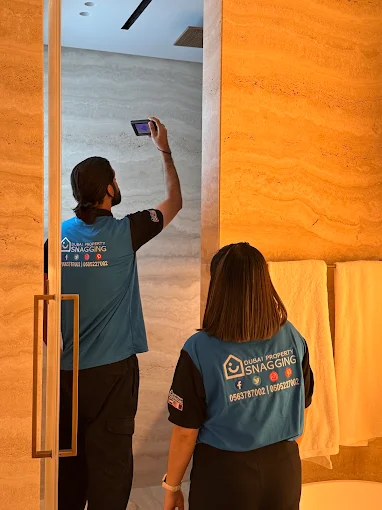
Our engineer tests the drain path, scans the ceiling and pipe routes, and photographs every finding.
- 4
Report within 6 hours
A Spectora report with thermal images, moisture readings, the confirmed cause and the recommended repair.
- 5
Re-inspection after repair
Optional follow-up visit to confirm the fix works and the ceiling has dried before it is repainted or closed.
When to book
Who Needs an AC Condensate Leak Inspection
We inspect. We never repair. We do not sell AC servicing, drain cleaning or ceiling repairs, so nothing in our report is a sales pitch. You get an independent finding you can hand to your developer, landlord, building management or any contractor you choose, with the evidence to back it up.
Related services
When the Leak Is Not From the AC
If the water source is somewhere else, our inspection will tell you, and these services take it further.
FAQs
AC Water Leak Questions, Answered
Why is my AC leaking water from the ceiling?
The most common causes are a blocked condensate drain line, an overflowing or cracked drain pan, a missing trap, a drain line without enough fall, or sweating chilled-water pipes with damaged insulation. Each needs a different repair, which is why the cause should be confirmed before any work starts.
Is AC water leaking dangerous?
The water itself is condensate, but the damage it causes is not harmless. Wet gypsum can sag and fall, damp ceilings and insulation grow mould, and water near light fittings or electrical points is a safety risk. Switch off the affected unit and book an inspection if water is reaching lights or sockets.
Can you find an AC leak without breaking the ceiling?
In most cases, yes. We use thermal imaging, moisture meters, a drain flow test and a borescope through the existing access panel. We only recommend an opening where the access panel does not give a clear view of the fault.
Do you repair AC leaks?
No. We are an independent inspection company and never carry out repairs. This means our report is impartial, and you can use it with your developer, landlord, building management or any AC contractor you choose.
Who pays for an AC leak in a rented property?
It depends on the cause and on your tenancy contract. Leaks from installation defects or worn components are usually treated as maintenance, while damage from misuse may fall on the tenant. Our report documents the cause clearly so both sides can agree. For a dispute, check your tenancy contract and RERA guidance.
My new apartment's AC is leaking. Is the developer responsible?
If the property is still within its defect liability period, installation defects such as missing traps, flat drain lines and loose joints are normally the developer's responsibility to fix. A documented inspection report makes the claim much easier to raise.
Why does my AC leak more in summer?
Dubai's humidity is highest in the summer months, so the AC removes far more moisture from the air and produces much more condensate. A drain that coped in winter can overflow when the volume rises.
How long does an AC leak inspection take?
Most apartment inspections take one to two hours, depending on how many units are affected. Villas with several ducted units take longer. Your full report is delivered within 6 hours of the visit.
Stop the Leak at Its Source
Book an independent AC water leak and condensate drain inspection anywhere in Dubai and the UAE. Certified engineers, thermal imaging included, and a full report within 6 hours.
DED Licensed · RERA Approved · InterNACHI Certified · 98,000+ Inspections