For Landlords · Building Owners · Property Managers
Building Inspection Contracts in Dubai: A Complete Guide for Landlords
Every tenant move-in and move-out is a chance for damage, hidden leaks and condition disputes to slip through. A building inspection contract with Dubai Property Snagging ® puts one professional inspection partner across your entire building — every apartment inspected, every significant defect documented, and a reliable photographic record of your property's condition at every tenant handover.
Protect Your Entire Building with One Professional Inspection Contract
Owning a residential building in Dubai is a valuable investment, but managing its condition across multiple tenants can become challenging. Every tenant transition brings the possibility of property damage, unnoticed maintenance defects, water leakage, electrical problems or disagreements over the condition of the unit.
For landlords who own an entire building with 20, 50, 100 or even 200 apartments, managing these issues individually is time-consuming and costly. Instead of arranging separate inspections whenever a problem occurs, you can establish an ongoing inspection agreement with our professional engineers.
Under an agreed contract, we inspect each apartment before a tenant moves in and after a tenant moves out, document its condition, identify maintenance issues and provide a detailed report with photographic evidence — whether your building is in Business Bay, Jumeirah Village Circle, Dubai Silicon Oasis or anywhere else in Dubai.

Our objective is straightforward: every apartment should be inspected, every significant defect should be documented, and every landlord should have a reliable record of their property's condition.
Why Every Building Landlord in Dubai Needs a Professional Inspection Contract
A building is not just a collection of apartments. It is a long-term asset that needs continuous monitoring, preventive maintenance and proper documentation.
Recurring problems in multi-tenant buildings
- Tenants leaving apartments with damaged doors, broken fixtures or cracked tiles
- Water leakage unnoticed until it damages adjacent apartments
- AC units failing or cooling inefficiently between tenancies
- Electrical and plumbing issues that were never reported
- Disagreements over whether damage existed before move-in
- Apartments sitting vacant while maintenance investigates
- Incomplete repairs accepted without independent verification
Reactive maintenance
Maintenance contractors are generally responsible for repairing equipment and defects — usually after a complaint arrives. Without inspection records, it is hard to tell when a defect first appeared or what must be done before the next tenant moves in.
Planned independent inspection
Independent engineers assess observable condition, test accessible systems within the agreed scope, record findings and verify whether problems were genuinely fixed. A contract makes this a routine part of every tenant turnover — so defects are found earlier and repairs prioritised properly.
How We Manage an Entire Building Inspection Contract
An ongoing arrangement coordinated with the landlord, authorised representative or appointed property management company — not a one-time visit.
-
1
Initial building assessment
We review the number of apartments, layouts, building facilities, existing maintenance concerns and expected inspection volume.
-
2
Customised inspection agreement
Move-in and move-out inspections, checklists, reporting procedures, scheduling and any optional services are defined and agreed.
-
3
Centralised inspection scheduling
The landlord or property manager informs our coordinator whenever an apartment is becoming vacant or a new tenant is moving in.
-
4
Professional engineer inspection
Our engineers examine the apartment's visible condition, accessible MEP systems, finishes, fittings and other agreed components.
-
5
Digital photographic report
A separate report for each apartment, with identified defects, locations, observations and supporting photographs.
-
6
Maintenance coordination and verification
Reports go to the authorised contact. Where included in the agreement, we revisit apartments to verify completion of reported rectification works.
-
7
Ongoing reporting and building oversight
Findings can be consolidated into a building-level record to identify recurring defects and future maintenance priorities.
One inspection partner for the entire building: a landlord with a 100-apartment building sees eight tenants move out and six move in during one month. Instead of booking different companies, the property manager coordinates all fourteen tenant-transition inspections through Dubai Property Snagging ®, subject to the contract's booking terms — each with its own unit-specific report, all to one consistent standard.
Move-In Inspection: Protecting the Property Before a New Tenant Receives the Keys
A move-in inspection establishes the apartment's condition before the tenant takes possession — the reference point for every future inspection, repair decision and handover discussion.
Walls, Ceilings & Flooring
Paint defects, cracks, water stains, broken or chipped tiles, damaged skirting, loose flooring and visible surface deterioration.
Doors, Windows & Wardrobes
Door operation, locks, handles, hinges, window seals, sliding mechanisms, cabinet alignment and visible joinery defects.
Electrical Systems
Accessible outlets, switches, lighting, distribution board condition and selected safety functions where testing is included.
Air-Conditioning
Cooling performance, thermostat operation, accessible air outlets, airflow, unusual noise and visible signs of condensation or leakage.
Plumbing & Bathrooms
Water pressure, taps, mixers, WC flushing, drainage, sanitary fittings, visible pipe connections and accessible fixtures for leakage.
Kitchen
Cabinet doors, countertops, sink drainage, faucets and installed appliances where testing is included in the scope.
Balconies
Accessible floors, drains, doors, glazing and visible railing condition, with observable safety concerns flagged.
Moisture & Thermal Assessment
Where included, moisture meters and thermal imaging investigate suspected dampness and possible water ingress. These support investigation but do not on their own prove the source of a concealed leak.
Dated Condition Record
A photographic, room-by-room record of the handover condition that both landlord and tenant can acknowledge before occupancy.
Why move-in documentation matters: a tenant moves into an apartment where a wardrobe door is already scratched and two floor tiles are chipped. Twelve months later they leave. Without a move-in report, nobody can establish whether those defects pre-dated the tenancy. With a dated photographic report, both parties have a reference record. We recommend inspecting before occupancy, rectifying significant defects where possible, and having both parties acknowledge the condition record.
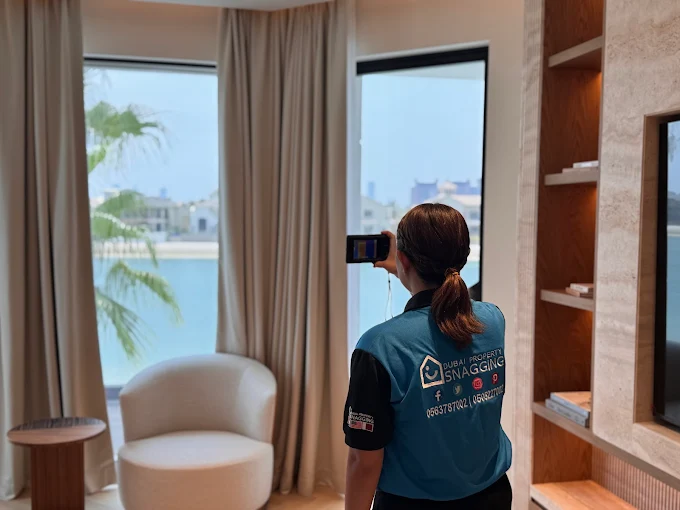
Move-Out Inspection: Identifying Damage Before the Next Tenant Arrives
When a tenant vacates, you need to understand the unit's current condition before accepting it for the next tenancy. A professional move-out inspection documents observable defects and compares them against the earlier move-in report where one is available.
- Damaged or broken doors, locks, cabinets and kitchen fittings
- Wall holes, damaged plaster, stains and significant paint deterioration
- Cracked or chipped tiles and damaged flooring
- Missing fixtures, fittings or accessories
- Damaged sanitary ware, mixers and shower fittings
- Signs of water leakage or moisture damage
- Malfunctioning switches, outlets and lighting
- AC cooling and visible equipment condition
- Unauthorised or visibly defective modifications
- Balcony damage and accessible drainage concerns
Normal Wear and Tear Versus Property Damage
Not every defect observed at move-out is necessarily the tenant's responsibility. Under Article 21 of Dubai Law No. 26 of 2007, tenants must generally return the property in the condition received, except for ordinary wear and tear or damage beyond their control.
| Ordinary wear and tear may include | Potential damage requiring further assessment |
|---|---|
| Minor paint fading from normal use | Large holes or extensive wall damage |
| Gradual deterioration of fittings | Broken or missing fixtures |
| Minor surface scuffs | Deep scratches or fractured tiles |
| Reasonable wear to door hardware | Broken door or damaged lock from misuse |
| Age-related component deterioration | Damage linked to unauthorised alterations |
These are examples, not automatic legal classifications. Responsibility depends on the tenancy agreement, condition records, cause of damage and applicable law. Our role is to document physical conditions objectively — not to make legal judgments or automatically assign repair costs to tenants. Treat this page as guidance rather than legal advice.
Technical Building Inspections: Electrical, Plumbing, AC, Moisture & Safety
Tenant handovers are only one part of protecting a building. Periodic technical inspections catch defects that affect multiple units or lead to expensive future repairs.
Leakage & Moisture Detection
Visible stains, damp walls, ceiling discoloration, bathroom leakage, pipe connections and suspected moisture penetration, assisted by thermal cameras and moisture meters.
AC & Ventilation
Thermostat response, cooling performance, temperature differences, unusual noise, condensation and airflow. Specialist HVAC diagnostics recommended when necessary.
Electrical Safety Observations
Accessible fittings and distribution boards. Where agreed and safe, relevant functional and protective-device tests, with concerns escalated for qualified corrective work.
Plumbing & Drainage
Supply fixtures, water pressure, visible leaks, drainage performance, bathroom accessories and signs of blocked or defective drains.
Common building areas (separate scope)
- Entrance lobby, reception and corridors
- Staircases, handrails and common-area finishes
- Car parking areas and visible concrete deterioration
- Accessible service rooms, plant areas and equipment
- Roof areas, drainage outlets and waterproofing concerns
- Building entrances and shared doors
- Accessible fire and life-safety components for observable defects
Specialist services stay specialist: fire-system certification, lift testing, structural engineering assessments and statutory compliance inspections must be carried out by appropriately authorised specialists where required. General snagging inspections do not replace these services.
Digital Inspection Reports: Complete Visibility for the Landlord
Consistent, organised, unit-specific documentation — what needs attention, where it is, and the evidence behind every observation.
| Report information | Purpose |
|---|---|
| Building and apartment identification | Identify the inspected unit |
| Inspection date and type | Distinguish move-in, move-out or follow-up visits |
| Room-by-room observations | Locate defects accurately |
| Photographic evidence | Document visible conditions |
| Defect descriptions | Explain the observed issue |
| Priority classifications | Highlight urgent or safety-related concerns |
| Functional test observations | Record relevant inspection results |
| Maintenance recommendations | Help plan appropriate corrective actions |
| Comparison findings | Identify documented changes from the previous inspection |
Standard reports are generally targeted for delivery within 12–24 hours after inspection, subject to scope and agreement terms.
Building-level reporting for large portfolios
An apartment status register lets you monitor inspection activity without reviewing every email or maintenance request.
| Unit | Inspection type | Status | Next action |
|---|---|---|---|
| 101 | Move-out | Completed | Review bathroom leak |
| 205 | Move-in | Completed | Ready for landlord review |
| 307 | Move-out | Completed | Door and flooring repairs |
| 412 | Follow-up | Completed | Verify closure of electrical defect |
| 508 | Move-in | Scheduled | Awaiting inspection |
Illustrative building management register; not an actual client record.
How Annual Inspection Contracts Reduce Risks and Maintenance Costs
Inspections don't eliminate maintenance expenses — they help you spend the budget where it actually matters, and avoid the cost of unidentified defects and extended vacancies.
Four Building Inspection Case Studies
Illustrative scenarios based on common property inspection situations in Dubai. They explain how a building inspection contract works and do not represent verified DPS client projects.
Tenant moves out and leaves significant damage
The problem: after a two-year tenancy, the property manager notices damaged fixtures but cannot tell which issues existed before move-in.
Findings: three chipped living-room tiles, a damaged wardrobe hinge, loose kitchen cabinet fittings, wall holes and damaged paint, a broken bathroom accessory and a faulty balcony sliding-door lock.
Outcome: comparison with the earlier move-in report separates existing defects from new changes, giving the landlord a documented repair list and a clearer basis for discussion with the former tenant.
Move-in plus move-out inspections create a consistent record that reduces uncertainty over damage.
Hidden water leakage between two apartments
The problem: a damp ceiling is repainted as a cosmetic fix, but the discoloration returns — and a neighbouring apartment reports similar moisture concerns.
Findings: abnormal moisture readings, a thermal pattern consistent with moisture accumulation, localised plaster damage and evidence that plumbing or waterproofing above needs investigation.
Outcome: instead of repeating cosmetic repairs, the landlord directs a targeted investigation, then a follow-up inspection checks for continuing signs of moisture.
Fixing the cause of a suspected leak beats repeatedly repairing the symptoms.
Repeated AC complaints across several apartments
The problem: tenants report rooms staying uncomfortable even with AC running continuously. Different technicians visit, but complaints continue.
Findings: inconsistent supply-air temperatures, weak airflow from selected outlets, unresponsive thermostats, excessive noise and a possible condensate drainage concern.
Outcome: standardised reports reveal a pattern, so a specialist HVAC contractor can investigate equipment, maintenance, air distribution or a wider building system.
Standardised records across units expose recurring technical problems.
Move-out dispute over a security deposit
The problem: after three years, the landlord notes paint deterioration, floor scratches, a damaged cabinet door and bathroom stains. The tenant disputes responsibility.
Findings: the engineer compares photographs from both visits, identifying which conditions were already present and which changes can be documented — separating observation from legal conclusions.
Outcome: both parties have a clearer record for discussing repair costs and deductions. If unresolved, the report provides factual support, though it does not decide the legal outcome.
An objective condition report promotes transparency between landlord and tenant.
A Customised Inspection Contract for Buildings of Every Size
A 150-apartment tower needs a different arrangement from a 15-unit building. Every proposal is built around your property.
| Contract type | Suitable for | Potential inspection coverage |
|---|---|---|
| Annual move-in & move-out contract | Residential landlords | Each scheduled tenant transition |
| Multi-building portfolio contract | Investors and property management companies | Agreed inspections across several properties |
| Periodic building inspection agreement | Long-term building owners | Scheduled apartment and common-area assessments |
| Combined inspection & verification contract | Buildings with frequent maintenance | Tenant inspections and agreed repair-verification visits |
What determines the contract price?
Number of apartments, average unit size, inspection frequency, building location, scope of testing, reporting requirements, and whether additional technical inspections or revisits are needed. Contracts can use a fixed annual allocation, an agreed per-apartment rate, or another commercial model that suits the building.
Example allocation
A landlord managing 100 apartments might request 40 move-in inspections, 40 move-out inspections and an agreed allocation of technical or follow-up inspections per year. These numbers are illustrative — actual quantities, response times, pricing and deliverables are defined in the signed contract.
Who Should Consider a Building Inspection Contract?
Especially valuable for properties with frequent tenant turnover or a history of recurring maintenance issues.
Why Landlords Choose Dubai Property Snagging ® ®
Building Inspection Contracts — Frequently Asked Questions
What is a building inspection contract?
A building inspection contract is an agreement between a property owner or authorised manager and an inspection company for an agreed programme of property inspections. It may include tenant move-in and move-out inspections, periodic condition assessments, technical inspections and verification visits.
Can Dubai Property Snagging ® inspect every apartment when tenants move in or move out?
Yes. A building-wide inspection arrangement can be designed to cover each scheduled tenant transition, subject to the agreed appointment procedure, access arrangements and contract terms.
Is a move-in inspection legally mandatory for every rented apartment in Dubai?
A separate professional move-in inspection is not established as a universal requirement under the general Dubai tenancy provisions. However, documenting the condition of an apartment before tenancy is a sensible practice that can assist both parties.
Can an inspection report help with security deposit disputes?
Yes. A move-in and move-out condition report can provide factual evidence about the apartment's condition. Any proposed deductions must still be assessed in accordance with the tenancy agreement and applicable law.
Does Dubai Property Snagging ® determine whether a tenant caused the damage?
Our engineers document observed defects and can compare available inspection records. When evidence supports it, they may identify changes or signs of misuse, but final responsibility is a contractual or legal question.
Can you inspect apartments before a new tenant collects the keys?
Yes. This is generally the preferred time to conduct a move-in inspection because the unit is normally vacant and accessible.
Do you check electrical, plumbing and air-conditioning systems?
Yes. We conduct relevant visual and functional checks within the agreed scope. Specialist investigations and statutory certification are separate where required.
How long does an apartment inspection take?
The duration depends on apartment size, condition, accessibility and the tests required. Larger or more technically complex units may require additional inspection time.
Can you provide inspection reports for landlords living outside the UAE?
Yes. Digital reports can be shared with the landlord or authorised representative, allowing remote review of documented property conditions.
Do you verify maintenance work after repairs are completed?
Yes. Repair verification or de-snagging visits can be included in a customised building inspection agreement.
Can one contract cover multiple buildings in Dubai?
Yes. A multi-property inspection agreement can be proposed for owners and property managers handling several buildings.
Can the inspection contract include common areas?
Yes. Common-area assessments can be incorporated into the agreed scope. Specialist inspections of regulated building systems may require separately qualified providers.
Will the inspection company arrange repairs?
Our primary role is independent inspection, defect documentation and verification. Repair coordination or additional project-monitoring support can be separately agreed, with responsibility for carrying out repairs remaining with the appointed contractors.
Can the same report be used to compare future apartment conditions?
Yes. A unit-specific report can serve as a historical reference, particularly when accompanied by dated photographs and consistent inspection criteria.
How can a landlord request a customised annual inspection contract?
Contact Dubai Property Snagging ® with the building location, total number of apartments, approximate unit sizes, anticipated yearly tenant turnover and required inspection services. Our team will prepare a proposal based on your building's requirements.
Protect Your Building. Document Every Tenant Handover.
From the first move-in inspection to the final move-out assessment, Dubai Property Snagging ® supports building owners with professional inspections, photographic reports, technical observations and agreed repair verification. Tell us about your building and we'll prepare a customised annual or multi-property proposal.
Inspect Before You Invest · Serving Landlords Across Dubai & the UAE