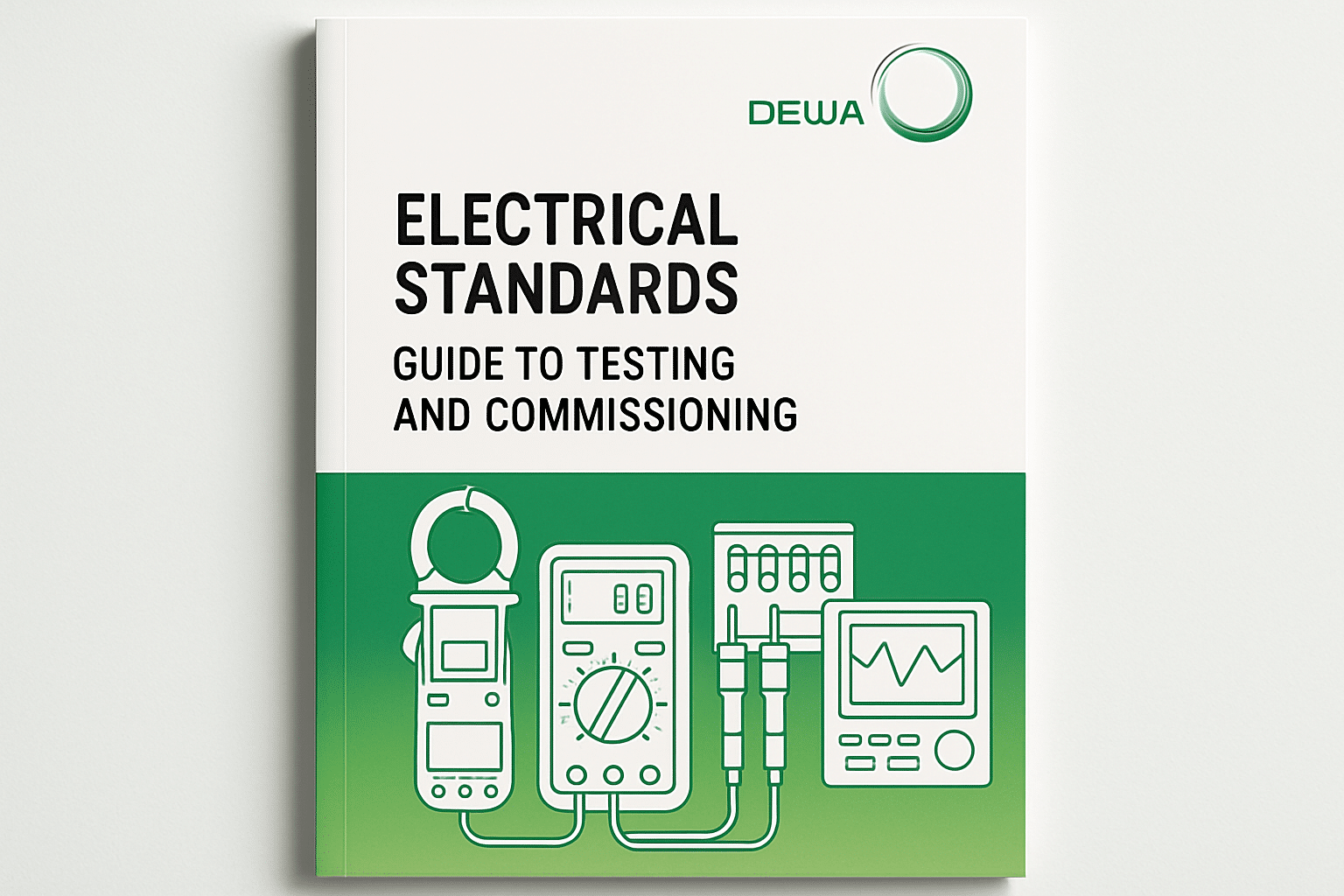
When you’re preparing to accept handover on a new property in Dubai, one crucial requirement stands above all others: DEWA electrical standards compliance. The Dubai Electricity and Water Authority (DEWA) sets strict regulations that every electrical installation must meet before it’s legally safe for occupancy. Understanding these standards—and verifying your property meets them—is essential to protecting your investment and your family’s safety.
This comprehensive guide explains DEWA’s electrical standards, the testing and commissioning process required for compliance, and how to ensure your Dubai property is fully compliant before you move in.
What is DEWA and Why Are Its Electrical Standards Critical?
DEWA (Dubai Electricity and Water Authority) is the government agency responsible for generating, distributing, and regulating electricity and water throughout Dubai. As the primary utility provider, DEWA has absolute authority over all electrical installations within the emirate.
Beyond simply providing electricity, DEWA maintains strict safety standards that every building—residential, commercial, industrial—must comply with. These standards exist to:
- Prevent electrical fires – The leading cause of property damage in Dubai
- Protect against electrocution – Proper earthing and grounding prevent shock hazards
- Ensure system reliability – Proper cable sizing and load distribution prevent blackouts
- Maintain sustainability – Standards promote energy efficiency and reduce waste
- Provide legal compliance – Failure to comply can result in fines, property seizure, or legal action
DEWA’s authority is absolute. Without DEWA approval, your property cannot legally receive electricity. Without a DEWA Certificate of Compliance, you cannot legally occupy the property or sell it later.
Overview of DEWA Electrical Standards 2025
DEWA updated its electrical installation regulations in 2025, replacing standards from previous decades. The new regulations incorporate international best practices while addressing Dubai’s unique climate and rapid development.
Key Areas Covered by DEWA Standards:
Design & Planning Standards
- Electrical load calculations for buildings
- Cable selection and sizing requirements
- Circuit protection device specifications
- Earthing and grounding system design
- Safety device requirements (RCDs, MCBs)
- Emergency shutdown specifications
Installation Standards
- Proper cable routing and support
- Conduit and duct requirements
- Junction box placement and protection
- Outlet and switch installation height
- Outdoor electrical protection measures
- Waterproofing for wet areas
Safety Standards
- Proper earthing continuity (max 0.1 ohms)
- Insulation resistance (min 1 megohm)
- Circuit protection response times
- RCD (earth leakage) protection
- Emergency lighting and shutdown
- Fire safety device integration
Testing & Commissioning Standards
- Mandatory testing procedures
- Test equipment calibration requirements
- Documentation standards
- Professional certification requirements
- Defect reporting protocols
- Certificate of Compliance issuance
Special Installation Standards
- Pool and water feature electrical safety
- Solar photovoltaic system integration
- Smart home and automation systems
- Generator and backup power systems
- Data center and server room installations
- Hospital and medical facility requirements
The DEWA Compliance Process: Step by Step
Stage 1: Pre-Construction Approval
Before construction begins, the electrical contractor must submit plans to DEWA for approval. This includes:
- Load calculations showing total electrical demand
- Cable size specifications for each circuit
- Transformer size and location
- Earthing system design
- Safety device specifications
- Outdoor installation plans
DEWA reviews these plans to ensure they meet all standards. Any deficiencies must be corrected before construction can begin.
Stage 2: Installation Under DEWA-Approved Contractor
Only DEWA-approved contractors can install electrical systems in Dubai. These contractors have been vetted and trained on DEWA standards. They must:
- Follow DEWA’s approved plans precisely
- Use DEWA-approved materials and components
- Maintain proper documentation throughout installation
- Perform preliminary testing as work progresses
- Report any deviations immediately
Stage 3: Preliminary Inspection
As construction progresses, DEWA conducts preliminary inspections to verify:
- Cable sizes match specifications
- Earthing systems are installed correctly
- Safety devices are properly positioned
- Conduits and ducts are properly installed
- No unauthorized modifications have been made
Any deficiencies must be corrected immediately.
Stage 4: Final Testing & Commissioning
Before the system can be energized, the contractor must conduct comprehensive testing:
Insulation Resistance Testing
- Measures resistance between conductors (min 1 megohm)
- Ensures no moisture or damage to insulation
- Tests at 500V for low-voltage systems
- Performed on every circuit individually
Continuity Testing
- Verifies all earth conductors are properly connected
- Tests every circuit for proper conductor sizing
- Ensures no breaks or loose connections
- Maximum acceptable resistance 0.1 ohms
Polarity Testing
- Confirms earth, neutral, and live conductors are correct
- Tests every outlet for proper wiring
- Verifies no reversed connections
- Critical for appliance safety
Load Testing
- Energizes system under controlled load conditions
- Measures voltage at distribution points
- Verifies voltage within ±10% of 220V
- Confirms no overloading or circuit issues
Safety Device Testing
- Tests RCDs (earth leakage devices) trip correctly
- Tests MCBs (circuit breakers) respond to overload
- Verifies emergency shutdown functionality
- Confirms all protection devices are operational
Thermal Imaging
- Detects hotspots indicating loose connections
- Identifies overheating components
- Verifies proper heat distribution
- Reveals load imbalances across phases
All testing results must be documented with precise measurements and signed by the DEWA-approved contractor.
Stage 5: DEWA Inspection & Approval
After all testing is complete, DEWA conducts a final inspection to verify:
- All installation work meets approved plans
- All testing has been properly documented
- No unauthorized modifications exist
- All safety standards are met
- Proper documentation is complete
Stage 6: Certificate of Compliance Issuance
Upon passing DEWA’s inspection, the contractor receives a Certificate of Compliance. This certificate:
- Certifies the system meets all DEWA standards
- Is required for legal property occupancy
- Is required for insurance coverage
- Is required for property sales or transfers
- Remains valid as long as the system is properly maintained
- Can be revoked if unauthorized modifications are made
Without this certificate, you cannot legally occupy the property.
Critical DEWA Electrical Standards for Property Safety
Earthing and Grounding Standards
Proper earthing is the foundation of electrical safety. DEWA requires:
Earth Continuity
- Main earth conductor: min 10mm² copper
- Branch earth conductors: min 6mm² copper
- Maximum resistance from any point to main earth: 0.1 ohms
- All metal components must be bonded to earth
- Tests required every 100 meters for large installations
Earth Loop Impedance
- Maximum acceptable value: determined by circuit protection
- Lower impedance = faster fault clearance
- Protects against dangerous touch voltages
- Critical for RCD protection effectiveness
Earth Fault Path
- Every circuit must have independent path to earth
- No reliance on structural steel or water pipes
- Dedicated earth rods installed at building perimeter
- Multiple earth points for redundancy
Improper earthing causes:
- Electrocution hazards in bathrooms and kitchens
- Equipment damage from voltage spikes
- RCD protection failure
- Fire hazards from uncontrolled faults
Cable Sizing Standards
Cable size must be appropriate for electrical load. DEWA requires:
Load Calculations
- Demand factor calculations for all circuits
- Peak load analysis considering diversity
- Future expansion capacity (typically 25%)
- Separate calculations for lighting, power, and HVAC
Cable Selection
- Copper conductors preferred over aluminum
- Cross-sectional area based on current rating
- Voltage drop not exceeding 3% for main runs, 5% for branch circuits
- Temperature rise not exceeding design limits
Undersized cables cause:
- Excessive voltage drop (dimmer lights, weaker AC)
- Overheating and insulation degradation
- Nuisance circuit breaker tripping
- Fire hazards from excessive current
Circuit Protection Standards
Every circuit must have proper protection devices. DEWA requires:
Miniature Circuit Breakers (MCBs)
- Rated correctly for circuit amperage
- Respond within specified time frames
- Allow no more than 125% of rated current continuously
- Trip instantly at 2x rated current
Residual Current Devices (RCDs)
- 30mA RCDs in bathrooms and wet areas
- 100mA RCDs for general circuits
- Automatic testing capability
- Manual test button for user verification
Selective Protection
- Main breaker rated for total load
- Sub-breakers sized for individual circuits
- Proper coordination to isolate faults
- No single fault trips entire building
Overload Protection
- Every circuit has matching breaker
- No undersized protection devices
- No missing breakers for any circuits
- Backup protection for hardwired appliances
Smart Home and Automation Standards
Modern properties with smart systems must comply with:
Integration Standards
- Smart systems properly integrated with main electrical
- No independent parallel wiring creating hazards
- Central coordination of all automated systems
- Backup systems if automation fails
Safety Standards
- Control panels properly earthed
- Emergency manual override always available
- Automation cannot override safety devices
- Loss of automation power doesn’t disable safety
Documentation Standards
- All automation wiring clearly labeled
- System diagrams provided
- Emergency procedures documented
- Integration points clearly marked
Testing and Commissioning Procedures Required by DEWA
Mandatory Testing Procedures
DEWA standards mandate these specific tests before any system can be energized:
Insulation Resistance Test
- Performed on every circuit individually
- Test voltage: 500V DC for low-voltage systems
- Minimum resistance: 1 megohm
- Documents: Initial and final readings
- Equipment: Calibrated insulation tester
Earth Continuity Test
- Measures resistance of all earth conductors
- Maximum acceptable: 0.1 ohms
- Tests main earth bond
- Tests branch earth conductors
- Tests earth rod effectiveness
- Equipment: 4-wire earth resistance tester
Polarity and Continuity Test
- Verifies correct identification of conductors
- Confirms proper connections at every outlet
- Tests appliance wiring for correct polarity
- Identifies any reversed connections
- Equipment: Digital multimeter or polarity tester
Load Testing
- Energizes system under controlled loads
- Measures voltage at multiple points
- Verifies stability and proper distribution
- Confirms no overloading
- Documents: Voltage readings at peak and off-peak
RCD Testing
- Button test on 30mA devices
- Confirmation trip time <40ms at 5xIΔn
- Verification of tripping current
- Test of trip disconnection time
- Equipment: RCD tester
Safety Device Testing
- MCB response to overload
- Emergency shutdown function
- Isolation switch operation
- Emergency lighting function (if applicable)
- Fire safety system integration
Documentation Requirements
DEWA requires comprehensive documentation:
Test Certificates
- Insulation resistance certificates with readings
- Earth continuity certificates
- Polarity test certificates
- Load test reports with voltage measurements
- RCD test certificates with trip times
- Thermal imaging reports (if performed)
System Documentation
- As-built electrical drawings
- Circuit diagrams for all circuits
- Load calculations and diversity factors
- Cable schedules with sizes and routes
- Equipment specifications and serial numbers
- Maintenance and testing schedules
Compliance Declaration
- Statement that system meets DEWA standards
- Professional engineer’s certification
- DEWA-approved contractor’s seal
- List of any non-compliant items and corrections
All documentation must be in English and submitted to DEWA before system energization.
DEWA Standards for Different Property Types
Residential Apartments Standards
Load Allocation
- Lighting: min 3VA per square meter
- Power outlets: min 50A for 100-150 sqm
- Air conditioning: separate heavy-duty circuits
- Kitchen appliances: dedicated circuits
- Total demand: typically 3-5 kVA per unit
Special Requirements
- Each unit has independent meter
- Emergency lighting in corridors
- Backup power for common areas
- Fire safety system integration
- Proper isolation between units
Villa Standards (More Complex)
Load Allocation
- Lighting: min 5VA per square meter (larger area)
- Power outlets: 63A+ main supply
- Multiple AC zones: separate circuits each
- Pool systems: isolated heavy-duty circuit
- Outdoor installations: weatherproofed circuits
- Smart home systems: dedicated control circuits
- Total demand: typically 10-20+ kVA
Special Requirements
- Larger main distribution board
- Sub-distribution boards in remote areas
- Separate outdoor circuit protection
- Pool bonding and safety requirements
- Generator integration capability
- Smart system earthing requirements
Commercial Property Standards
Load Allocation
- Lighting: varies by use (office vs warehouse)
- Power loads: calculated from equipment specification
- HVAC systems: often largest load
- Server/data rooms: specialized requirements
- Emergency systems: separate backup circuits
- Total demand: 50-500+ kVA depending on use
Special Requirements
- Three-phase supply (typically)
- Switchboard with selective coordination
- Emergency lighting extensive
- Fire safety system priority circuits
- Hot standby generator requirements
- Transformer with proper protection
- Regular maintenance documentation
Common DEWA Compliance Failures and How to Avoid Them
Undersized Cables
Problem: Cables too small for actual load Signs: Voltage drop, dimmer lights, weaker AC DEWA Requirement: Proper load calculation before installation Prevention: Hire DEWA-approved contractor, verify cable schedules
Improper Earthing
Problem: Earth resistance too high or missing continuity Signs: Nuisance RCD tripping, shock hazard in bathrooms DEWA Requirement: Max 0.1 ohm earth continuity Prevention: Professional earth system installation, proper testing
Missing or Undersized Protection Devices
Problem: No breakers for some circuits or breakers too large Signs: Complete circuit failure, fire hazards DEWA Requirement: Every circuit properly protected Prevention: Detailed circuit planning, professional installation
Improper RCD Protection
Problem: RCDs in wrong locations or wrong ratings Signs: Nuisance tripping or no protection DEWA Requirement: 30mA in bathrooms, 100mA for general circuits Prevention: Proper device selection, professional installation
Poor Workmanship
Problem: Loose connections, damaged insulation, improper terminations Signs: Hotspots on thermal imaging, safety device failures DEWA Requirement: Proper installation techniques Prevention: DEWA-approved contractor, proper supervision, professional testing
Unauthorized Modifications
Problem: Homeowner or unlicensed worker modifications after installation Signs: New circuits without protection, extended circuits DEWA Requirement: Only DEWA-approved contractors can modify Prevention: Obtain DEWA approval before any modifications, use licensed contractors
The Role of Professional Testing and Commissioning in DEWA Compliance
While DEWA’s inspection verifies compliance at handover, professional electrical testing and commissioning goes deeper to ensure:
Beyond Regulatory Compliance
- Long-term system reliability
- Early detection of potential failures
- Thermal analysis of all components
- Load balancing optimization
- Performance under peak conditions
Early Defect Detection
- Loose connections visible on thermal imaging
- Load imbalances found before system stress
- Insulation degradation detected
- Circuit overloading identified
- Safety device response verified
Buyer Protection
- Independent verification of DEWA compliance
- Detailed baseline documentation
- Defect prioritization before acceptance
- Warranty preservation through documentation
- Leverage for developer corrections
Long-term Value
- Baseline for future maintenance
- Historical record of system condition
- Performance data for insurance claims
- Documentation for property resale
- Preventive maintenance schedule
Steps to Verify DEWA Compliance Before Handover
Before You Sign Handover Documents:
- Request DEWA Certificate of Compliance – Verify it exists and is valid
- Review all test documents – Insulation, continuity, polarity, load tests
- Request thermal imaging report – Verify no hotspots indicating defects
- Check load calculations – Confirm sizing appropriate for your needs
- Verify RCD protection – Bathrooms have 30mA devices
- Confirm earthing test results – Resistance within DEWA limits
- Review system documentation – Drawings match actual installation
- Verify contractor credentials – Confirm DEWA approval
- Schedule professional inspection – Independent verification before acceptance
- Document all certifications – Keep copies for your records
If Compliance Issues Are Found:
- Critical defects: Must be corrected before handover acceptance
- Major defects: Should be corrected before occupancy
- Minor defects: Can be documented for warranty coverage
- Non-compliant devices: Must be replaced with approved equivalents
- Installation deviations: Must be corrected to match DEWA-approved plans
Never accept handover with known DEWA compliance failures. Once you’ve signed, the developer has no obligation to fix them.
DEWA Compliance and Your Insurance Coverage
Insurance companies require DEWA Certificate of Compliance before:
- Issuing property insurance
- Covering fire or electrical damage
- Processing claims related to electrical issues
- Renewing annual insurance policies
- Providing coverage to new occupants
Without valid DEWA compliance documentation:
- Insurance claims for electrical damage may be denied
- Policy may be void for non-disclosure
- Liability issues if electrical fault causes injury
- Difficulty selling property without compliance proof
Maintain copies of all DEWA compliance documentation throughout your ownership.
DEWA Compliance for System Modifications and Upgrades
If you plan any electrical modifications after handover:
Major Modifications Require:
- DEWA approval for changes
- Calculation of modified loads
- Testing of modified circuits
- New compliance certification
- Updated system documentation
Examples of modifications requiring DEWA approval:
- Adding circuits or outlets
- Upgrading to higher capacity
- Installing solar panels
- Adding backup generators
- Installing smart home systems
- Extending circuits to new areas
Do not hire unlicensed electricians. Unauthorized modifications void compliance and create liability. Always use DEWA-approved contractors.
Frequently Asked Questions About DEWA Electrical Standards
Q: What is the difference between DEWA approval and professional testing?
A: DEWA approval confirms the system meets minimum safety standards. Professional testing goes deeper to verify functionality, detect hidden defects, and establish a baseline for maintenance.
Q: How long is the DEWA Certificate of Compliance valid?
A: The certificate remains valid as long as the system is properly maintained and no unauthorized modifications are made. It can be revoked if serious violations are discovered.
Q: Can I hire any electrician to make modifications?
A: No. Only DEWA-approved contractors can legally modify electrical systems. Using unlicensed electricians voids your compliance and creates liability.
Q: What happens if I discover DEWA compliance issues after accepting handover?
A: If discovered within the warranty period (typically 1 year), the developer should address them. After warranty, corrections are your responsibility. This is why pre-handover inspection is critical.
Q: Are there penalties for DEWA non-compliance?
A: Yes. DEWA can impose fines up to 20,000 AED, require immediate corrections, or even disconnect electricity supply for serious violations.
Q: How often should my system be tested for ongoing compliance?
A: Professional testing should be performed annually for residential properties and every 6 months for commercial properties to ensure continued compliance.
Q: What is the cost of DEWA compliance verification?
A: Professional electrical testing typically costs 500-1,500 AED depending on property size and complexity. The cost is a small fraction of potential repair or fire damage costs.
Q: Can thermal imaging detect DEWA compliance issues?
A: Thermal imaging detects hotspots indicating loose connections and overheating components—issues that violate DEWA safety standards. It’s a critical complement to electrical testing.
Real Examples of DEWA Compliance Issues
Case 1: Undersized Main Cable
- Property: Marina apartment
- Issue: Main cable rated 50A, demand 65A
- Detection: Load test showed voltage drop exceeding DEWA limits
- Correction: DEWA ordered cable upgrade before energization
- Impact: 2-week delay, 5,000 AED correction cost
Case 2: Improper RCD Protection
- Property: Downtown villa
- Issue: No RCDs in bathrooms (only at main)
- Detection: DEWA inspection found non-compliance
- Correction: Bathroom circuits rewired with 30mA RCDs
- Impact: Dangerous condition prevented before occupancy
Case 3: Loose Earthing Connection
- Property: Business Bay office
- Issue: Earth resistance 0.5 ohms (should be <0.1)
- Detection: Continuity testing revealed poor connection
- Correction: Earth rod relocated and resized
- Impact: Safety hazard corrected before system energization
Case 4: Missing Circuit Documentation
- Property: Palm Jumeirah villa
- Issue: Several circuits had no matching documentation
- Detection: Test certificates didn’t match actual circuits
- Correction: Unlabeled circuits identified and documented
- Impact: Compliance achieved after investigation
Why Professional Electrical Testing and Commissioning Ensures DEWA Compliance
Many property buyers assume that if DEWA approved the property, professional testing is unnecessary. This misses a critical point: DEWA approval confirms basic compliance, but doesn’t verify:
- Actual system performance
- Hidden defects in concealed wiring
- Long-term reliability of connections
- Thermal stress on components
- Load balancing and efficiency
- Proper functioning of safety devices under fault conditions
Professional testing ensures DEWA compliance by:
✓ Documenting all required test results with precise measurements
✓ Identifying compliance failures before DEWA final inspection
✓ Verifying safety devices respond correctly to fault conditions
✓ Detecting loose connections through thermal imaging
✓ Confirming load calculations are accurate
✓ Establishing baseline for ongoing compliance verification
✓ Providing leverage for developer corrections before handover
Next Steps: Verify Your Property’s DEWA Electrical Standards Compliance
Before accepting handover on any property in Dubai, professional verification of DEWA electrical standards compliance is essential. This protects your family’s safety, preserves your warranty, and ensures regulatory compliance.
Schedule your electrical standards compliance inspection today:
📞 Call us now: +971 56 378 7002
💬 WhatsApp for instant response
🌐 Visit: www.dubaipropertysnagging.ae
📅 Same-day scheduling available
We are fully certified by DED, approved by RERA, and proudly InterNACHI-accredited — providing trusted, precise, and professional snagging inspections across the UAE.
Your property’s DEWA compliance is our priority. Verify before you move in.