Dubai is known for its modern skyline, energy-efficient buildings, and innovative infrastructure. One of the technologies that keeps apartments comfortable during the city’s extreme summer temperatures is district cooling. While this system is highly efficient, it can sometimes experience issues such as chilled water pipe leaks, which may cause inconvenience for residents and property owners.
In this article, we’ll explain how district cooling works, what causes chilled water pipe leaks, the warning signs to look out for, and how these problems can be prevented.
What Is District Cooling?
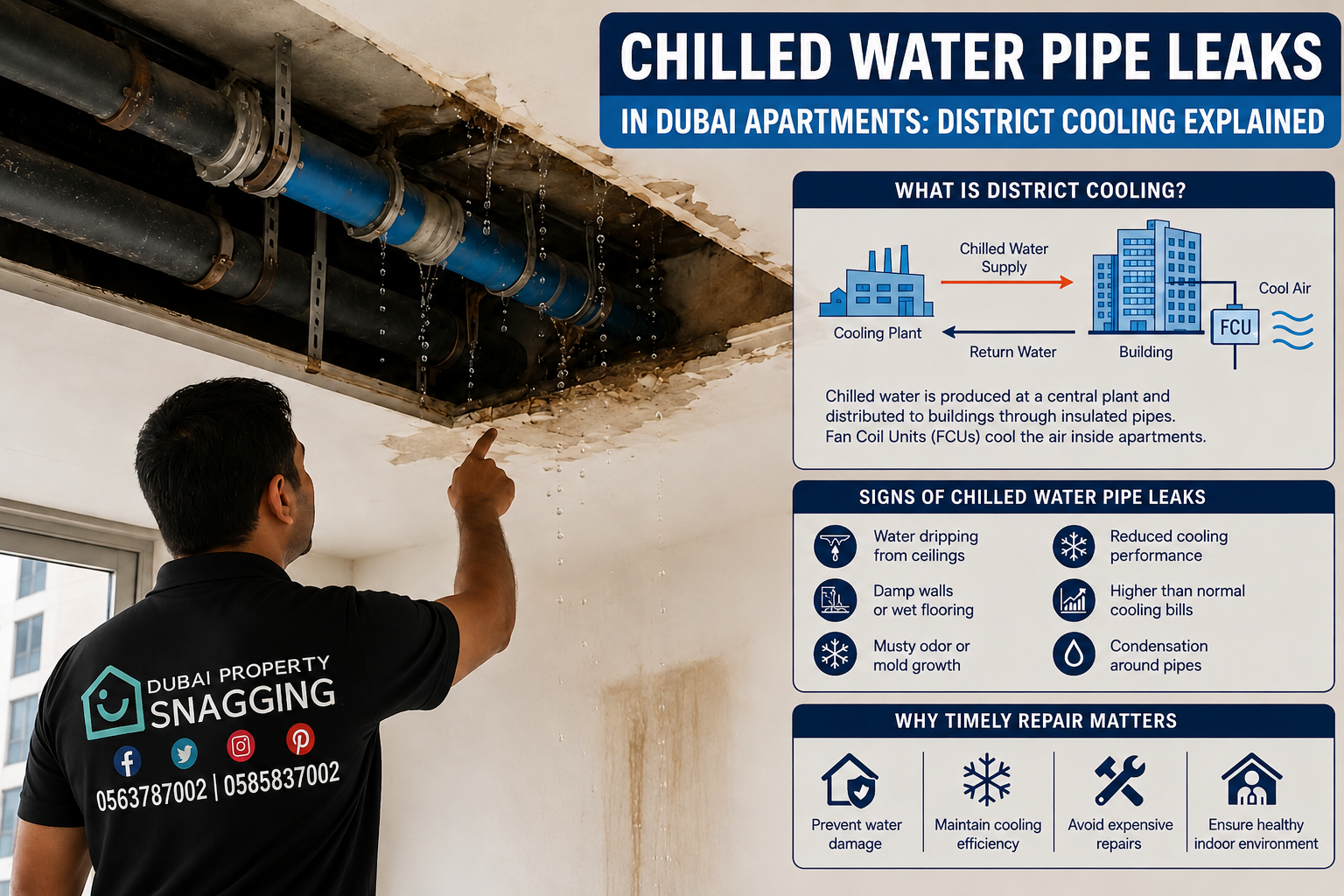
District cooling is a centralized air conditioning system that supplies chilled water from a cooling plant to multiple buildings through an underground network of insulated pipes.
Instead of every apartment having its own large air conditioning unit, chilled water is circulated through the building and into fan coil units (FCUs) or air handling units (AHUs). These units transfer cool air into apartments before the slightly warmer water returns to the cooling plant to be chilled again.
Major district cooling providers in Dubai include:
- Empower
- Emicool
- Tabreed
- Palm Utilities
This system reduces electricity consumption, lowers maintenance requirements, and improves overall energy efficiency.
What Is a Chilled Water Pipe Leak?
A chilled water pipe leak occurs when water escapes from the piping system that carries chilled water throughout the building. Although the water is not used for drinking, it is essential for the air conditioning system to function properly.
Leaks can occur in:
- Main chilled water supply pipes
- Return pipes
- Branch pipes serving individual apartments
- Fan coil unit (FCU) connections
- Pipe joints and valves
- Flexible hose connections
Even a small leak can lead to water damage, reduced cooling performance, and higher maintenance costs if left unresolved.
Common Causes of Chilled Water Pipe Leaks
1. Corrosion
Over time, moisture, oxygen, and water chemistry can contribute to corrosion in metal pipes, especially in older buildings.
2. Aging Pipe Insulation
Damaged insulation allows condensation to form, which may hide leaks and accelerate pipe deterioration.
3. Poor Installation
Improper welding, loose fittings, or incorrectly installed pipe supports can eventually result in leaks.
4. High System Pressure
Unexpected pressure fluctuations or water hammer can stress pipe joints and fittings.
5. Mechanical Damage
Renovation work, drilling into walls, or accidental impacts may damage concealed chilled water pipes.
6. Vibration
Continuous vibration from pumps and fan coil units may gradually loosen pipe connections over time.
Why Immediate Repair Is Important
Ignoring chilled water leaks can result in:
- Damage to ceilings, walls, and flooring
- Mold growth that affects indoor air quality
- Reduced cooling efficiency
- Higher energy consumption
- Equipment damage to fan coil units
- Costly structural repairs
Prompt repairs also help avoid disruptions to neighboring apartments in shared buildings.
Preventing Chilled Water Pipe Leaks
Property owners and facility managers can reduce the risk of leaks by:
- Scheduling routine inspections
- Maintaining proper water treatment
- Replacing damaged insulation promptly
- Monitoring system pressure
- Servicing fan coil units regularly
- Repairing minor leaks before they worsen
Preventive maintenance extends the lifespan of the entire district cooling system.
Conclusion
District cooling has transformed air conditioning in Dubai by providing an efficient and environmentally friendly way to cool residential and commercial buildings. However, like any mechanical system, chilled water networks require regular maintenance to operate reliably.
Recognizing the early signs of a chilled water pipe leak and arranging prompt professional repairs can prevent costly water damage, improve cooling performance, and extend the life of your building’s HVAC system.
Whether you’re a tenant, landlord, property manager, or facility engineer, understanding how district cooling works can help you respond quickly when problems arise and keep your apartment comfortable throughout Dubai’s hot climate.