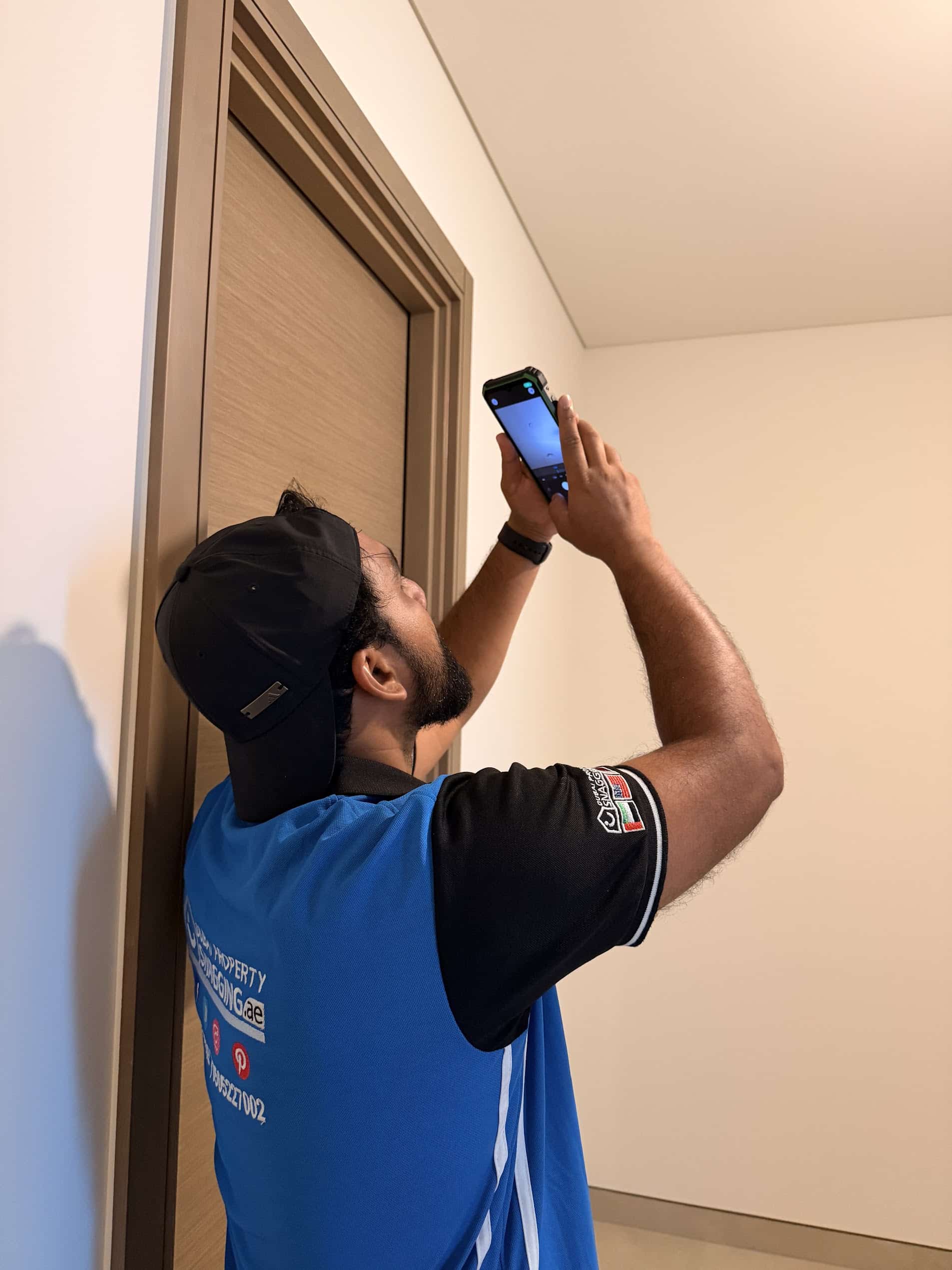
Property snagging is an essential procedure when owning, buying, or renting property in Dubai. Viewing a completed property before taking keys is the start. Documenting the rental’s condition before and after move-in captures defects and the current status. This inspection provides a foundation for clear communication. Recognizing the differences between property inspections enables an individual or business to identify what they may need. Properties do not need to be brand new for an inspection. A completed villa may have finishing touches to address. An apartment may have plumbing or air conditioning issues, or a rental property may need repairs before a tenant’s arrival. Each scenario may require a slightly different approach. All share a common goal: capturing the property’s condition at a given time and documenting concerns.
Understanding Property Inspections in Dubai
Property inspections are not uniform. Different inspection types may determine a building’s status. Inspectors may use certain processes for construction verification. Others help identify discrepancies at the start or end of a tenancy.
As a buyer, you may worry that the developer delivered exactly what they promised for the property. A landlord may want to capture the property’s condition before a tenant occupies it. A tenant may need to document scratches, dents, and other maintenance concerns.
This is where snagging comes in. A systematic inspection enables individuals to note visible defects and issues with accessible building systems. It also captures details in a report with photographs and descriptions to ensure everyone is aware of the concerns.
The inspector can determine the extent of a snagging inspection based on the property and its needs. For instance, a new property may require extensive evaluation of fittings and finishes. A rental property, instead, focuses on documenting damage and the status of the building’s systems, keys, and rooms.
Handover Snagging: What Buyers Should Know
Keys to a new property can be exciting, but the handover process should entail more than a cursory walk-through. Before accepting possession of a new property, a buyer must know what they are receiving. They should identify any visible defects or unfinished works.
The project team conducts handover snagging to capture concerns missed in a hurried inspection. Issues range from uneven paint to damaged tiles. Doors in the home may have misaligned hinges. The sealant around cabinets may be uneven, taps may drip, and air conditioning systems may under perform.
The inspection will usually take place across the rooms within the property, as well as the accessible systems.
The kitchen and bathrooms matter because of many water fixtures and connections. The buyer can review windows, doors, floors, lighting, and fitted furniture. The buyer can use a report to communicate their concerns to the developer.
You should define each snag clearly and specify the impact and the area within the property. We should take photographs where applicable.
Instead of simply noting that the bathroom requires work, the report should identify the specific issues. For instance, it should name the tiles, fittings, or sealant that may be an issue.
A snagging inspection cannot guarantee that the inspector will identify every concern. It helps the buyer understand the property’s visible condition. The inspection outlines the steps for addressing defects you may find.
Villa Inspection and Villa Snagging
A villa may require a more extensive inspection than an apartment. Larger properties often have more areas to review, such as stairs to access different villa sections and spaces around structures. It also includes the garden, garage, roof, terrace, and other structures around the property.
Villa inspections usually focus on the property’s interior based on its layout. They contrast with a standardized checklist used for smaller dwellings.
Inside the villa, review walls, ceilings, floors, windows, and doors. Then include wardrobes, fitted kitchens, and bathrooms. Also assess accessible plumbing. We can test the functionality of the doors and fitted equipment where it is safe to do so.
Outside, the review can include the accessible elements of the external finish. It covers boundary walls, roof details, and the garage doors. Also included are the garden and drainage, and the pool equipment items. We can also review the safety features and systems that may require expert assessment.
Villa snagging is particularly important in larger developments. This is especially true for properties with more than one bathroom. It also applies to properties with a fitted fixture. We may overlook a snag in one area of the villa. Systematic preparation ensures we capture all concerns.
It will be essential to differentiate between visible and inaccessible defects. An inspector may identify discolored ceilings during an inspection. However, the cause of the staining may require additional work to identify.
Apartment Inspection: Small Details Matter
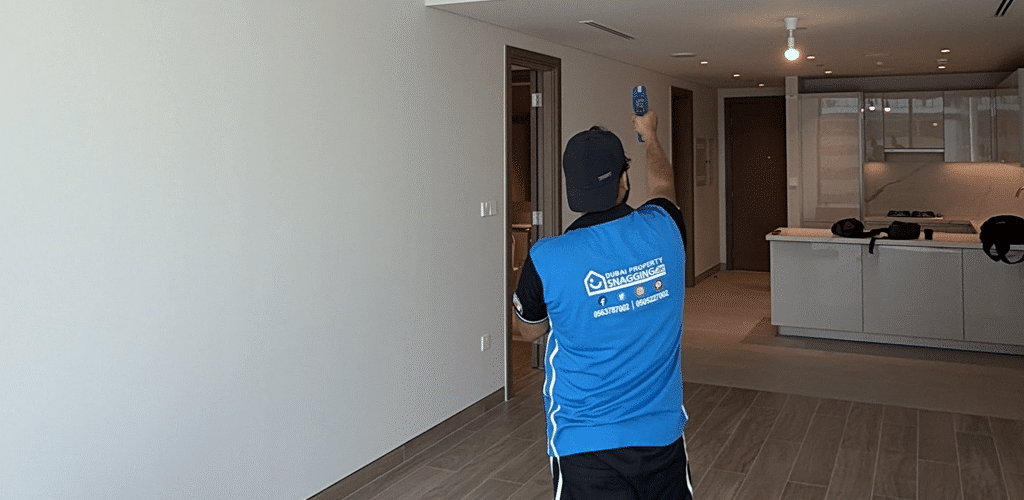
An apartment may have fewer external areas to review than a villa. However, inspectors must capture numerous elements during the inspection before handover or occupation.
An apartment inspection can include a review of the walls, ceilings, floors, windows, balcony doors, fitted kitchens, bathrooms, and wardrobes. Inspectors can test the accessible switches, lights, taps, and other controls where it is safe to do so.
Air conditioning can be a priority in an apartment in Dubai. You can monitor the response to the controls, the vent output, and any unusual noises or visible defects.
A basic inspection cannot fully review the air conditioning equipment’s technical specifications. Specialists should note any further concerns about cooling capacity or concealed machinery.
The small details within an apartment can also be particularly important. They include gaps around fittings, cracks on cabinet edges, broken handles, scratches on glass, and other finishes.
During a snagging inspection of an apartment, capture room by room. Capturing room by room identifies each concern clearly. Compare each issue to the corrections noted by the developer.
Handover Inspection After Construction or Renovation
A handover inspection is a general term for a more extensive property inspection. The handover process can involve a new property, a renovated space, or a rental property returned by a tenant.
A buyer usually cares whether a developer has completed a new property to the expected standard. Alternatively, a landlord or tenant may focus on the property’s condition, its fixtures, and any supplied equipment.
Before the handover inspection, ensure the property is accessible for the process. Utilities will be available for testing if required.
You should note the functionality of the appliances and air conditioning systems present within the property. Do not assume the equipment is operating correctly.
After finishing the handover inspection, review the findings. Make sure you understand the process for submitting any concerns. Retain reports and correspondence for reference.
A handover inspection identifies property issues. It also clarifies the property’s condition for all parties to the transaction or tenancy.
Move-In Snagging: Create a Record Before Settling In
Unlike a buyer who purchases a completed property, a tenant has fewer opportunities. This limits their ability to address defects in a rental property.
Move-in snagging is important for a tenant. It lets them document any present damage and maintenance concerns before occupying the property with their belongings. It also serves as a reference before vacating the premises.
Reviewing the property by room allows a tenant to capture visible defects and concerns. These include scratches on the walls, floorboard disrepair, and damaged tiles. They also encompass broken handles, faulty lights, and issues in kitchens and bathrooms.
The tenant should review the equipment supplied within the property and note the items provided. The tenant should test their functionality where it is safe to do so.
Photograph the visible damage to the property. Ensure the location is visible in the image, and include close-ups of the damage.
Notes on the property follow the same principle. Emphasize only observable details, avoiding speculation about the damage’s cause.
Move-in snagging documents the status of keys, access points, and windows. It also covers air conditioning systems and other property aspects.
The tenant should file the report and any correspondence with the appropriate party based on the terms of the tenancy agreement.
Move In Inspection: What Should Tenants Check?
During a move-in inspection, the tenant can create a baseline record. It notes the property’s condition at the start of tenancy. Conducting the move-in inspection helps. It ensures the property is clean and ready for occupation. The inspection confirms that the supplied equipment is present and functioning properly and notes any visible damage.
Technicians can test accessible taps, lights, windows, doors, and air conditioning where it is safe to do so, and note and report any maintenance concerns.
A tenant should ensure that the report accurately captures the condition that they have seen, as they are unlikely to be able to identify what has occurred if there is a dispute concerning the condition of the property.
The tenant records the property’s visible damage to establish a baseline and limits liability to what is captured.
Similarly, the landlord can use the report to confirm that they maintain the property to the expected standard.
Move-Out Snagging: Preparing to Return the Property
Unlike a move in inspection, a move out inspection will enable a tenant to review the property for any damage and the necessary maintenance requirements prior to vacating the premises.
The tenant and landlord can use the report to identify concerns and address them before the tenancy ends or the landlord returns the security deposit.
The tenant reviews the property at tenancy end to complete all submitted maintenance and repair requests and keep it clean.
The inspection of the property should follow a similar process to a move in snagging, with an emphasis on reviewing the condition of the walls, floorboards, doors, cabinets, fitted kitchens and bathrooms, and any supplied equipment.
During move-out, the team records any new damage, missing items, or maintenance concerns that require addressing.
It will be essential to differentiate between the damage that has occurred as a result of the tenant and the natural deterioration of the property, with consideration given to the age of the property, the condition at the start of the tenancy, the terms of the lease agreement, and the local regulations.
A photograph will not prove the tenant caused the damage; report should objectively record the property’s condition at tenancy end.
The landlord must carry out repairs and cleaning in accordance with the tenancy agreement, and the tenant should note what has been agreed and the supporting documentation.
If there is a disagreement, use the move-in inspection report to review the property’s condition at tenancy start and since.
We should conduct a move-out inspection to help the tenant determine how they returned the property and avoid assuming that any damage is theirs.
Move-Out Inspection: Why Documentation Matters
The move-out inspection documents the property’s condition when a tenant departs and records required maintenance and repairs.
This will be particularly useful to a landlord that is preparing the property for its next tenant, as well as providing a record for the departing tenant that the property has been returned in the expected condition.
When completing a move out inspection, a tenant should review the supplied equipment and furnishings to ensure that they have been returned, as well as any visible damage that has not been captured in the move in documentation.
The photographs that were taken during the move in inspection should also be reviewed, ensuring that the same perspective is used where possible.
The maintenance and repair work should then be captured individually in the report, with a distinction being made between a damaged bedroom door and a stained living room wall.
Each will need to be addressed, but the clarity of the report will minimize the confusion between the tenant and the landlord.
The move in and move out reports, along with any photographs and maintenance and repair documentation, should be retained by the tenant and filed with the appropriate party based on the terms of the tenancy agreement.
The documentation can then facilitate a smoother handover process, although it will not be a definitive statement on the security deposit or disputes.
Move-Out Inspection and Move-Out Snagging: Are They Different?
While the two terms may be similar, move out inspection and move out snagging tend to highlight two different processes, although both involve an examination of the property.
While a move out inspection is concerned with capturing the condition of the property at the end of a tenancy, move out snagging may be more focused on reviewing the property for defects, damage to finishes, fixtures, and the general maintenance requirements.
In either case, the process will involve examining the property to ensure that the appropriate documentation is completed.
The correct approach should be determined based on whether the landlord is preparing the property for a new tenant or determining the required repairs, as well as whether the tenant is seeking to protect their security deposit.
A report should be completed for a move out inspection that enables the tenant to identify the concerns based on the visible damage and the maintenance requirements.
It should also be possible to distinguish between the concerns that were present at the beginning of the tenancy and those that arose during the period.
The claims that cannot be substantiated should also be avoided, as it will be difficult to prove that the damage was incurred by the tenant.
For a landlord, this can facilitate the organization of maintenance and repair work ahead of the next tenancy, whereas for the tenant, it can ensure that they have documentation on the condition of the property when they departed.
For a property manager, it can serve as the foundation for the handover process between the tenant and landlord.
How to Choose the Right Property Inspection Service
The scope of a property inspection will differ depending on the property and the requirements of the client. A buyer who is purchasing a completed villa, for instance, may have different expectations than a tenant that is seeking to document a one bedroom apartment before their arrival.
Prior to scheduling an inspection, it will be essential to determine what areas will be reviewed, whether accessible plumbing and electrical fixtures will be tested, and if air conditioning equipment and supplied appliances can be examined.
The client should also ask the service provider if a report will be issued and whether additional inspections can be scheduled following the completion of maintenance and repair work.
A basic understanding of what will not be included in the visual inspection should also be gained, as a standard process does not involve invasive investigations, the testing of individual systems, or the confirmation of concealed waterproofing and structural elements.
The client should then choose the service provider that best outlines the process and provides a report that is easy to understand and utilizes, as an appropriate report will identify the location of the concerns and provide enough detail to facilitate communication with the developer, landlord, or property manager.
Protect Your Property With the Right Inspection at the Right Time
A property owner or tenant must be aware of their options when it comes to property inspections, as a villa owner may need a separate villa snagging inspection than an apartment buyer.
A tenant may also need a move in inspection and a move out inspection when they occupy a rental property. Handover snagging can ensure that a buyer has the opportunity to identify any concerns before taking possession of a new property.
A property snagging and related inspection service can ensure that a customer has the ability to understand the condition of a property, document any visible defects and maintenance requirements, and facilitate the communication process.
The most appropriate approach to a property inspection will be determined by the property, as well as the needs of the owner or tenant.
Anyone involved in a property handover, a rental tenancy, or a property purchase should ensure that they schedule an inspection that will be relevant to the property and their requirements. By doing so, they can maximize the benefits of a thorough property assessment and facilitate the communication process with all of the stakeholders.
Whether it is handover or move-in snagging, a tenant can ensure that they have the opportunity to document the condition of a property prior to occupying it for an extended period of time.