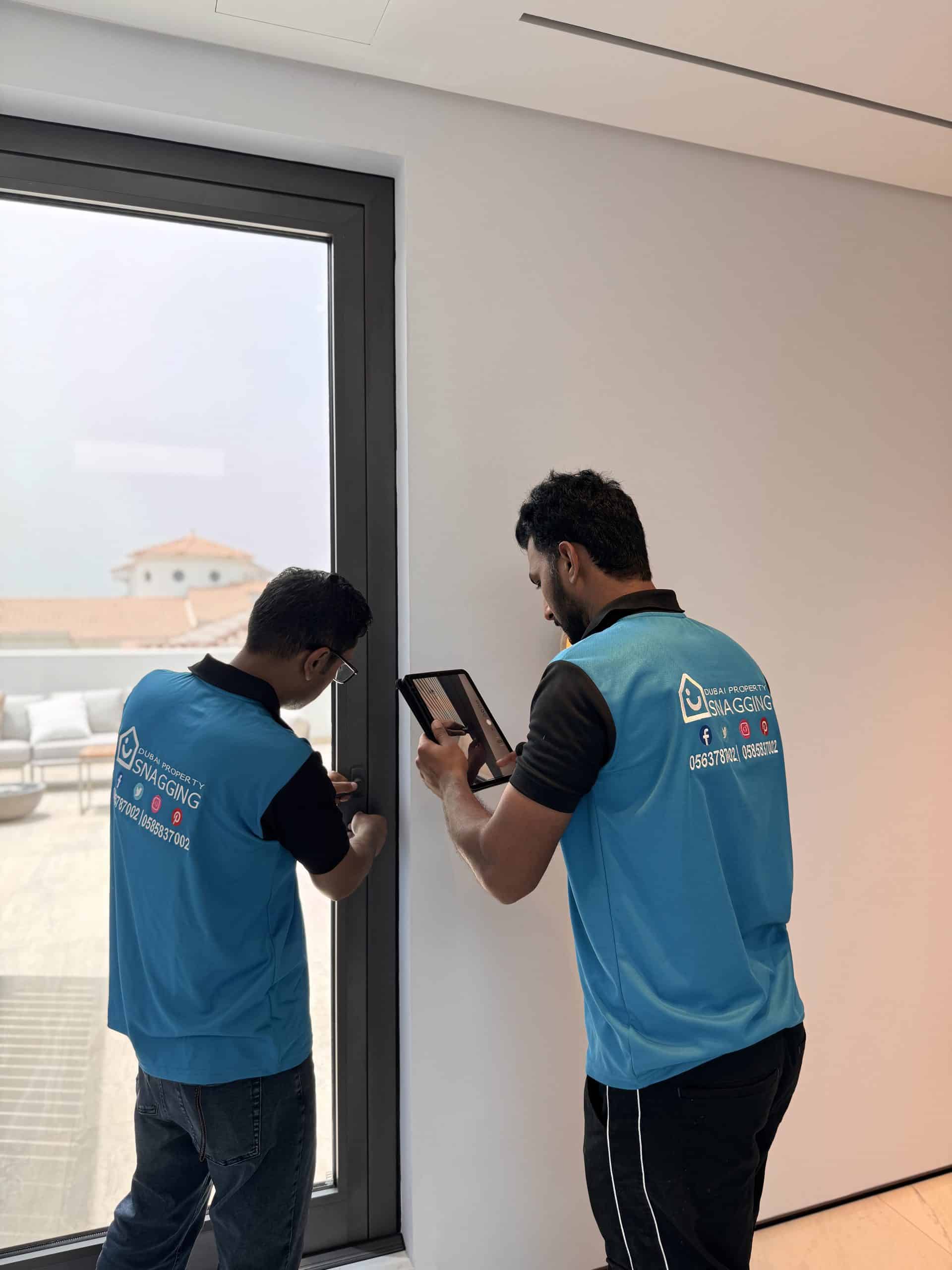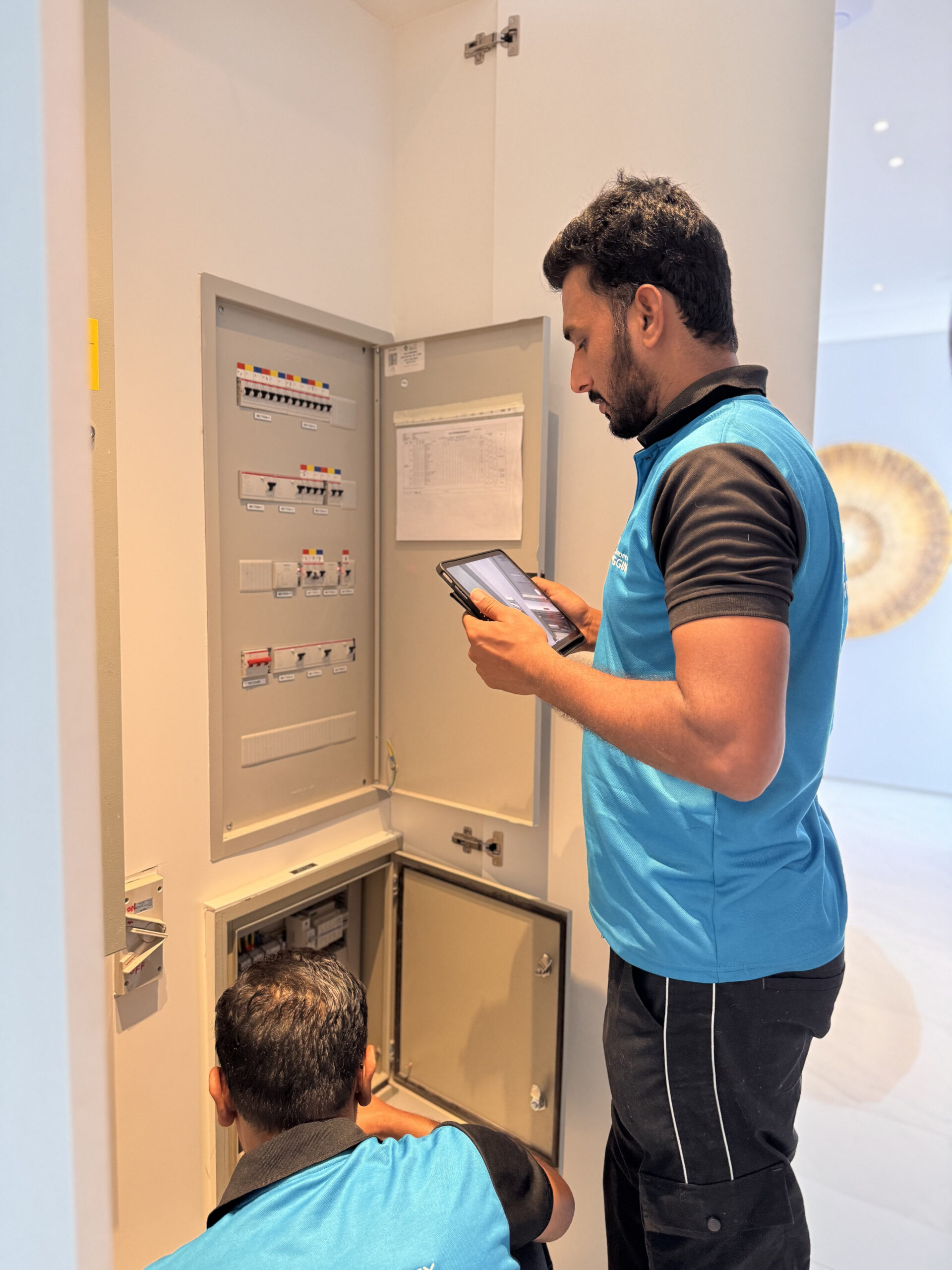
Buying a new home in Dubai is an exciting milestone. However, whether you purchase a townhouse or a villa, a professional snagging inspection remains essential. Although these properties may appear similar at first glance, they differ in design, construction, maintenance responsibilities, and inspection priorities. Therefore, understanding these differences helps buyers protect their investment and avoid expensive repairs later.
Why Snagging Matters
A newly completed property can still contain hidden defects. For example, cosmetic issues, plumbing leaks, electrical faults, and poor finishing are common even in premium developments. Consequently, a detailed snagging inspection identifies these problems before they become your responsibility.
Furthermore, developers usually provide a defect liability period. As a result, identifying issues before this period ends can save significant repair costs.
What Is a Townhouse?
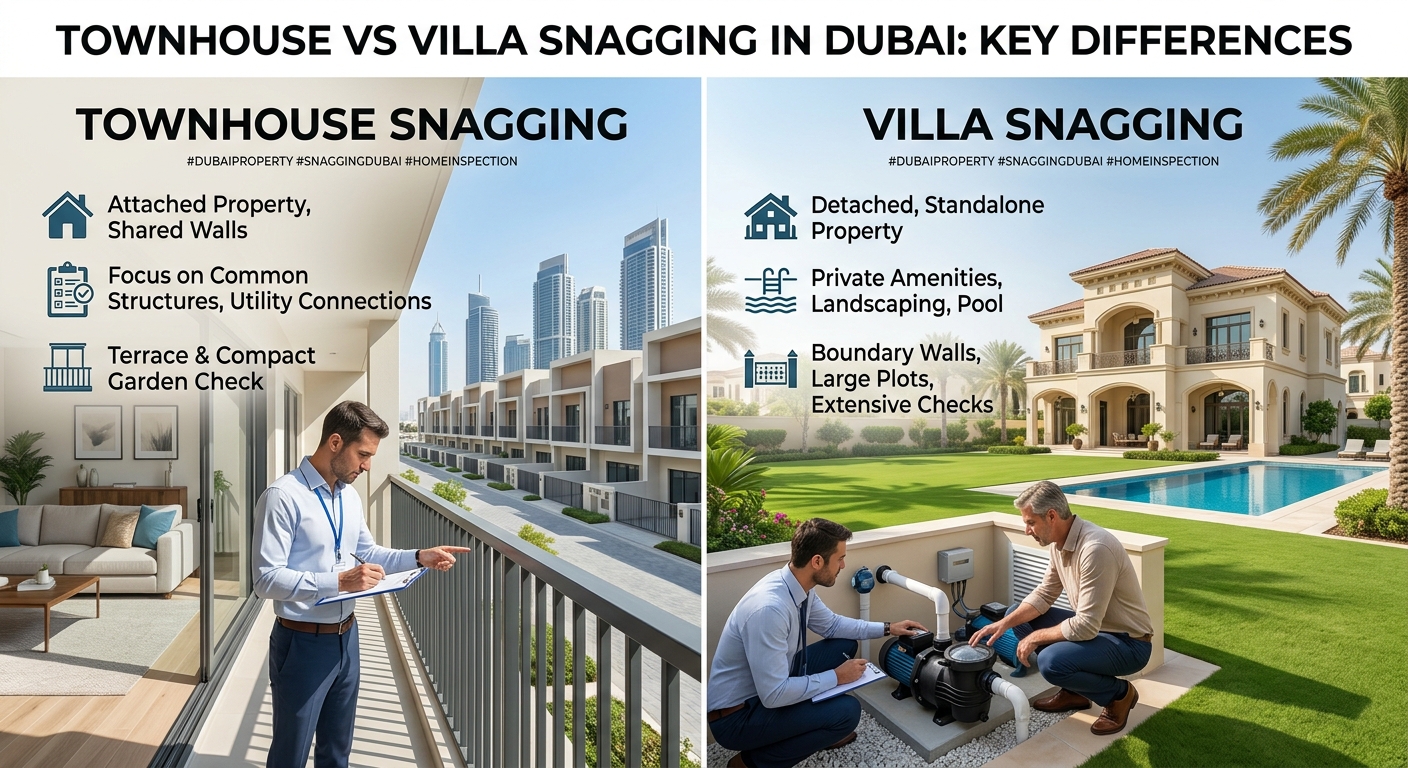
A townhouse is a multi-floor home that shares one or two walls with neighboring properties. Typically, townhouses are located within gated communities and often include shared facilities such as parks, swimming pools, and gyms. Because some structural elements are shared, inspections focus on both the private unit and areas that may affect neighboring homes.
What Is a Villa?
A villa is a detached property built on its own plot of land. Unlike a townhouse, it does not share walls with adjacent homes. Therefore, homeowners have greater responsibility for the entire building, including outdoor spaces.
In addition, villas generally include larger gardens, private pools, boundary walls, rooftops, and parking areas that also require careful inspection.
Key Differences Between Townhouse and Villa Snagging
1. Shared Walls vs Detached Structure
Townhouses share walls with neighboring units. As a result, inspectors carefully check for cracks, moisture transfer, and sound insulation.
On the other hand, villas require inspection of every external wall because they are fully exposed to weather conditions.2. Roof Inspection
Townhouses may have smaller roof areas. Nevertheless, waterproofing and drainage remain critical.
Meanwhile, villas usually have larger roofs. Therefore, inspectors spend additional time checking waterproof membranes, roof slopes, drainage systems, and expansion joints.
3. External Areas
Townhouses often have compact outdoor spaces. Even so, paving, drainage, fencing, and landscaping should still be inspected.
By comparison, villas typically feature larger gardens, driveways, terraces, and boundary walls. Consequently, these areas require a more comprehensive assessment.
4. Plumbing Systems
Both property types require plumbing inspections. However, villas generally have more bathrooms, outdoor taps, irrigation systems, and water tanks.
Because of this, villa inspections often involve more extensive testing for leaks, pressure, and drainage performance.
5. Air Conditioning
Dubai’s climate makes HVAC performance essential. Therefore, inspectors verify cooling efficiency, airflow, condensate drainage, and thermostat operation.
Additionally, larger villas usually have more AC units. As a result, inspections take longer than those for townhouses.
6. Electrical Systems
Electrical inspections remain important for both property types. Nevertheless, villas usually contain more circuits, outdoor lighting, garden power outlets, and larger distribution boards.
Accordingly, inspectors perform more extensive electrical testing in detached homes.
7. Swimming Pools
Most townhouses rely on community pools. In contrast, many villas have private swimming pools.
Therefore, villa snagging often includes checking pool equipment, pumps, waterproofing, filtration systems, and surrounding paving.
Should Thermal Imaging Be Used in townhouse?
Absolutely. In fact, thermal imaging helps inspectors identify hidden moisture, water leaks, insulation gaps, and electrical hotspots that are invisible during a standard visual inspection.
Moreover, advanced FLIR thermal cameras provide more accurate results. Consequently, buyers gain greater confidence before accepting handover.
Which Inspection Takes Longer?
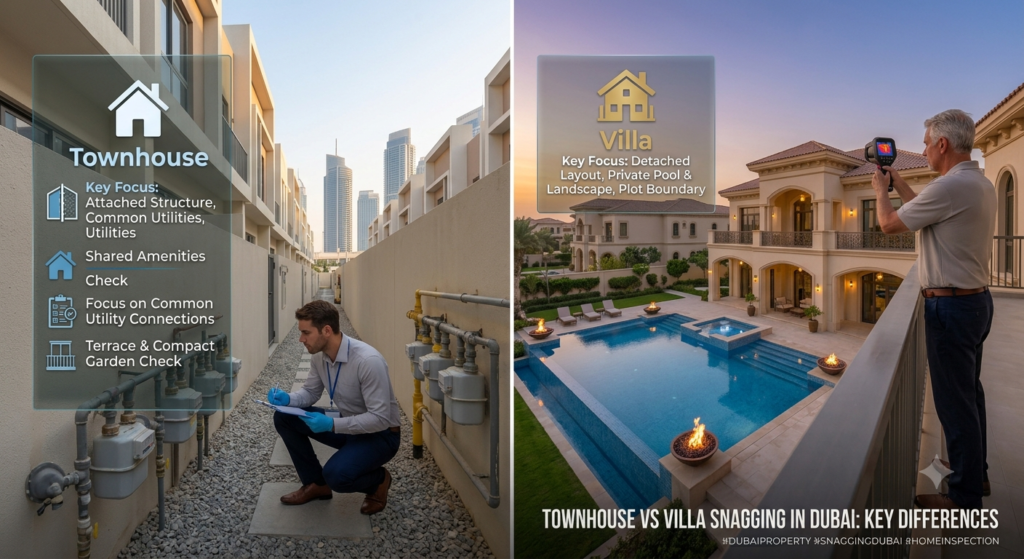
Townhouse inspections are generally completed faster because they cover a smaller area. However, villa inspections often require additional time due to larger living spaces, outdoor areas, roofing systems, and extra building services.
Therefore, inspection duration depends on the property’s size and complexity.
Final Thoughts
Whether you are buying a townhouse or a villa, professional snagging should never be skipped. Although villas typically require a more detailed inspection, townhouses can still contain significant defects that affect comfort and long-term maintenance.
Ultimately, a comprehensive snagging inspection ensures your property meets expected quality standards. As a result, you can move into your new Dubai home with greater confidence while avoiding unnecessary repair expenses in the future.