Leaking from your roof and terrace can cause issues for property owners. Identifying roof and terrace leak snagging in Dubai is key, as even if there are no issues apparent when the weather is dry, there could be underlying problems with the waterproofing, drainage or detail. Once it rains it can cause water to penetrate through the roof due to weak spots.
Many people will assume that the issue is a crack or broken tile on the roof but the issue could be more discreet. Blocked outlets, poorly sealed pipes, damaged waterproofing membranes, or incorrect finishing on your terrace threshold indicate an issue. The staining could be some distance away from where the water actually enters the building.
Identifying the source of the issue will help you fix the issue. Even if you paint over the ceiling and seal the crack, if there is still an issue with the waterproofing the leak may recur once there is heavy rain again.
Knowing about how the waterproofing works on your roof, why outlets are important and what to look for can help you get the right actions in place.
Why Roof and Terrace Leaks Occur in Dubai
Dubai has a very hot climate, meaning there can be long periods of dry weather with the odd periods of heavy rain. Many residential buildings and villas will have flat roofs. Contractors must install the waterproofing correctly with the right falls and outlets.
As long as everything is in good working order the water should flow to the correct drainage outlets.
High temperatures strain the materials on your roof. Constant expansion and contraction can cause movement in your screed, joints, sealants and finishes. Direct sunlight could affect the waterproofing products if they are not well protected or maintained.
Dust, leaves and debris can build up causing issues with outlets. If the drainage isn’t flowing well the water won’t flow off quickly. If there is heavy rain then even a small issue could be apparent.
There may not be an obvious issue causing the leak, there could be multiple smaller issues.
Understanding Roof Waterproofing
Waterproofing is one of the most important parts of a roof or terrace. It prevents water from penetrating the roof and getting into your rooms.
Typically a roof will have a prepared surface, angled screed, waterproofing membrane and finishes such as tiles or approved materials. This will depend on the design of your property.
Each part of the waterproofing plays its part.
Screed will help the water flow to the drainage. The waterproofing membrane is the main protection to stop water getting in. The finishes will protect the underneath and make the roof/terrace usable.
If you don’t install any part correctly or it becomes damaged, issues can occur.
The installer can install the waterproof membrane correctly, but a poor seal around the pipe penetration could let water in.
Why Drainage Outlets Are Important
Outlets are important on flat roofs, terraces, balconies etc. They help to remove the water from the surface.
However, they must install and maintain them.
If the outlets become blocked by dust, leaves or construction related debris then water could start to build up. If the surface doesn’t have enough fall to the outlet then water could pool in low areas.
The installer must finish the waterproofing membrane correctly around the outlet. If you don’t seal the collar or you damage the connection, water can enter.
When inspecting your outlets look for any visible damage, debris, poor finishing and pooling. Performing a test to see if water is flowing correctly can help.
Never assume that just because it looks clean from above that it is working correctly. Take note of how it connects and discharges when looking into recurring leaks.
Common Roof Waterproofing Issues Causing Leaks
There are a few common issues which can cause water to penetrate through your roof and terrace. Knowing these can help you understand why the leak may continue.
Damaged Waterproofing Membrane
The waterproofing membrane is there to provide a full barrier. If the membrane suffers punctures, tears, blisters, or joint detachment, water can enter.
The waterproofing may become damaged during installation or maintenance. Someone may drill into new equipment, install roof supports, or make other changes.
Tiles or a protective screed protect some membranes, so damage may not be apparent during a walk through.
Poorly Sealed Outlets
Bond and fix the waterproofing membrane correctly around the outlet. If not water could enter.
The leak could be appearing on your ceiling or walls nearby but the staining may not be coming from the exact point.
Look at how it connects to ensure you are looking at the right area.
Incorrect Falls on Roof
Even flat roofs need careful planning to ensure the correct falls. If the installer hasn’t laid the screed with enough fall, water could pool in low areas.
We commonly refer to this as pounding.
Damp on the surface isn’t necessarily a sign of waterproofing failure, but if water pools, have the area inspected. Prolonged periods of water can expose joints and vulnerable areas.
Poor Finishing to Parapet Walls & Upstands
Many flat roofs and terraces will have parapet walls. The waterproofing membrane should connect to these correctly. Finish the membrane according to the design.
If the membrane does not extend high enough, pulls away, or fails to seal properly, water can seep behind.
Cracks may occur to the coping, render or sealant. Sometimes a small issue close to the edge of your roof can cause water to enter.
Unsealed Pipes & Cables
Many roofs will have air conditioning pipes, cables, sleeves, supports etc.
You must seal all penetrations through the waterproofing correctly.
If you add new equipment, you could disturb the existing waterproofing. You should plan carefully for any changes to your roof and inspect the affected areas.
Warning Signs of a Leak
Sometimes you may not notice a leak as water drips from your ceiling. Instead you may notice a slight change to the look of your walls/ceiling.
A common issue will be brown/yellow staining after rain. If the stain darkens or gets bigger after rain then this could indicate that water is getting in from an exposed area.
Peeling paint and bubbling plaster can indicate damp. White powdery deposits on the walls (sometimes known as efflorescence) may appear if water is traveling through the masonry leaving minerals.
Other signs could be damp smells, discoloration to your ceiling boards, damaged skirting and damp around your light fittings or air conditioning grilles.
Looking at your roof you may notice cracked tiles, damaged grouting, damaged sealant, blocked drainage points and areas where water seems to be pooling.
If the leak occurs after rain then this could indicate an issue with your roof drainage or waterproofing. If you wash the terrace or irrigate the garden and the leak occurs afterward, it could be linked.
However, these are just indicators and you should look into the actual source.
Why Terraces Can Be Difficult to Locate Leaks From
There are many joints and features on a terrace which can make locating the source of water getting in tricky.
Your terrace may have tiles, sliding doors, glass balustrades, planters, drainage channels, outside taps and connections to your walls. All of these areas need to have the correct detailing to stop water getting in.
A common issue will be with the sliding doors. If the frames sit too low or the waterproofing fails to connect to the threshold, water can seep in during heavy rain or when you wash your terrace.
Planters can also be an issue. Regular watering exposes the walls and bases of the planters to moisture if they aren’t well protected. If drainage isn’t good then water could pool and find a way in.
Check balcony and terrace drainage. If water isn’t getting to the outlets easily then it may pool near doors, wall joins or other vulnerable areas.
A thorough inspection should be carried out. Just looking at the leak on the inside may not show you where the water is coming from.
How a Professional Inspection Will Be Carried Out
When you have a leak you want to understand where the water is coming from and how it is traveling.
Generally a professional inspection will start with a visual inspection. This will look for any visible damage, staining, pounding, poor drainage and any issues with key joints.
Depending on the property and suspected source further testing may be advised.
Visual Inspection
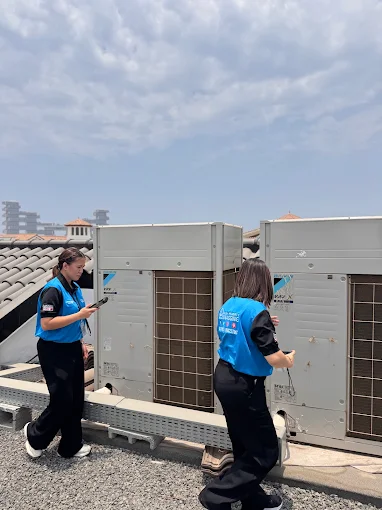
This will look at any areas you can see from your roof. Tiles, screed, parapet walls, sealants, outlets and services.
The inspection will also look at the ceiling and walls below the suspected leak. This can help to narrow down areas to look into.
Drainage Flow Test
This can help to understand if water can flow through the outlet.
Water will be introduced and watched to see if it flows through the drainage. This can help to identify any blockages, slow discharge or issues with the connection.
Thermal Imaging
This can help to identify temperature patterns. This can be useful to investigate but doesn’t necessarily mean there is a leak. It should be used in conjunction with visual inspections.
Moisture Map
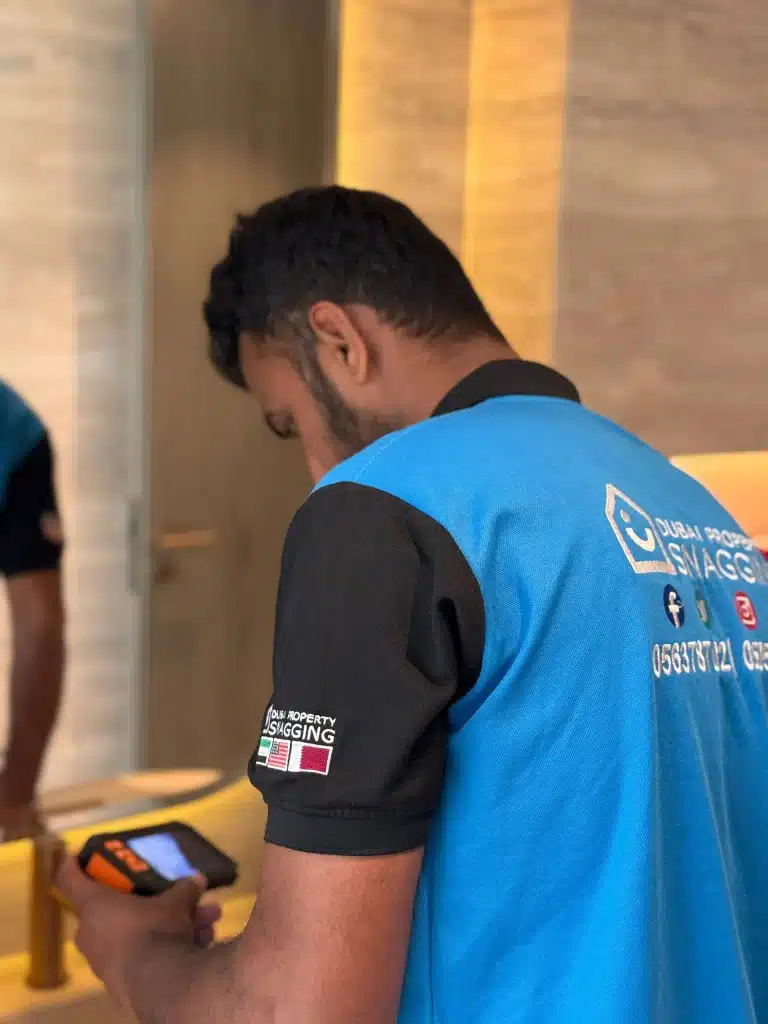
Taking readings can help to identify any issues with your ceiling, walls and accessible areas. Taking readings from multiple areas can help to see how far the moisture is appearing to have traveled.
This can help with your investigation and give a good reference.
Controlled Water Testing
Where possible and safe to do so controlled water testing can help to investigate any suspected leak.
Flood testing can be carried out by containing a set depth of water on your roof/terrace and monitoring the area below. How the test is carried out, how long it lasts and if it is suitable will depend on your waterproofing system, structure, drainage and professional opinion.
Not all roofs should be flooded. It should be planned and carried out by competent individuals. Appropriate precautions should be taken to ensure you don’t overload the structure or cause extra water damage.
Using multiple methods can help give a better understanding.
Why Repainting the Ceiling May Not Fix the Issue
One of the most common mistakes property owners make is to repair the visible damage on the ceiling without finding the source of the leak.
The staining may be directly below a bathroom, terrace, roof drain or service but the water could be traveling along the structure, through the insulation or around pipework. If you repaint the ceiling but don’t fix the waterproofing issue then the same staining could occur once there is rain again.
This can cause you to pay to repair the issue multiple times.
A better option would be to investigate the source of the leak, record your findings and then decide if you need a local repair or full waterproofing.
Ideally you should only repair the affected internal finishes once you have addressed the source of the water.
Local Waterproofing or Full Waterproofing?
Not all roof leaks will require a full waterproofing repair. How you proceed will depend on the condition of your waterproofing membrane, where the issue is, drainage and whether other areas are affected.
If it is a local issue such as a poorly sealed outlet collar, damaged joint or unsealed penetration then a local repair may be suitable. Ensure that the surrounding waterproofing is in a good condition.
If the membrane sustains widespread damage, including leaks or drainage issues, a larger waterproofing repair may be needed.
If there have been previous repairs then you should look into this. Should the same area keep leaking, this may indicate that previous repairs were only addressing the symptoms and not the actual source.
Decide based on your findings from the inspection and the condition of the system.
When Should I Book a Roof Leak & Terrace Leak Snagging in Dubai?
The best time to book an inspection will depend on the condition of your property.
If you have just had your villas/buildings completed then getting an inspection can help identify any visible waterproofing and drainage issues before handover by the developer.
If you have had heavy rain and have noticed any staining or damp areas then booking an inspection can help to identify the issue whilst it is still apparent. This can help to see a clearer link between the external conditions and internal damage.
After any changes to your roof. Installing air conditioning, solar panels, pergolas or other items can affect the waterproofing. Ensure you review the affected areas.
If you have had ongoing leaks then it is especially important to carry out a more detailed investigation. If you keep sealing the same area of your ceiling/wall then this can be a waste of time and money.
During the defect liability period of the developer, property owners should review their documents and report any suspected waterproofing or drainage issues using the correct procedure and within the specified time frames.
How Property Owners Can Minimize Future Leaks
Regular checks can help spot any early warning signs.
Ensure that your accessible outlets on your roof/terrace are free from leaves, dust and loose debris. Don’t block your drainage by placing outdoor furniture, storage or decor over the outlets.
Check any visible sealant around your door thresholds, pipe penetrations and wall joins. If you notice any deterioration then ensure you get an appropriate assessment.
Don’t drill into your roof/terrace without knowing where your waterproofing is. Any installation which penetrate your roof should have the correct detailing to protect the waterproofing.
Why Having an Independent Report Can Be Helpful
If you discover a leak on your roof or terrace, several parties will work to resolve the issue. The developer, building management, maintenance contractor, waterproofing expert or property owner may all need to understand the issue.
Having an independent report can help to provide a clearer picture of the situation. This can include photos of any visible damage, moisture readings, thermal images (if used), drainage observations and any testing carried out.
It should explain what was found, where the issue is and whether further technical investigations are recommended.
Protect Your Property By Identifying the Source
Never judge a leak by how large the staining is. It could be due to a small issue with your waterproofing membrane, outlet, damaged threshold or blocked drainage. Understanding these links is key to roof leak & terrace leak snagging in Dubai. A thorough inspection will be carried out to identify any issues with your roof/terrace, drainage, waterproofing and affected rooms.
Whether you own a villa, apartment, townhouse or penthouse identifying the actual source can help you make the right decision. Don’t keep painting your ceilings or sealing cracks, instead get an appropriate assessment, record your findings and ensure the repair addresses the issue.