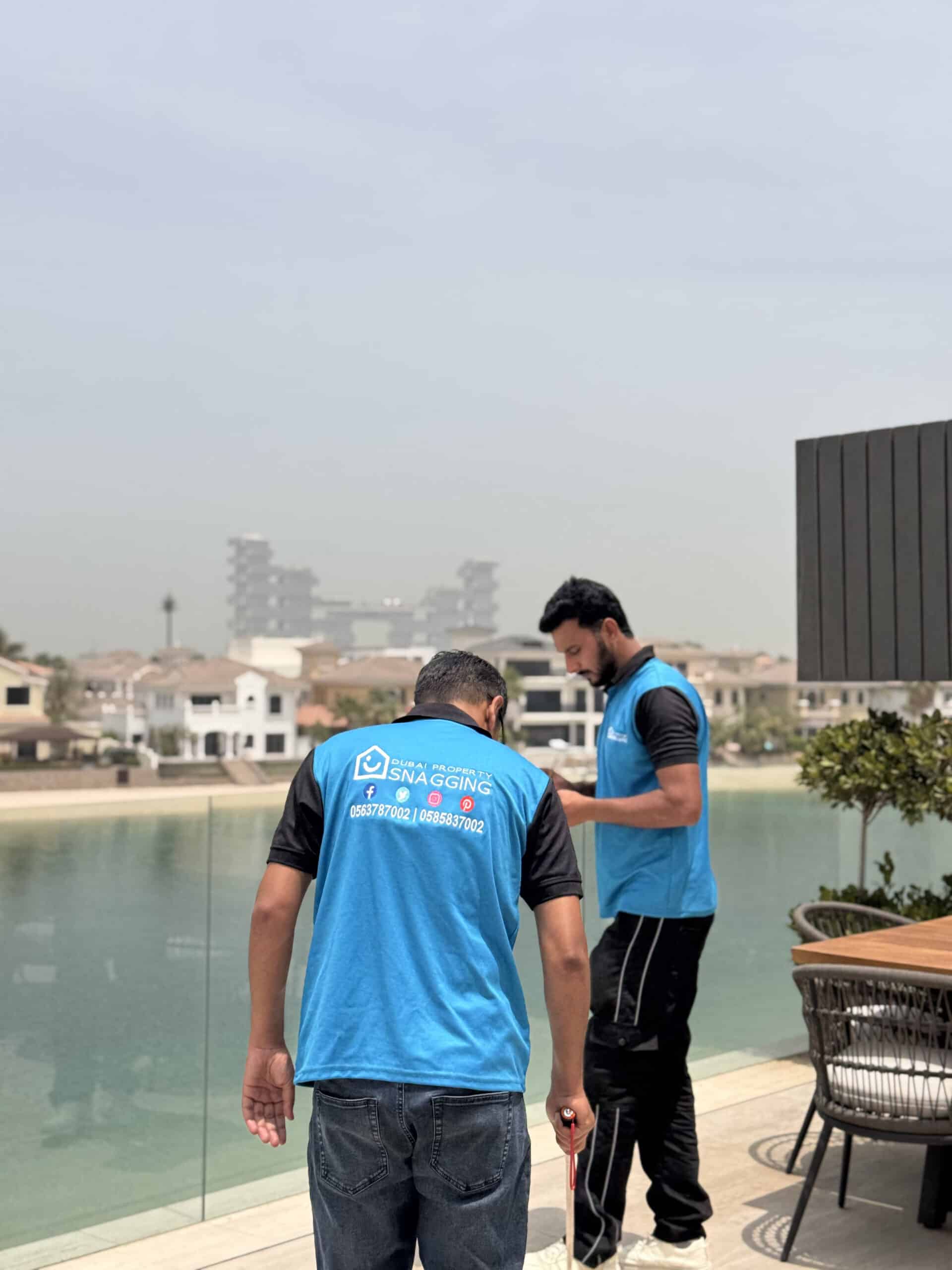
Typically, the condensate drain causes AC water leaks in newly constructed homes in Dubai, not the air conditioner itself. The water your air conditioner extracts from the air can escape into the ceiling rather than drain away due to a blocked pipe, a drain line with insufficient slope, a weak joint, or a poorly fitted drain pan. The optimum time to identify it is during property snagging, before handover, while the developer is still in charge of repairs. The best approach will depend on the reason.
If you are searching for ac water leakage Dubai because water is already dripping from your ceiling, jump to the section on what to do right now. If you are an agent, investor or first-time buyer who wants to avoid the problem, read on.
Why AC leaks are so common in new homes across the UAE
An air conditioner does more than cool a room. It also removes moisture from the air, and in a humid climate that is a lot of water. During a summer in Dubai, Abu Dhabi, Sharjah, Ajman, Ras Al Khaimah, Fujairah or Umm Al Quwain, a single indoor unit can produce a steady flow of condensate every day. All of that water has to leave through one small drain line.
New buildings add a few extra risks:
- Fast construction. Construction teams finish homes quickly and hand them over, and they install drain lines above false ceilings no one inspects them.
- Construction dust and debris. Plaster, cement dust and off cuts can get into pipes during the build and collect later.
- The units have seen little use. Many handover problems stay hidden because the AC has not run long enough in real conditions to show a fault.
- Coastal humidity. Coastal emirates tend to have higher humidity, so there is more condensate to drain.
The result is that a home can look perfect on handover day and then start leaking in the first hot months.
How the condensate drain works
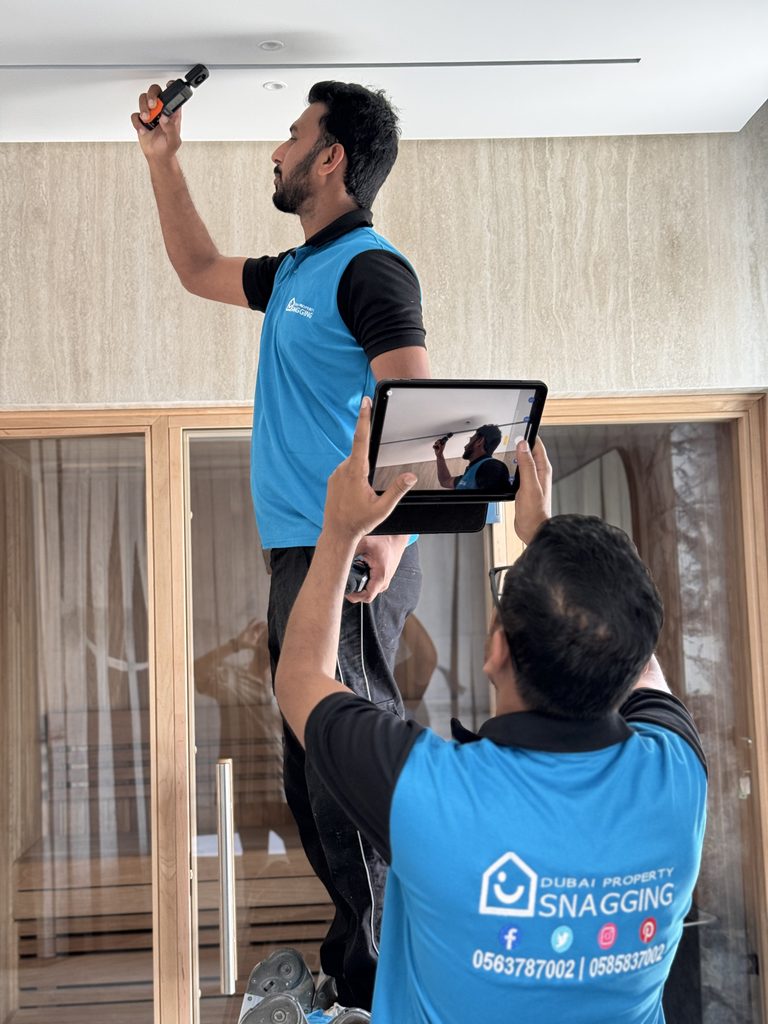
Inside the unit, cold coils collect moisture from the air. That water drips into a drain pan, then flows out through a condensate drain pipe, usually a small pipe running through the ceiling void to a drainage point. For this to work, the pipe needs a steady fall (slope), firm support, tight joints, and a clear path. If any of these fail, the water backs up and overflows, and you see an ac condensate drain leak as a stain, bubble or drip in the ceiling.
The most common causes of AC water leakage
1. AC drain pipe blockage
An ac drain pipe blockage is the number one suspect. Algae, dust, slime, insects and building debris slowly narrow the pipe until water can no longer pass. In a new home, debris left from construction is a common culprit. Algae, dust, slime, insects, and building debris slowly block the pipe, triggering the drain pan to fill and overflow.
2. Not enough slope on the drain line
Condensate moves by gravity. If the pipe sags between supports, runs flat or even slopes the wrong way, water sits in the low points and eventually spills. This is a workmanship issue, and it is invisible from the room below.
3. Kinked, crushed or disconnected pipes
Squeezing the flexible drain hose past other services may kink it. Technicians may leave joints loose or unglued. Both create leaks that only show when the unit has been running for a while.
4. Poor trap or connection to the drain point
Some systems need a properly formed trap, and the pipe must connect correctly to the drainage point. A bad connection can cause water to back up or smell, and in some cases lets air disturb the flow.
5. Damaged or badly fitted drain pan
Improper handling can crack the drain pan under the coil, cause it to seat unevenly, or fail to connect to the outlet. A slight tilt in the wrong direction is enough to make it overflow.
6. Sweating pipes and ducts
Sometimes the water is not coming from the drain at all. Refrigerant pipes and ducts carry cold air, and where the insulation is missing or has gaps, warm humid air condenses on the surface and drips. It looks like a leak, but the fix is insulation, not a new drain.
7. Dirty filters and a frozen coil
A clogged filter or low airflow can make the coil freeze over. When it melts, more water than the drain can handle comes off at once. This is more of a maintenance issue, but a new home with poor airflow can show it early.
8. Float switch or unit not level
Some units have a safety float switch that stops the AC if the pan fills. If it is missing or faulty, nothing warns you. If the unit is not installed level, it can push water to one side of the pan.
Is it an AC leak or a plumbing leak?
Before you call anyone, work out which one you have. The clues are usually clear.
Signs it is an AC leak:
- Water appears only when the AC is running, or soon after.
- The stain or drip is near an indoor unit, vent or along the drain route.
- The water is clear and clean, and worse on hot, humid days.
Signs it may be plumbing:
- The leak continues when the AC is off.
- It appears below a bathroom, kitchen or pipe route.
- The water meter keeps moving even when all taps are closed.
If you are unsure, turn the AC off for several hours and watch. If the dripping stops, the AC is the source.
What to do right now if your AC is leaking water
- Switch off the AC unit. This stops the production of more water.
- Switch off power to nearby lights or sockets if water is near them, and keep away from wet electrical fittings.
- Protect furniture and floors. Move items, and place a bucket or towels under the drip.
- Take clear photos and short videos. Include the ceiling, the stain and the unit.
- Report it in writing to your developer, landlord or property manager, with the date and photos.
- Don’t open the ceiling yourself. You may damage the evidence or make the repair harder.
How HVAC technicians fix AC water leaks
The repair should match the cause. Here is a simple guide.
| Cause | Typical fix |
| AC drain pipe blockage | Flush or clear the pipe, then confirm free flow by running water through it |
| Insufficient slope | Re-fix the pipe with proper fall and supports |
| Kinked or disconnected pipe | Replace the damaged section and secure all joints |
| Poor trap or connection | Correct the connection to the drainage point |
| Damaged or tilted drain pan | Reseat, seal or replace the pan |
| Uninsulated pipes or ducts | Add or repair insulation along the whole run |
| Dirty filter or frozen coil | Clean or replace filters and have the unit serviced |
| No float switch | Install a safety float switch or secondary pan, where suitable |
After the repair, the technician should run the unit for a full cycle and test the drain again. A fix that is never re-tested is the most common reason the problem comes back.
Also remember to deal with the damage. Wet ceiling boards, stained paint and damp insulation need to be dried and repaired, because prolonged dampness can lead to mold.
Why this is snag work, and why it should be found before handover
In a new home, an ac leaking water problem is a construction defect, which makes it part of snag work. Snag work is simply the list of defects and unfinished items that a developer should fix. Drain faults are easy to miss on a quick walk through because they are behind ceilings, and an AC that is switched on for ten minutes may not show any problem.
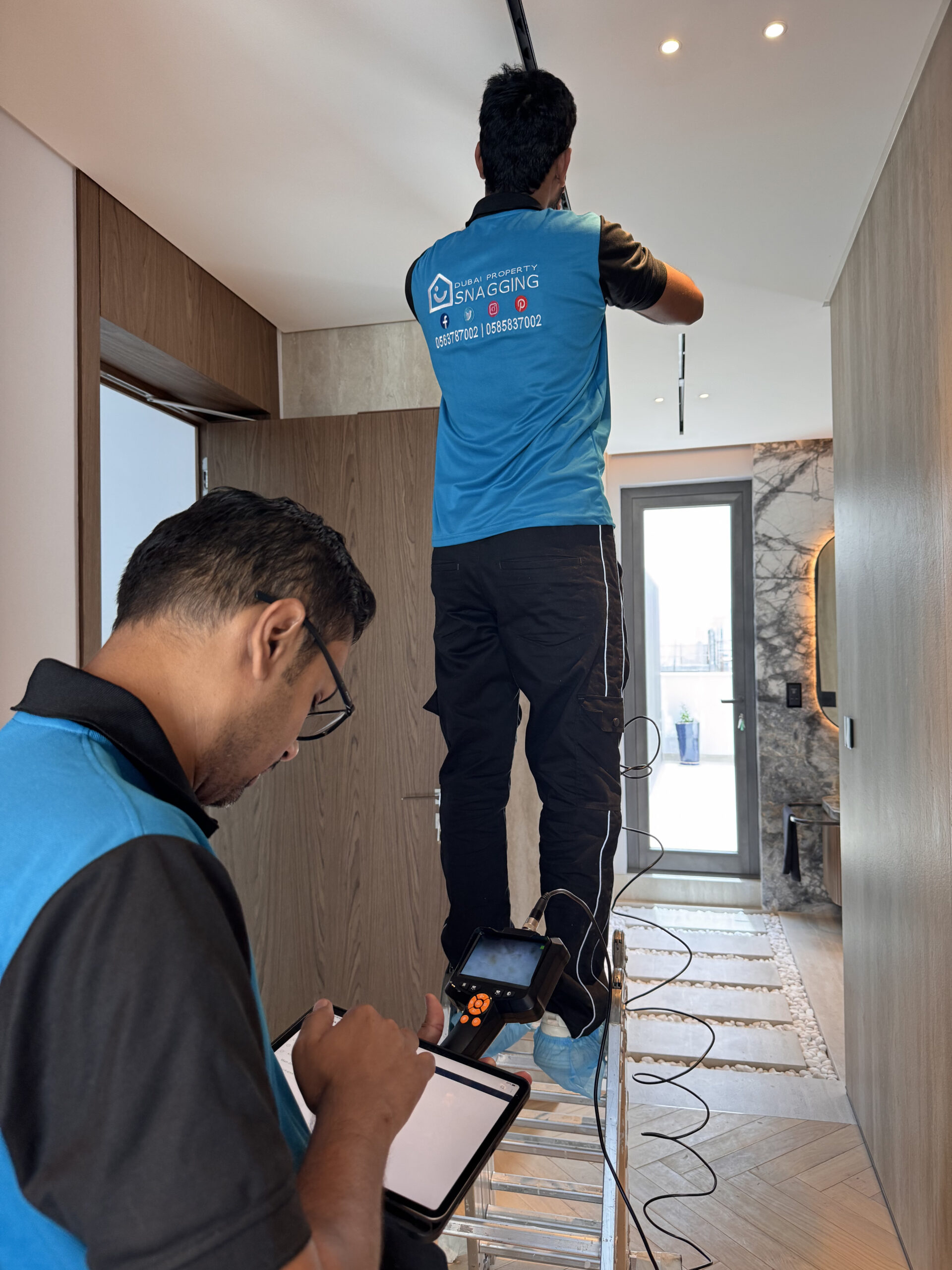
A proper property snagging inspection tests what a visual check cannot:
- Running every unit long enough for condensate to form.
- Drain flow tests, where water is poured through the line and watched at the outlet.
- Thermal imaging to spot cold, damp patches in ceilings and walls.
- Moisture meter readings to confirm dampness behind paint.
- Slope and support checks wherever the pipe can be reached.
- Insulation checks on refrigerant pipes and ducts.
- Cooling and airflow checks to catch poor performance that points to the same installation faults.
Each issue is photographed, tagged to its room and unit, and added to the snag list, so the developer’s MEP team knows exactly what to fix. You can read more about our apartment snagging service, our villa snagging service and our handover snagging option.
Already moved in? Use your defects period
If the leak shows up after you take the keys, do not wait. New homes in the UAE normally come with a developer defects period, often around a year, though the terms depend on your sale and purchase agreement and the developer. Check your own contract for the exact cover, and report defects in writing as soon as you find them. A dated snag report with photos makes the claim much easier to handle.
A note for agents, landlords and investors
If you manage or sell property, AC water leakage is a risk worth taking seriously:
- Before handover: a snag report gives your client leverage to have drain faults fixed at the developer’s cost.
- Before a resale or purchase: an inspection shows the real condition of the AC drains, and can support price negotiation.
- Between tenants: inspect before and after a tenancy so leak damage is documented and responsibility is clear.
- For investors with several units: one failed drain can damage joinery, flooring and the unit below, and the repair bill grows quickly.
This applies in every emirate. A villa in Sharjah, an apartment in Abu Dhabi, a townhouse in Ras Al Khaimah or a unit in Dubai all rely on the same basic drain design, and all of them can fail for the same reasons.
What happens if you ignore a small drip
A small AC leak rarely stays small. Water can stain and swell ceiling boards, damage paint and joinery, reach lighting and wiring, drip onto floors and furniture, and feed mold in a warm, closed ceiling void. In an apartment, it can also affect a neighbor below, which adds disputes and cost. Dealing with it early is almost always cheaper than repairing it later.
Frequently asked questions
Why is my AC leaking water inside my new apartment in Dubai?
The most common reason is the condensate drain: a blocked pipe, poor slope, a loose joint or a badly fitted drain pan. Dripping can also come from insulated pipes or a dirty filter. An inspection finds which one applies.
Can I fix an AC drain pipe blockage myself?
A simple blockage may be cleared by a qualified AC technician. If your home is new and under the developer’s defects period, it is better to report it first, because a DIY repair could complicate a warranty claim.
Is an AC condensate drain leak covered by the developer?
Often it is raised as a construction defect during the developer’s defects period, but cover depends on your contract. Check your documents and report the issue in writing with photos.
Can a snagging inspection find AC leaks before they show?
Often, yes. Drain flow tests, thermal imaging and moisture readings can reveal problems before a stain appears. Areas that cannot be reached will be noted in the report.
How long does it take to check the AC drains in a home?
It depends on the number of units and the size of the property. An apartment is usually a few hours, and a larger villa takes longer.
Do I need property snagging if the home is brand new?
Yes. A new home can still have hidden defects, and a snag report is evidence you can use while the developer is still responsible.
Final thoughts
AC water leakage in new homes is common, but it is also preventable and fixable when caught early. Know the signs, report problems in writing, and make sure the drains are tested before you accept the property. If you are buying, handing over or managing a home anywhere in the UAE, a professional property snagging inspection will show you exactly where the water could go wrong.
Ready to check your AC drains before handover? Contact Dubai Property Snagging for a fixed quote and a clear, photographed snag list you can send straight to your developer.