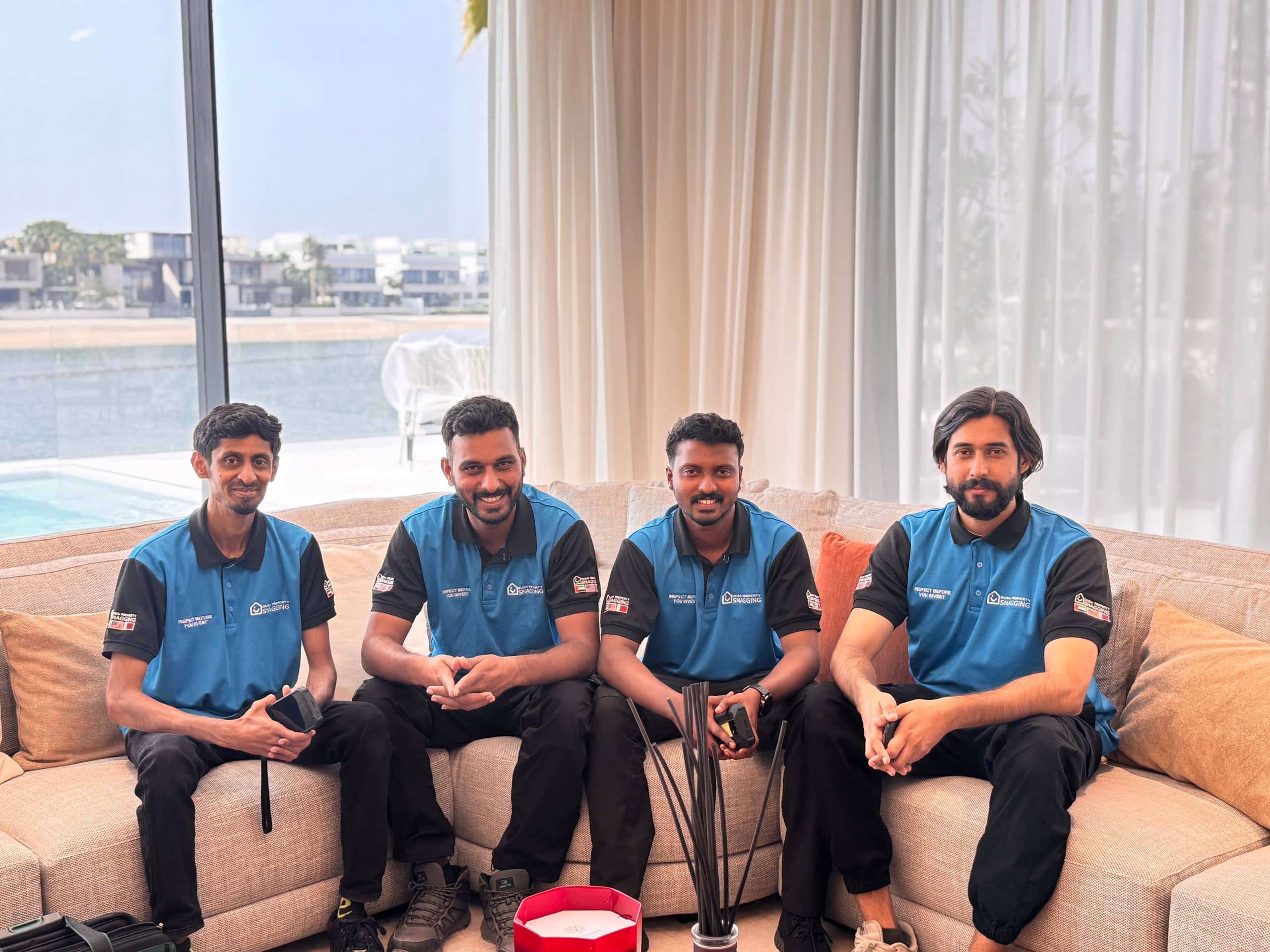
Getting the keys to a new home is exciting. Before signing the handover papers, buyers can save months of headaches by using a professional property snagging Dubai. A professional inspector will thoroughly inspect the property. A detailed report will be provided to the developer for necessary corrections. The inspection is crucial, even for buyers of apartments, townhouses, or villas, which are big purchases.
Why a Final Walk-Through is Incomplete
Most handover walk-through are similar. The buyer admires the view, opens the kitchen cupboard, and switches on the AC. They also test the light switches.
Some issues are apparent, such as cracked tiles, plaster, glass, uneven or patchy paint, or a loose cabinet handle. Other issues reveal themselves only when you use the property and inspect more carefully than the average buyer. Do not rely on a walk-through alone. Perform a systematic check of the property, noting every defect for the developer’s attention.
What a Handover Inspection Involves
The extent of a handover inspection depends on the property category. The terms of reference and the safely check able aspects determine how extensive the handover inspection will be. With that in mind, the items below are indicative of a snagging service provider’s scope:
Inspect walls, ceilings, and floors for cracks, uneven patches, or stains on painted or plastered surfaces. Test the floor for gaps, uneven or hollow tiles, and messy grouting.
Doors, windows and locks – the inspector will open and close and lock all doors and windows.
Kitchens and bathrooms receive the most attention. They have the most fittings tested for leaks, taps, drains, sanitary ware, cabinets, and sealant.
Electrical and AC – testing switches, sockets and AC controls, where the inspector has access.
Exterior – the property snagging Dubai service can also inspect the external finishes, accessible drains and fittings.
A good inspector will explain issues and their impact, and you should know what matters most to you clearly today. However, it is impossible to find every snag during an inspection. Inspectors may miss some issues even when they use specialist equipment.
When Choosing a Snagging Company in Dubai, Ask These Questions
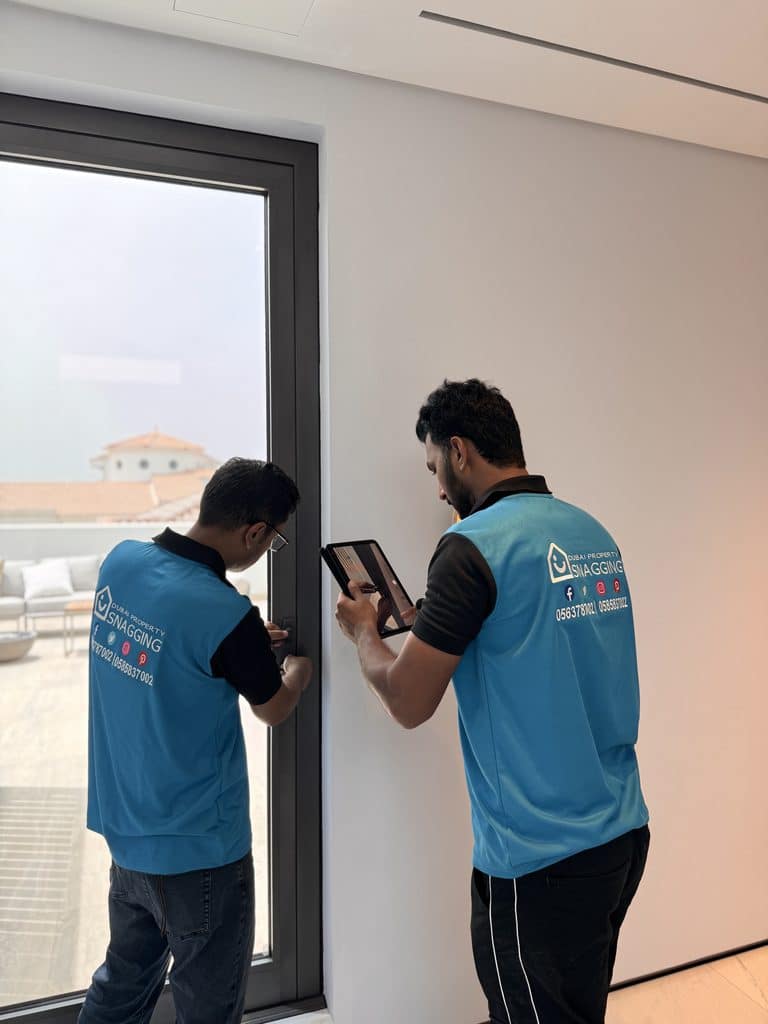
The main challenge during a handover walk-through is knowing what to look for. There are hundreds of potential finishing and fitting issues that could arise. We notice the problem only after the furniture arrives.
A good snagging company in Dubai will provide details in advance. These details cover the report format and content. They also explain the limitations of their scope. Before selecting a snagging company, a buyer should ask themselves a few questions:
Should the report include photographs?
Will the developer obtain the report directly?
Could someone explain the report to me?
Does it have a different checklist for apartments, townhouses and villas?
The last question is essential as a villa is not the same as an apartment, and a company that uses the same generic checklist for all properties does not fully appreciate the differences.
In addition to the answers listed above, it is a good idea to ask for a sample report to provide an indication of the level of detail, as a more comprehensive report provides greater value and does not always come with a higher cost. A generic report may appear cheaper, but it will not identify potential snags as effectively and could cause issues if the developer rejects the report.
A professional inspection will provide peace of mind at handover without being completely foolproof to any potential snags.
What “Snagging” Involves
Snagging is the process of identifying defects in a new property. It involves recording and rectifying issues. These include finishing faults, incorrectly installed fittings, installation errors, and malfunctioning items.
It typically follows the snagging inspection report procedure, where any snags are identified and compiled in a snagging report. Document each snag with its location and, if possible, attach a photograph. The report is then submitted to the developer, who will respond by rectifying the issues and arranging a snagging follow-up visit to confirm all the snags have been resolved. Do not rely solely on the developer’s assurance that the snagging is resolved.
A snagging report should contain a detailed description of each snag identified.
In most cases, “bathroom problem” is not informative to the developer, whereas “water accumulates at the entrance of the shower after use” is specific and will help them identify and resolve the issue in a timely manner. A good snagging report is specific, enabling faster resolution of the snagging items. In addition, it is a good idea to retain a copy of the snagging report, the submitted snagging list and all the correspondence with the developer, as evidence, if required, for any disputes.
Villa and Townhouse Inspections Explained
A villa inspection and a townhouse inspection may seem similar, but they differ slightly; a villa is usually larger and has more standalone exterior surfaces, such as private gardens and boundary walls, driveways, roof access and drainage systems, which may require a closer inspection depending on the layout and the accessibility. In contrast, a townhouse shares some of the exterior building surfaces with the adjacent properties and has a smaller private outdoor space. The inspection covers similar items (internal finishes, walls, windows, doors, plumbing, electrical and AC), but it emphasizes the items specific to the property being inspected. Building elements shared with other properties or those not readily accessible may require the expertise of a specialist.
Whether inspecting a villa or a townhouse, the inspector will complete a thorough examination of the areas accessible to them and document all the snags identified during the inspection. If applicable, the inspector should also complete an external inspection and building survey, depending on the terms of reference. If you would like more information about villa and townhouse snagging inspections in Dubai, you can find it here.
Do not ignore plinth protection
Plinth protection is an external feature that runs along the building’s perimeter at the base. Its appearance and material can vary, but the function remains the same, to protect the building from the elements. During the external inspection, take particular care to note any cracks or staining and the presence of water close to the building and its direction. If there are any issues, the inspector will note them during the inspection.
However, the presence of water does not necessarily mean there are problems, as there are several reasons why water may be present, and a visual inspection is not enough to confirm concerns about the waterproofing specification or integrity. If in doubt, the inspector should raise the matter with the developer or a building surveying specialist to prevent any issues at handover.
An inspection is not purely a visual inspection. A good snagging inspection will verify that the property’s systems are performing correctly.
A freshly painted wall may conceal imperfections, and a newly furnished bathroom may have issues with water drainage or sealant, and an air-conditioning unit may switch on, but it does not cool the room adequately. A balcony may look clean, but it has water pooling on it due to incorrect drainage. A snagging inspection will highlight these issues during the inspection.
An inspector may use various tools to test some of the items, depending on the snagging terms of reference. However, inspectors cannot test all items, and some items require a specialist to perform the test.
If a buyer is purchasing a resale property, it is important to consider the different requirements for a property snagging inspection. The report will be different, as a resold property will have different maintenance and repair requirements depending on the age and the impact of the previous owners’ renovations or alterations. The inspection will be similar for a new property, but it will focus on the finishing and installation issues. In both cases, the inspection should be appropriate to the property and its requirements.
After the Inspection Report, What Happens Next?
We will complete a snagging inspection and provide the buyer with a report detailing all identified snags. We will note each snag with its location and a description, and, if possible, a photograph of the snag. The team will forward the report to the developer to prepare an action plan and rectify the identified snags. The time required for this process can vary depending on the type of snag and the developer’s process, so it is not always immediate.
After the developer has completed the snagging corrections, it is essential to ensure that they have been completed correctly according to the snagging report. Do not take the developer’s word for it; a follow-up snagging inspection should take place to confirm that all the snags have been resolved to your satisfaction. If any snags remain, it is important to note their current condition and any remedial action required.
It is important to remember that a snagging report is not a legal document and does not take the place of legal, regulatory or engineering advice. If the snagging inspection identifies any issues that affect building regulations or statutory requirements for structural safety, electrical supplies, water supplies or other engineering concerns, it is advisable to take the matter to a qualified specialist.
Common Mistakes Made by Buyers at Handover
Assuming that a newly cleaned and tidy property will have all the fittings and finishes correctly installed and completed.
Focusing only on the interior finishes and fittings without examining the exterior elements as well, depending on the property category and the terms of reference.
Assuming that any verbal assurances from the developer or builder are sufficient; ensure that any verbal assurances are included in the snagging report and that any action taken has been documented, along with the proposed solution and time frame. In addition, ensure that the report is kept up to date if any changes are made.
Making unsafe tests to establish a snag
A handover walk-through inspection is useful, but it is not a snagging inspection. Before accepting possession of the keys to a new property, it is crucial that a buyer completes a thorough property review, ensuring that all the areas accessible to them are checked, and any concerns are documented for the developer’s attention. A professional property snagging Dubai service will ensure that the details are documented correctly and that the report is clear to the developer.