Property Snagging is a detailed inspection of a new home so that any issues can be highlighted so that the developer can carry out the repairs free of charge.
We have walked through many new homes with first time buyers in Dubai. Almost always they say the property looks perfect, and then we turn on the shower and water is flowing down the bedroom door!
If you have been told about snagging by your agent/developer and are a little unsure what it is then this post will give you a simple explanation of what a snag is, why it should matter to you, what we look for and common mistakes made by new buyers.
What is a Snag?
A snag is any issue with the property. Chip in the tiles, doors that don’t shut properly, no power in sockets or slow dripping joints in pipes hidden in the wall.
Snagging is simply identifying all these issues, taking photos and creating a list. You can call this list a snag list or snagging report.
What we find in new Dubai Properties
Depending on the building, we will generally find a list of issues. However some common issues are doors scraping floors, tiles that are not solid when tapped (usually cracking within 1-2 years). Incorrectly sloped showers/balconies, AC units not cooling the bedrooms in August.
We also find minor issues such as paint on light switches, scratches to work tops and stained grouting. Whilst these won’t affect your life, you paid for a completed property so the developer should sort these out.
Our main worries are often the less obvious issues. Poorly sealed windows or incorrectly sloped showers may not cause you any issues initially but after a week of rain or a few months of regular use can cause a leak and these can become costly very quickly.
Why it Matters More for First Time Buyers
Many first time buyers assume new properties will have no issues. Hundreds of tradespeople across dozens of trades will have built the property, usually under tight deadlines. Things can happen! Whilst it is not a scandal, it is just part of the build.
The issue is you probably won’t know what to look for. Most people check paint and the toilet; few ensure sockets get earthed or the shower slopes.
Another issue is that your sale agreement will almost certainly include a period of defects liability (usually around a year). Any issues reported during this time will be the developers issue. However once the defects liability has passed these issues will mostly be your problem. A proper report with photos and exact locations will help you sort the issues more easily. We normally ignore a list typed on your phone at 9 p.m. the night before handover.
Finally, you just want to move into your new home and relax. You don’t want to spend your first summer waiting for a plumber.
What do we actually check?
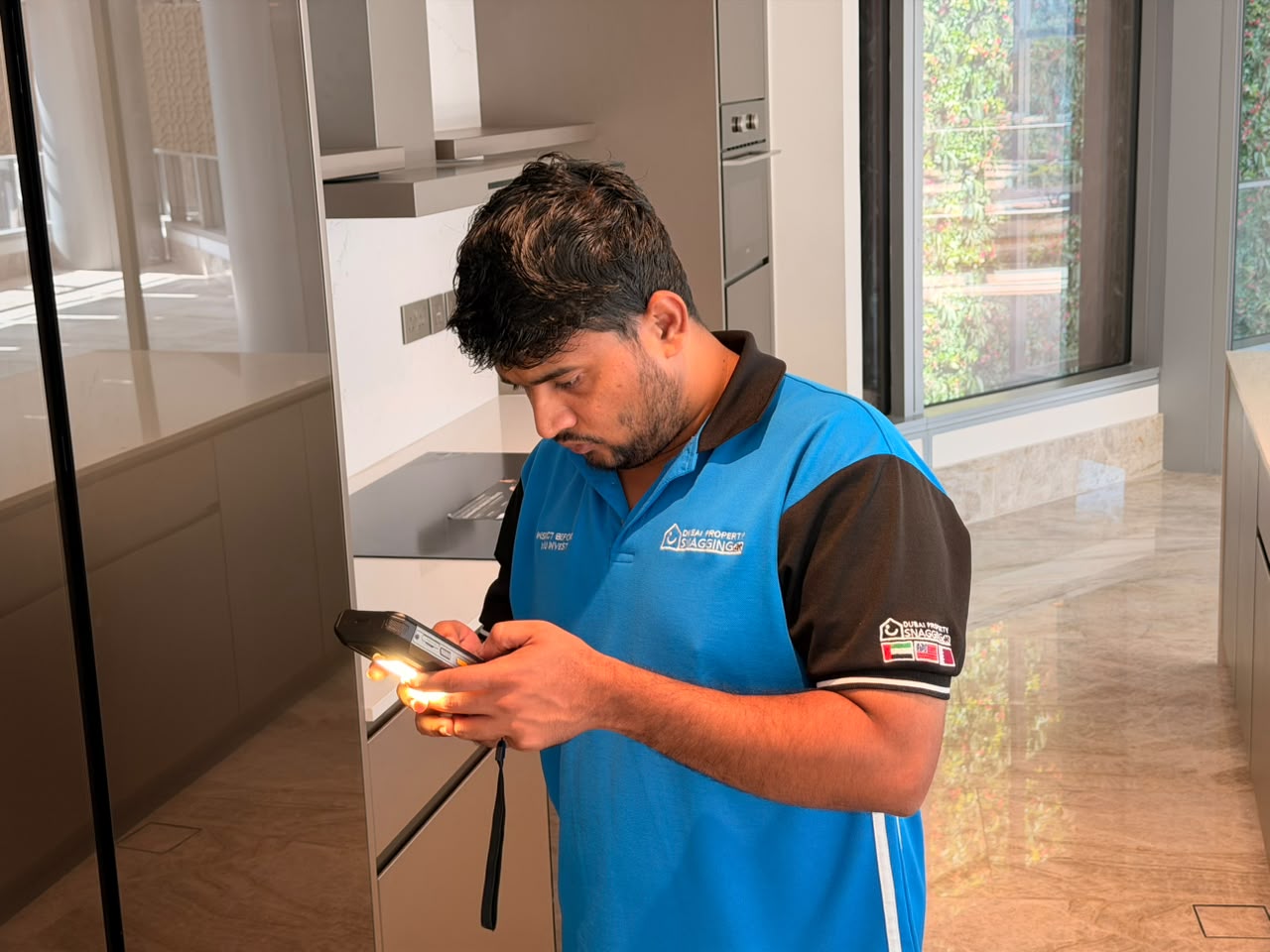
Pretty much everything you can touch or switch on. We usually start with the front door and then each room. Finally we will check all the systems (electrical, plumbing, AC).
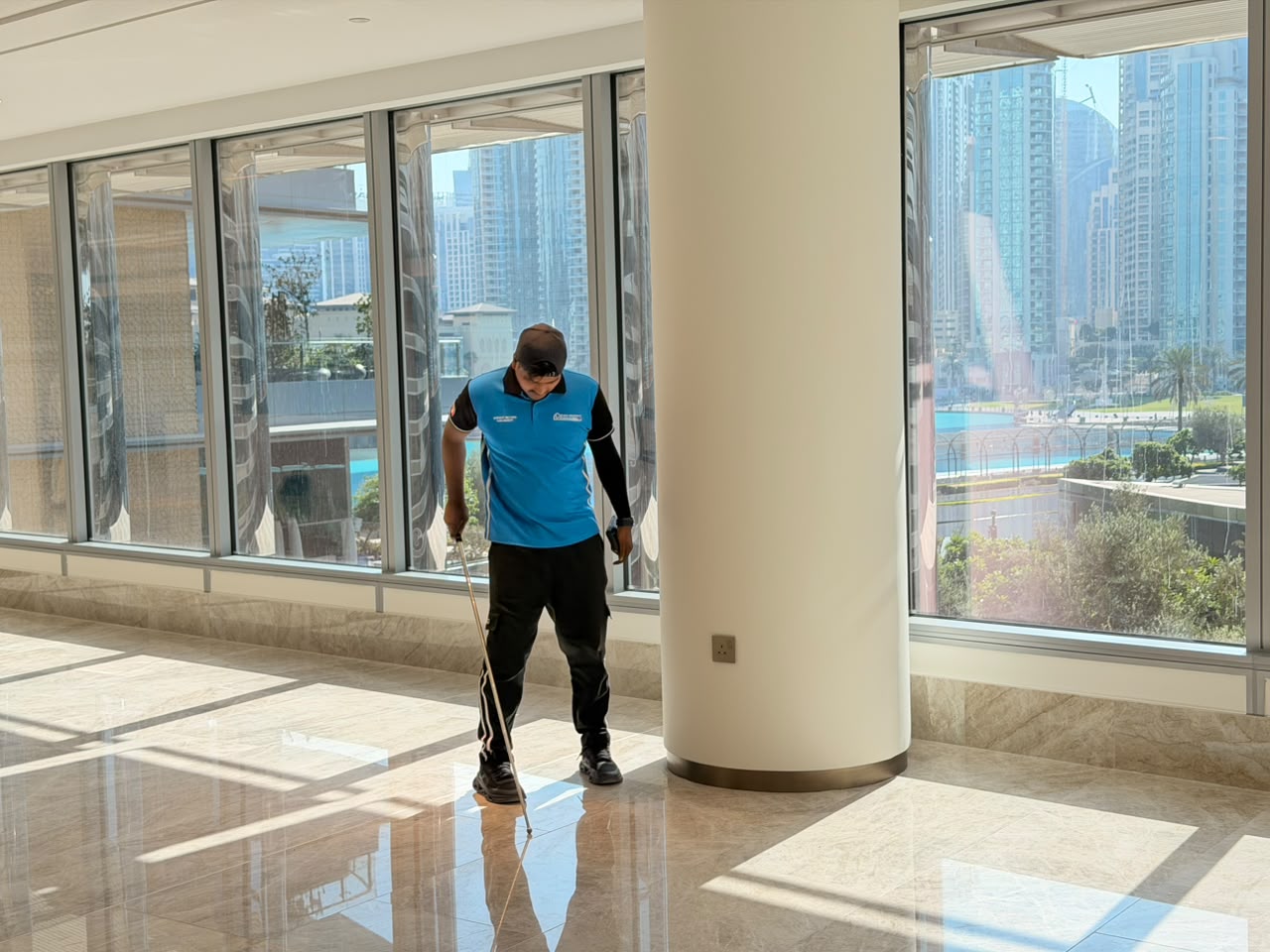
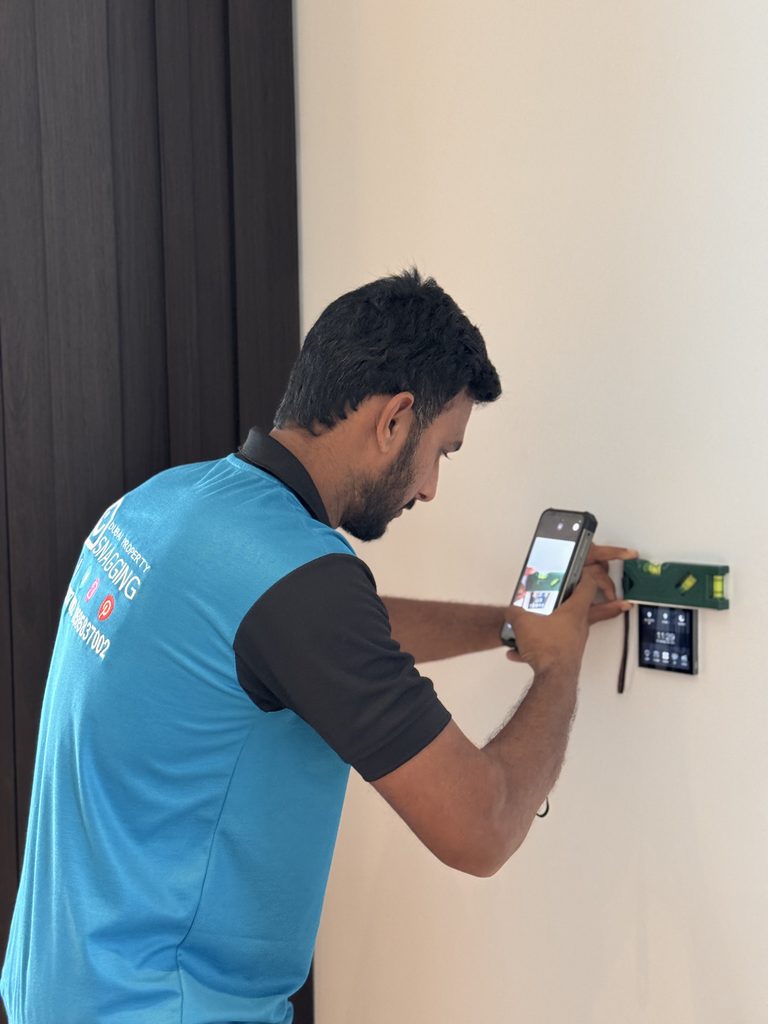
We will check for cracks in walls/flooring, hollow tiles, uneven surfaces and patchy paint. During the check, the team will open and close all doors and windows. We will check the locks and the seals, since dust from Dubai and winter rains can enter here. Testing all sockets and switches, we will check the earthing and inspect the DB board.
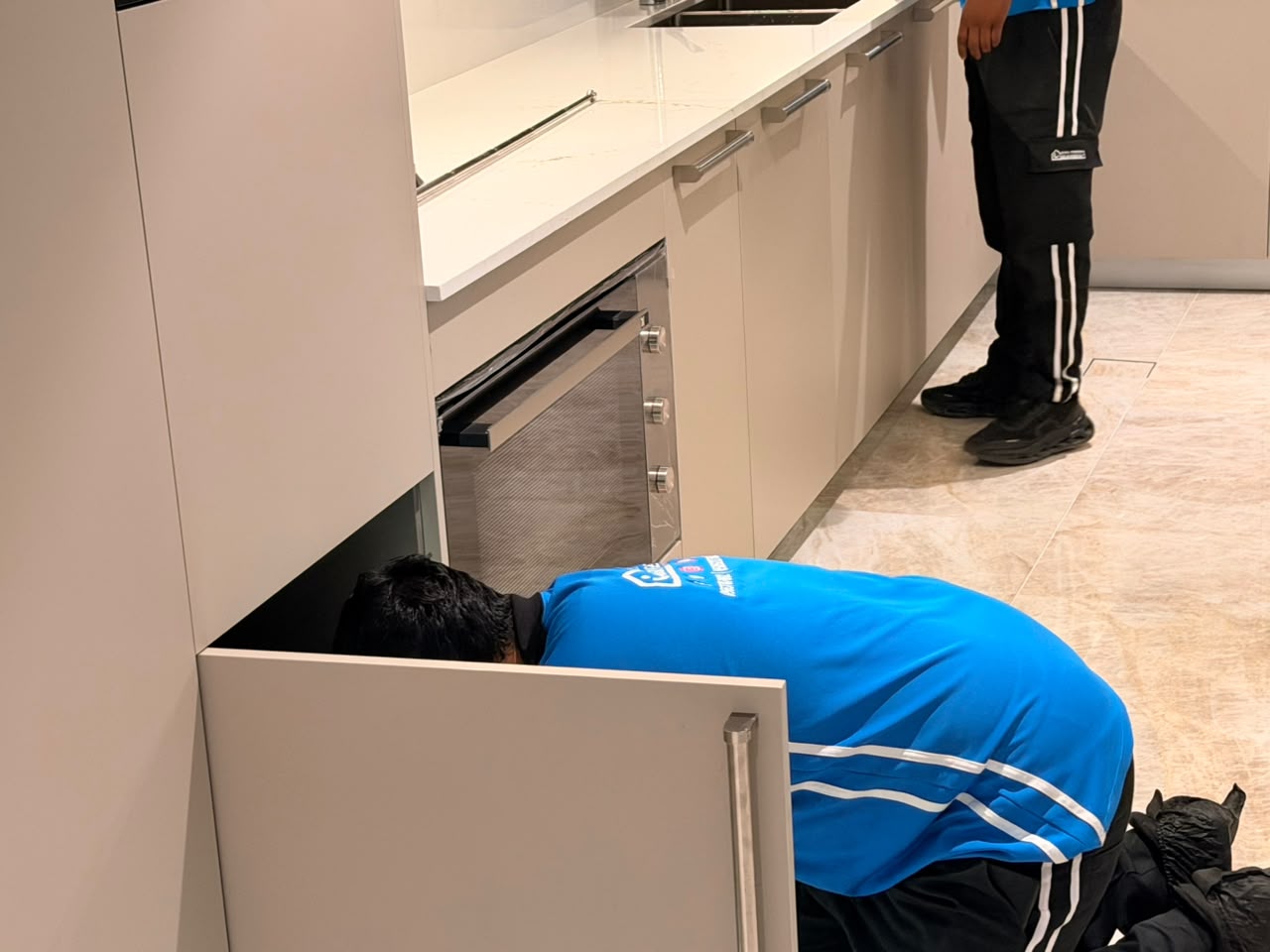
We fill bathrooms and balconies with water to check the flow. You will be surprised at how many slopes we have built incorrectly. Turning on the taps verifies pressure and hot water. We will inspect under all sinks. We will time the drains to measure how quickly they empty. All AC outlets will have temperatures taken. We will test kitchen cabinets, hinges, and built-in appliances. We will check safety features (smoke alarms, balcony railings, glass panels).
Hidden Issues
We use a thermal imaging camera to see any temperature changes in the wall. This helps us identify any damp, lack of insulation or cables running too hot. If something looks damp we will use a moisture meter to confirm. We can also carry out a proper water leak detection to pinpoint where the leak is without anybody breaking any tiles.
If you like lists we have an apartment snagging checklist.
When to Book
As soon as you receive an email from the developer with a handover/inspection date. During busy periods the good times can fill up very quickly. Complete the inspection before you sign anything.
There are a few terms you may hear. Pre-handover snagging is when the developer allows you to view the unit. Handover snagging is when we come to the property to check on handover day. We return to verify that everything is fixed. (We have a whole article about snagging vs de-snagging). Some owners will also book a final check a few weeks before their warranty ends.
If you are purchasing a resale property the process is the same however it is usually referred to as a resale property inspection.
What happens on the day?
We will ensure DEWA is connected and we switch on the AC. Without water and electricity we won’t be able to test everything. An apartment will take us 2-3 hours. A villa can take most of the day. We would encourage you to come along as most people learn more about their property in one visit than throughout the whole purchase.
You will usually receive your report the same day. You will forward this to the developer and they will send their team in. We will come back to confirm we have carried out the repairs. This is an important step. We have seen cracks filled and painted over.
Common Mistakes Made by First Time Buyers
Signing the handover documents first. It will be harder for the developer to priorities your repairs. Always inspect first and then sign.
Doing it yourself with a torch on your phone. You may spot scratches and dripping paint, yet you will miss real issues hidden behind walls and inside the AC.
Booking without utilities connected. We have had to visit properties without water and electricity more times than we would like. This causes us to have to visit again and the report will be incomplete.
Many buyers opt out of the de-snagging to save a little money. We understand however this is often where you can save money. Developers are busy, so they may rush repairs.
Forgetting about the warranty. If something starts going wrong 6 months after you move in report it. As long as you are still within the defects liability period it is still the developers job.
About Us
We are Dubai Property Snagging. Our team of 15+ InterNACHI certified inspectors work with a DED licensed and RERA approved company. We will always bring our FLIR thermal cameras, moisture meters and electrical testers to most jobs.
We love explaining things to first time buyers. If we find a hollow tile we will tap it so you can hear the difference. Your report will usually be sent to you within 6 hours. It will be presented clearly so the developers team can easily work from. Curious to see what it looks like? Here is an example. We work across all 7 emirates.
Cost
From AED 500 + VAT for a studio/1 bedroom property. If you require a de-snagging visit it will start from AED 700 + VAT. Larger properties will cost more as there is more to test. You can view our full snagging prices here. One hidden leak in your bathroom after your warranty ends can easily cost more than our service.
FAQ
What is property snagging?
A professional inspection of your new home. Anything that is broken, incomplete or poor quality will be noted. The developer will then fix it free of charge.
Do I need to snag my new property?
Yes! New properties are When It pays off the most. We rarely visit a new unit without finding any issues. The developer are still responsible for fixing them.
What is a snag list?
The report. All issues found, in what room, with a picture and short description.
Can I do my own property snagging?
Yes, you will find the obvious issues. However leaks, electrical issues and poor AC will not be found without the correct tools.
How long does it take?
Most apartments will take 2-3 hours. Large villas can take most of the day.
What is the difference between snagging and de-snagging?
Snagging identifies issues. De-snagging is when we return to check the developer have fixed them.
Who pays for the snags?
The developer. As long as you report the issues before handover or whilst still within your defects liability period.
Conclusion
Whilst property snagging sounds technical, it is simply ensuring you get the property you paid for. It is one of the cheapest parts of purchasing Your First Home and possibly one of the most useful. Issues will be picked up early, you have evidence and the cost of repairs will be on the developers.
If you have a handover date book an inspection with us or give us a call/WhatsApp on +971 56 378 7002. We are happy to answer any questions you may have.