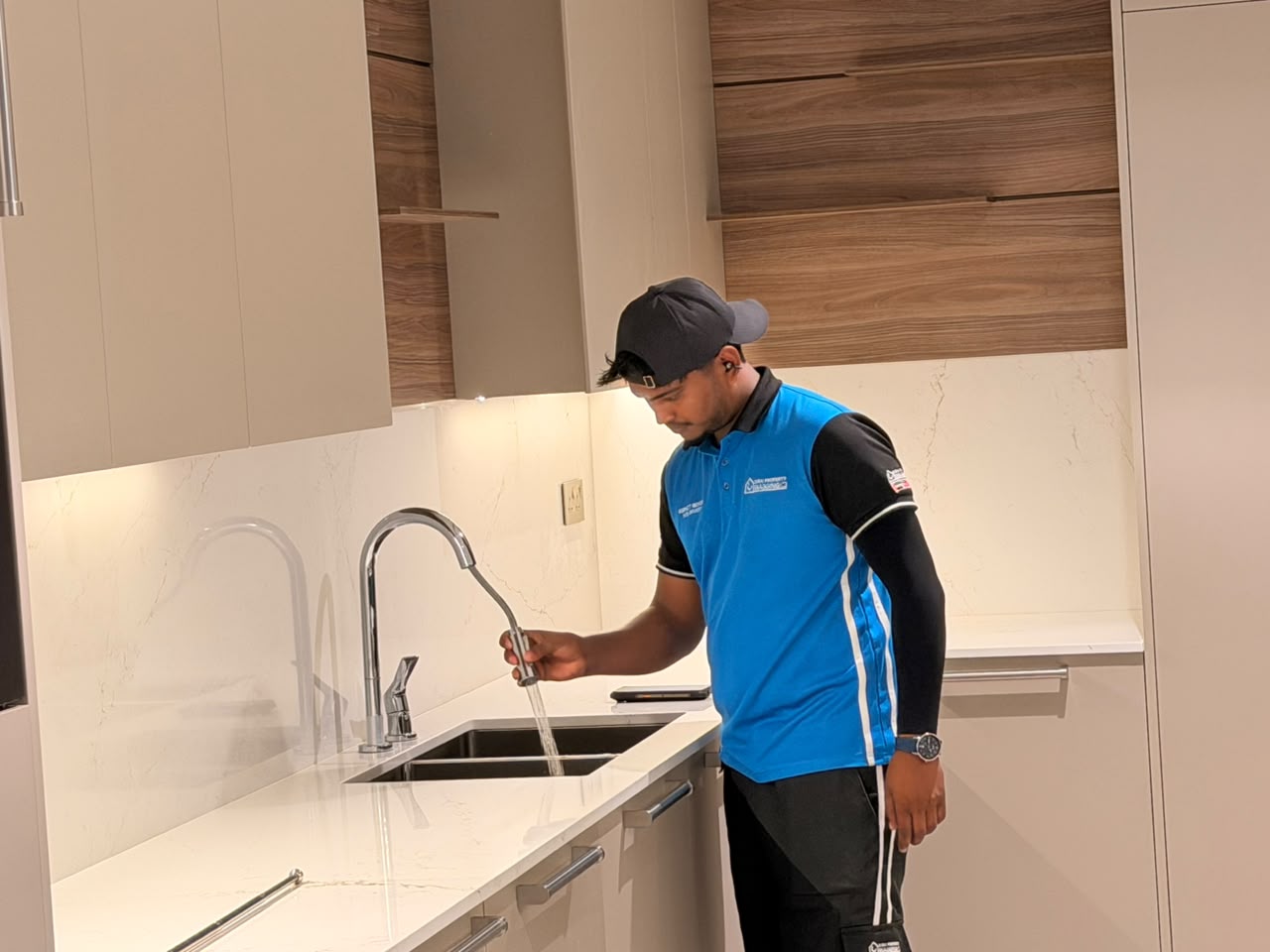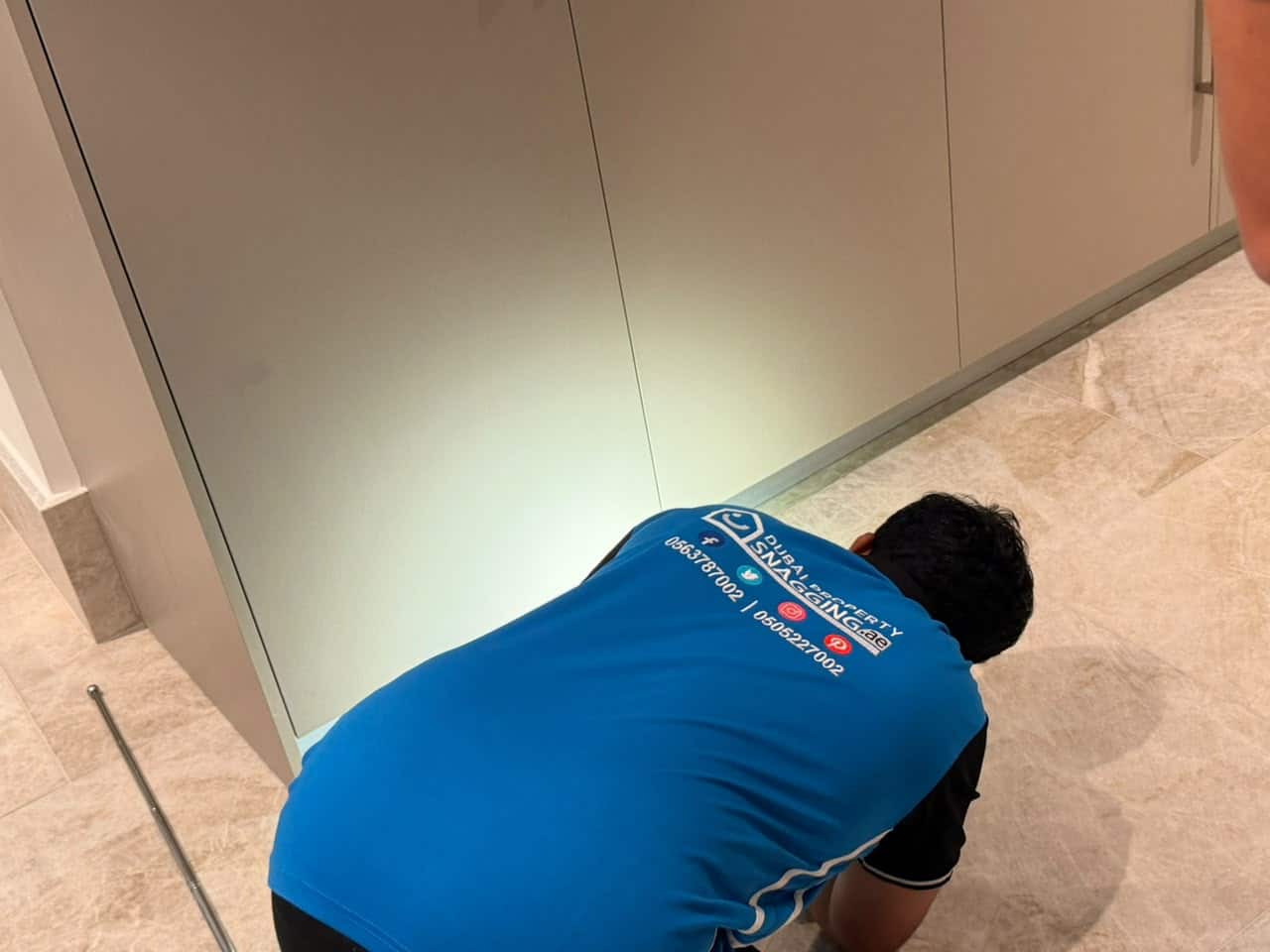
Post-handover issues often arise in Dubai, making Property Snagging an important step in identifying defects and protecting homeowners during the Defects Liability Period (DLP). Common issues include air conditioning problems, inefficient cooling, hidden bathroom water leaks, cracks in walls or ceilings, sagging or hollow tiles, and problems with external balcony drains. These defects often become noticeable within the first 3–9 months after handover. If you are within your developer’s Defects Liability Period (usually 12 months from handover), the developer is generally responsible for rectifying covered defects at no additional cost. Report issues in writing with a professional property snagging report and photos; the developer can then document and address defects.
You have your keys, and may have even installed your furniture and thrown your first dinner party. Then the minor issues begin. A fine crack above your bedroom door. An odor from your bathroom’s waste pipe. And condensation pooling on the floor beneath your air con outlet on a damp day.
You may well recognize these points. Our surveyors complete over 98,000 surveys each year and many of our inquiries are from existing property owners. Sometimes purchasers overlook the snagging process. Other times, even when surveyors have surveyed a property, people can identify issues only after occupation.
This article looks at reasons for post-handover issues and outlines the most frequently encountered ones. It will also explain how developers can take responsibility for rectifying these issues. This guidance is relevant for both new owners and landlords (who own more than one property), together with agents completing handovers for their clients.
Why Defects Show Up After Handover, Even in a “Perfect” Home
Properties are in their prime on handover. They have recently undergone redecoration and remain unused. As a result, defects can therefore be difficult to identify. On occupation:
- People then use the property regularly. Showers, air-con and drainage are all used frequently. People only identify poorly constructed and water tight areas when they regularly use a property.
- Structural movement occurs. In the first year new concrete and blocks will both contract and shift. Again this is natural and is often why fine cracks develop around door and window frames, and where ceiling sections meet.
- Seasons come and go. Winter transfers avoid the Dubai summer. Therefore, winter transfers keep seals, window frames, and air-con away from hot, humid conditions and occasional heavy rain. No one can easily recreate this on a cold January day.
- New paint can also obscure defects. New paint can initially make discoloration, repaired cracks and replaced tiling look good, but these issues will eventually show.
This is why we always say pre-handover snagging is the first line of defense, not the only one. A good survey will identify many issues before signing. However, a first-year re-survey can identify issues that emerge only after occupation.
The Most Common Defects We Find After Handover
These are the issues that come up again and again on post-handover inspections across Dubai apartments, townhouses and villas.
1. AC problems
Common problems associated with air conditioning in the UAE. Often people experience issues such as; moist air con grilles, poor temperature control, musty smells and/or noisy air con. Poor gradients and/or obstructions within the drainpipe, along with inadequate insulation of air con pipework and an air con system which is too small can all contribute to these issues.
2. Hidden water leaks
Bathrooms, kitchens and balconies are the usual suspects. Signs include bubbling paint, a damp skirting board, swollen cabinet bases or a stain on the ceiling of the unit below. We use thermal moisture detection to trace most leaks inside walls or under tiles before we open anything. For active leaks, our water leak detection service pinpoints the source.
3. Cracks in walls and ceilings
Cracks can also develop around corners again usually due to settlement. Investigate slanting cracks larger than a couple of mm that radiate from door and window corners, as well as cracks that keep expanding.
4. Hollow, cracked or lifting tiles
Incomplete adhesive bedding was present in tiles that commonly made a hollow sound when tapped. In the heat, they can completely lift or fracture under furniture.
5. Drainage and slope problems
The floor slopes improperly when water accumulates on terraces, balconies, or shower areas. It is easy to ignore because nobody splashes water on the floor on handover day.
6. Doors, windows and sealants
Sliding doors that refuse to lock, stuck doors, and window seals that allow rainfall or dust to enter. If installers apply silicone improperly, it can also tend to break within months around showers and basins.
7. Electrical faults
Sockets that stop working, breakers that trip, or lights that flicker. These need fixing quickly for safety reasons.
You can see examples of each of these, with photos, in our real defect reports.
When Each Defect Tends to Appear in Your First Year
From what our inspectors see on the ground, post-handover defects follow a fairly predictable pattern. Knowing it helps you check the right things at the right time.
| Time after handover | What usually shows up | What to check |
| First 2 weeks | Electrical faults, dead sockets, doors that don’t latch, missing fittings | Test every socket, switch and lock as you move in |
| 1 to 3 months | Slow drains, small bathroom leaks, cracked silicone, tiles lifting under heavy furniture | Look under sinks, around showers and at the skirting near wet areas |
| 3 to 6 months (first summer) | AC drips and poor cooling, window seal failures, condensation stains on ceilings | Check ceilings around AC grilles and the inside walls beside windows |
| 6 to 9 months | Settlement cracks, damp patches coming through paint, balcony drainage after rain | Walk the whole home and photograph any new cracks with a date |
| 9 to 12 months | Anything missed so far, plus repeat problems from earlier “fixes” | Book a professional end-of-DLP inspection before the period expires |
The real risk is the last row. Many owners notice small defects through the year, keep meaning to report them, then realize the defects liability period has run out. Our defect data page shows which issues come up most often by property type.
Your Rights: The Defects Liability Period and Beyond
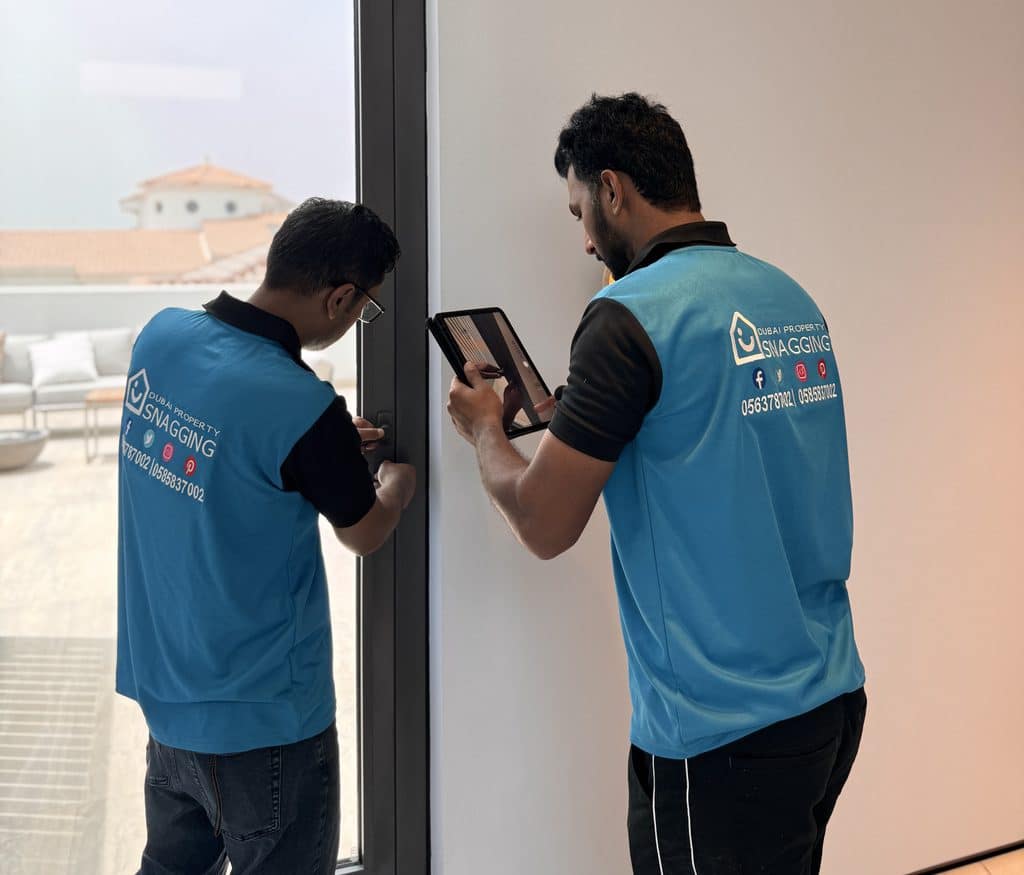
Post-handover there is in fact more protection available than many people realize. Generally in the UAE;
- Defects Liability Period. Most SPAs allocate a period of approximately 12 months post-handover during which the developer must self fund and rectify any construction and decoration related issues. This is detailed within your SPA;
- Structural issues. More serious structural faults remain the responsibility of both the contractor and architect for a period of 10 years according to the UAE Civil Code. This includes for example large scale structural cracks but does not include issues such as loose tiling or leaking taps;
- Common parts. Issues relating to lobbies, hallways, roofs and common equipment rooms are generally dealt with by the building’s owners association or property management company, rather than directly by owners.
One practical point matters more than the law itself: you have to report the defect, in writing, within the period. A WhatsApp message to a site engineer isn’t enough. You need a clear written record, ideally with photos and a professional report. Our DLP inspection is designed for exactly this, and our guide to RERA handover requirements explains the handover side in more detail.
This is general guidance, not legal advice. For a dispute, speak to a property lawyer or contact the Dubai Land Department.
Found a Defect After Handover? Here’s What to Do, Step by Step
- Stop the damage first. If water is involved, turn off the isolation valve or the main water supply. Turn off the AC unit that’s dripping. Move furniture and valuables away.
- Photograph everything with dates. Take wide shots showing where in the home it is, plus close-ups. Record a short video if something is leaking or making a noise.
- Check your SPA and handover date. Confirm you’re still within the DLP, and see how the developer wants defects reported, whether by email, customer portal or a form.
- Get a professional assessment. A developer is far more likely to act quickly on a clear technical report than on a vague complaint. A property defect assessment identifies the cause, not just the symptom, so the fix actually works. You can see what our reports look like in this sample snag report.
- Report it in writing. Send the report and photos through the developer’s official channel. Keep the reference number and every reply.
- Follow up on a timeline. If you haven’t heard back within a couple of weeks, follow up in writing. Polite but persistent works best.
- Check the repair before you sign it off. This is where de-snagging comes in. An inspector confirms each repair was done properly, not just covered up. Our guide on snagging vs de-snagging explains the difference.
Commonly, people allow a developers team in to then patch a leaking property. Covering then follows and it is labeled as ‘complete’. However 3 months later, the issue recurs and so too does the DLP. Always ascertain that the underlying problem has been resolved.
Beyond Dubai: Post-Handover Defects Across the UAE
Property snagging works the same way in every emirate, but local conditions change what we see most often.
- Abu Dhabi: Island and waterfront homes see more window seal and balcony waterproofing failures because of humidity and sea air. See our Abu Dhabi snagging page.
- Sharjah and Ajman: In fast-growing communities and affordable towers, drainage, plumbing joints and AC performance come up most. More on Sharjah and Ajman.
- Ras Al Khaimah, Fujairah and Umm Al Quwain: Coastal and beachfront homes suffer from salt corrosion on metal fittings, and roof drainage gets tested hard during heavy winter rain. See Ras Al Khaimah, Fujairah and Umm Al Quwain.
A note for agents and investors
Following sale there are often issues which can cause tenants to complain and/or stop re-commuting. Many of our investors arrange for a survey to be undertaken at six months into a tenancy and also during the time period before a DLP comes to an end. Issues are then documented on a ‘move out’ form.
Supplying information on DLPs and suggesting that clients get a 6 month survey done are simple methods of continuing to add value for clients after sale. Most importantly, your brand should be linked to a good experience – and not one where there is a wet ceiling!
Frequently Asked Questions
Is snagging common in Dubai?
Generally yes. Newly built properties will often have problems relating to air conditioning, pipework and structural movement. It is essential to highlight these during the defects liability period.
For how long is the defects liability period?
Usually 12 months from the date of handover. However the exact period is defined within the sale and purchase agreement. Under UAE Legislation major structural issues are also covered for up to 10 years.
Can I snag my property even after I’ve moved in?
Yes. People often schedule a snagging inspection a few months after moving in, and another closer to the end of the DLP.
Who is responsible for repairing post-handover issues?
Generally the developer is liable for rectifying issues relating to workmanship and/or presentation within the DLP. Poor maintenance or self made changes are typically not covered.
What happens if the developer’s repair does not resolve the issue?
Re-submit a snagging report including photographs which illustrate that the issue has reoccurred. An external de-snagging survey can then provide objective proof that the developers repair was unsuccessful.
How much does a post-handover inspection cost?
It totally depends on the property type and size. You can see our pricing page for current packages.
Don’t Let the Clock Run Out
Post-handover issues are not an indication that you have moved into an unsuitable house. Rather they are often associated with new properties becoming established. The key is not to delay too long. Maintain a basic log with old photographs. Then note any issues and enlist a professional surveyor to undertake a snagging survey prior to the expiry of your defects liability period.
If you’re checking problems in your new home, or your DLP is coming to an end, our DED-licensed, RERA-approved team can inspect it and give you a clear report the developer can act on. Book an inspection or WhatsApp us on +971 56 378 7002.