Thermal imaging, damp surveys, water surveys, Property Snagging Dubai, villa snagging, pre- and post-handover snagging, snagging and de-snagging, DLP surveys, sample snag reports, case studies, our Intelligence Hub (snags database), services across Dubai, Abu Dhabi, Sharjah and Ras Al Khaimah, off-plan buying advice, our survey tools, surveyors, costs and booking your survey. Clicking on each of these categories will take you to the relevant live page on dubaipropertysnagging.ae.
Yes, you can survey your own property. Using a suitable survey list and after a free afternoon, you will identify numerous surface level issues such as scuffed doors, cracked tiles and poor tiling. An awful lot of people do this and it is much better than ignoring issues.
Unlike visual inspection, a self survey cannot determine what is behind walls, under tiles or on the ceiling. In fact, it is often in exactly these 3 places that the most expensive problems arise within the UAE. Problems can include slow running leaks from a shower head, moisture build-up from an air conditioning discharge pipe leaking onto the bedroom’s gypsum ceiling together with a live electric wire in a wall. Once again, you cannot see any of these with the naked eye at hand-back. Typically, they do not come to light until many months later, often well beyond the developers’ defect period.
That’s the real difference between DIY and professional property snagging in Dubai. It isn’t about who’s more careful. It’s about what each person can actually see.
Our engineers complete more than 98,000 inspections across just the UAE! In today’s blog I will show you how to inspect an apartment – first as a self inspection and then as a professional engineer. I will then enable you to assess which approach works best for your property.
One Apartment, Two Walk through
Consider a typical handover of a two-bedroom apartment in a newly built tower. The unit and afternoon lighting are identical. Here is how the two inspections compare as you proceed from room to room.
The entrance and living room
DIY inspection
I observe a mark on the front door and a space at the end of the skirting board. Opening and closing the balcony door works well. I record these observations.
Expert inspection
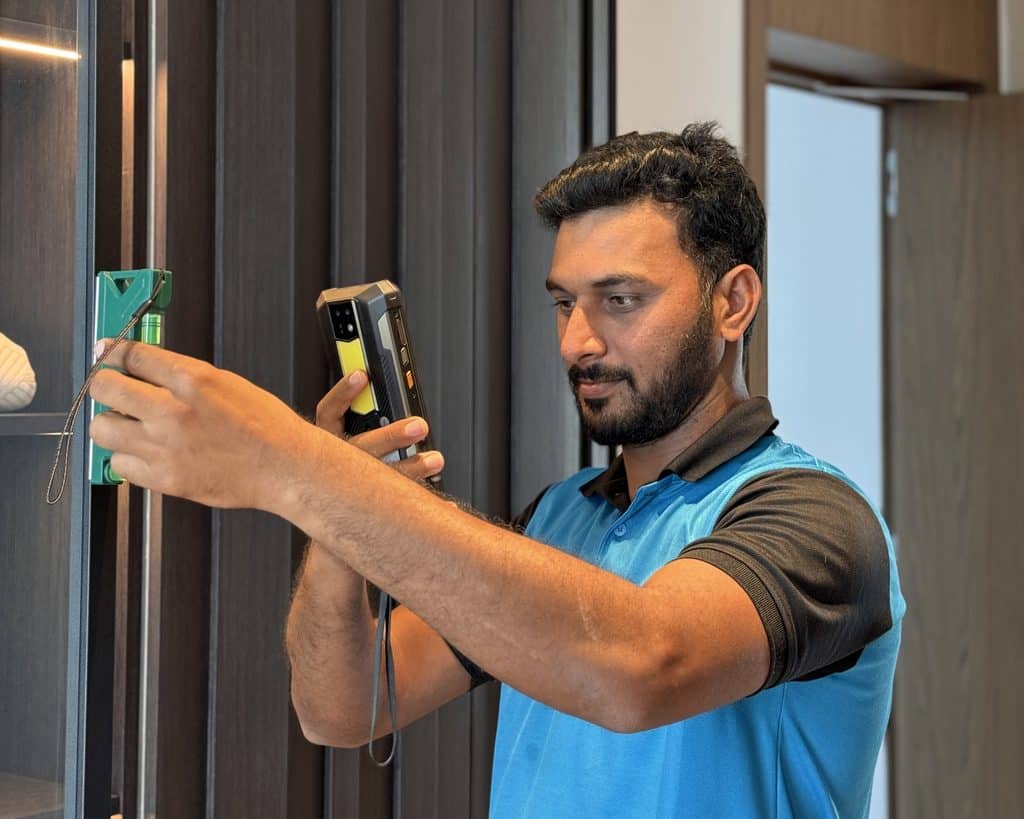
As above, the expert also identifies the mark and space. They then knock on each floor tile using a small instrument. The expert finds four loose tiles, showing that someone applied too little adhesive and that the tiles may crack. Furthermore, a spirit level demonstrates that the balcony is actually sloping towards the living room rather than away from it. A thermal image of the balcony doorway reveals a cold area. This shows that water is currently penetrating beneath the door. 11 points.
The kitchen
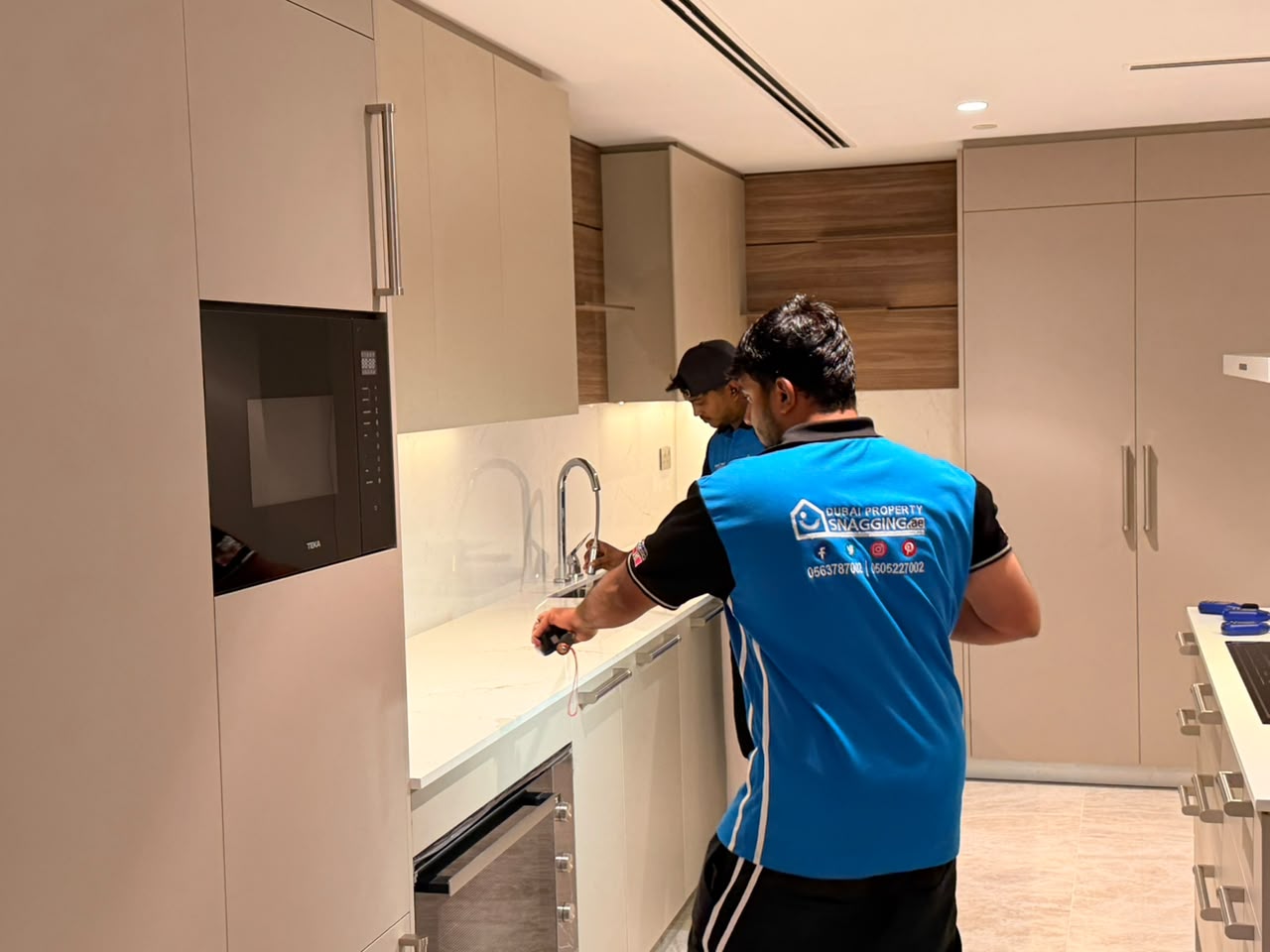
The DIY walk: You run the tap, open every cabinet, and spot a misaligned drawer. Two items.
During the professional walk, the professional tests every socket, including hidden ones behind appliance spaces. One has no earth connection. The thermal camera picks up a cool patch on the wall behind the sink cabinet, and a moisture meter confirms it’s damp. A slow leak at a concealed joint, invisible from inside the cabinet. Seven items, one of them serious.
The bathrooms
The DIY walk: You fill the basin, flush the toilets, run the shower. The water drains. A chipped tile and missing silicone in one corner. Two items.
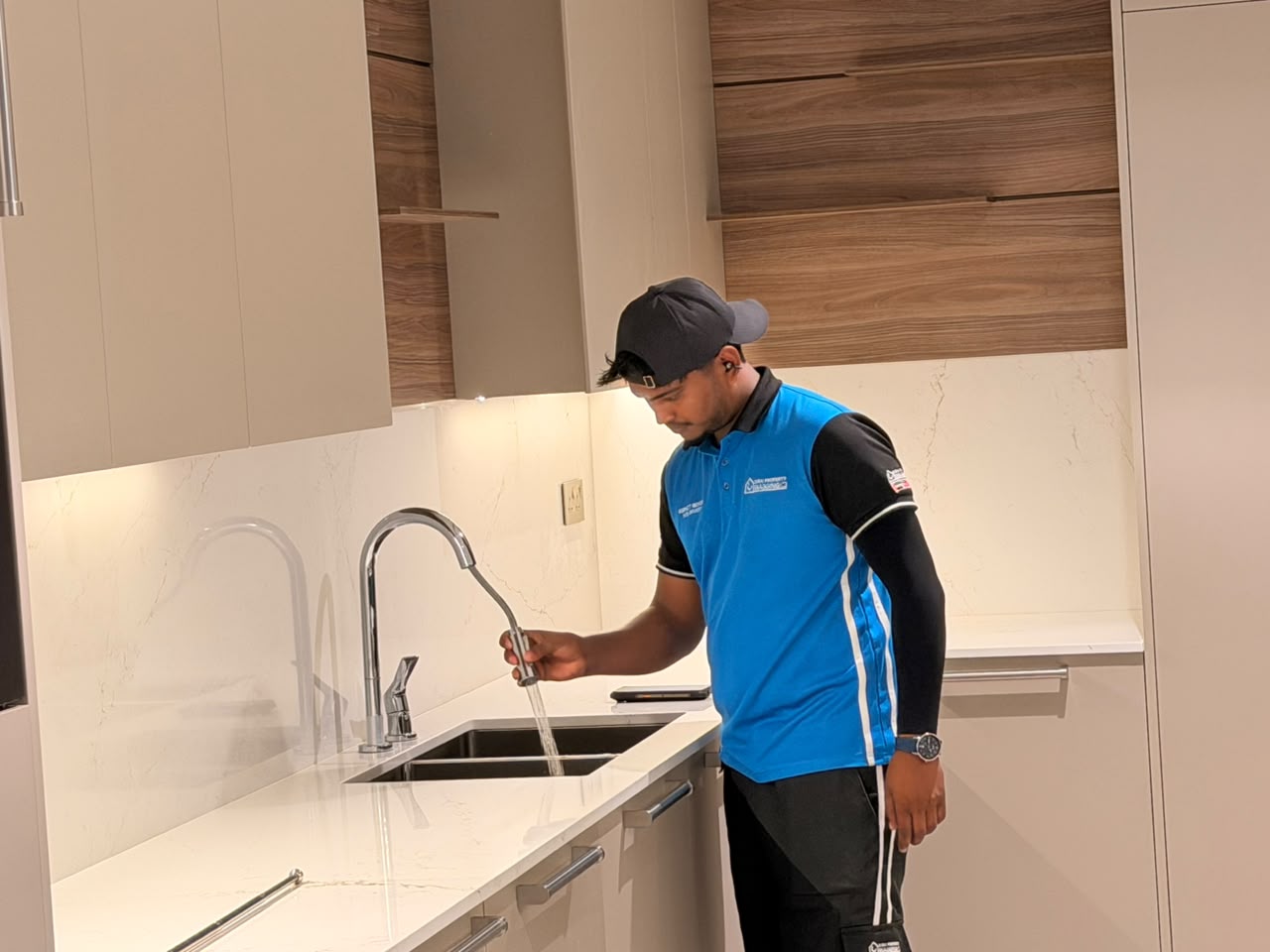
The professional runs the shower for several minutes while the thermal camera watches the wall on the other side. A cool spread appears at skirting level. The waterproofing behind the tiles has a weak point. The drain fall is measured and the shower tray holds a small pool. Nine items.
The bedrooms and AC
The DIY walk: You switch on each AC unit, feel cold air and move on. Nothing to note.
The professional walk: Temperature data is recorded for each room. There is a number of degrees difference between one room and the other. Heat is visible escaping from the air vent which is located under the ceiling. Also, there is poor gradient on the condensate pipe. Poor air flow is one of the most common issues experienced within UAE flats. Typically, it results in a mark on the ceiling during the initial summer months. Six items.
The result
The DIY list has around a dozen items, all cosmetic. The professional report usually runs to forty or more once every room is done. They are listed with photos, exact locations and thermal images the developer can’t easily argue with. More importantly, it includes the four or five items that would have cost real money to fix later. You can see what a full report looks like in our sample snag report and in our case studies.
What Thermal Imaging Sees That Your Eyes Can’t
Contrary to popular belief, a thermal imaging camera is not able to ‘see through’ walls. The camera identifies the temperature of a particular area and then translates minuscule temperature variances into colors. Within a house in the UAE, these minute variances can be very significant.
Hidden moisture. When water evaporates from a wet wall, it cools that patch slightly. On a thermal image, damp areas show up as cooler shapes, often long before any stain or smell appears. This is the main reason thermal moisture detection is part of every serious inspection. Once a damp area is spotted, a moisture meter confirms it, and if needed our water leak detection team traces the exact source.
Failed waterproofing. Waterproofing membranes protect moisture-prone areas, including balconies and rooftop terraces. If installed incorrectly, however, the membrane may fail and allow moisture to seep through. After completing a property, running a tap and inspecting the nearby walls can often help identify any problems on site.
Air con and drainage. Air-conditioning leaks, inadequate insulation, and blocked condensate pipes can all show up on thermal images. Detecting these problems before summer helps prevent plaster discoloration and mold growth.
Poor insulation and droughts. Poorly insulated window and outer wall areas appear as heat lines in the afternoon. This will cause your air con to work harder and so increase your costs for as long as you reside in the property.
Electrical heating points. A faulty spur or socket may become excessively hot. Thermal imaging of the distribution board while it is operating can reveal potential fire hazards that basic socket testing may not detect.
The quality of the camera matters too. A phone add-on camera can show a rough picture, but professional FLIR cameras have the resolution and sensitivity to pick up a temperature difference of a fraction of a degree. You can read more about how we use them on our FLIR thermal imaging inspection page, and see the full kit on our equipment page.
One more honest point: a thermal image needs a trained eye. Cool patches can also come from AC airflow, shadows or reflective surfaces. Knowing the difference is what separates a real finding from a false alarm.
When DIY Snagging Works, and How to Do It Properly
We’re not going to pretend DIY has no place. It does. Here’s where it makes sense.
It works well for a quick pre-check before the professional inspection, so you know what to look out for. It also helps with small rental refreshes where nothing structural has changed, and with keeping an eye on your home during the year between professional checks.
If you’re doing it yourself, do it properly.
- Go in daylight and bring a strong torch. Hold it flat against walls to show uneven plaster and paint.
- Take a phone charger, a small socket tester and masking tape. Plug something into every socket, and mark every snag with tape so the developer can find it.
- Run every tap, shower and toilet for at least two minutes. Watch the drains and look underneath for drips.
- Pour a bucket of water on the balcony and watch where it goes. It should run to the drain, not toward the door.
- Open and close every door, window and drawer twice. Check the locks and seals.
- Switch on every AC unit for 15 minutes and compare how cold each room feels.
- Photograph each snag with something in the frame that shows the room, then write a short, clear description.
It also helps to know the order of things. Our guide to snagging vs de-snagging explains what happens after you submit your list, and our off-plan buyers guide covers the timing around handover.
Just remember the limit. A careful DIY check will catch most of what you can see. It won’t tell you whether a wall is wet inside, whether a tile is hollow, or whether the AC duct is leaking above the ceiling.
Property Snagging 2027: Why the Gap Is Getting Wider
If you’re preparing for a handover next year, property snagging in 2027 will matter even more than it does today.
There has recently been a large growth in off plan development. Developers can face issues in managing the potentially large volume of move-ins that may take place in a relatively short period of time. Problems that are easily definable and supported by visual, location and/or evident data are typically addressed ahead of other issues. Disorganized, non-official documentation is frequently not given the same importance as professionally prepared information which may also contain infra-red data.
Buyers are also getting smarter. Thermal imaging used to be a premium extra. More and more buyers now see it as a basic part of a proper inspection, and agents who recommend it are seen as more trustworthy. Our Intelligence Hub tracks the defects we find most often, and hidden moisture and AC issues come up again and again.
It’s not just Dubai
Property snagging has spread well beyond Dubai. Each emirate has its own patterns.
In Abu Dhabi, island communities face humid sea air that’s tough on balcony waterproofing and window seals. See our Abu Dhabi snagging page.
In Sharjah and Ajman, many buyers are first-timers in large master communities and affordable towers, where plumbing and AC faults are common. Our Sharjah snagging page covers the area in more detail.
In Ras Al Khaimah, Fujairah and Umm Al Quwain, beachfront and coastal projects make roof waterproofing, storm drainage and corrosion-resistant fittings especially important. See our Ras Al Khaimah snagging page.
Wherever you’re buying, the logic is the same. The defects that cost the most are the ones you can’t see.
A Word for Agents and Experienced Investors
If you’ve bought or sold a few properties, you already know the snag list is where handovers get stuck. A few things we’ve learned from working with agents and portfolio investors:
Recommending professional snagging helps agents safeguard their reputation once the purchase closes. A customer often remembers who sold them the unit when they discover a ceiling leak during their first summer. At handover, a thermal-backed report is inexpensive reputation insurance.
For investors, a hidden defect is not just a repair bill. It can mean a frustrated tenant, maintenance call-outs and empty weeks between leases. Investors with several units often book apartment snagging or villa snagging for every unit at handover. They come back with a DLP inspection shortly before the defects period ends, to catch anything that appeared after a full summer of use.
For both, timing matters. Book pre-handover snagging as soon as the developer’s notice arrives, and keep the handover snagging report on file. If a dispute comes up later, that dated report with thermal evidence is what settles it.
Questions People Ask Us
Self-snagging in Dubai
Whilst self-snagging can identify many issues, it cannot pick up electrical faults, damp, hollow tiling or air-con leakage. Specialist tools such as a hygrometer and infra-red camera will be required to investigate these areas.
What can infra-red cameras identify?
Often prior to external signs of a problem, an infra-red camera will highlight areas of concealed damp, poor waterproofing, air-con leakage, obstructed condensation pipes, absent insulation and overheating electrical components.
Can my smartphone act as an infra-red camera?
Although not as clear and sensitive as a dedicated infra-red camera, a smart phone can still be used. Again it will require knowledge to differentiate between true damp and reflections, as well as the effect of an air-con unit.
Should I employ a professional snagged for my small apartment?
Yes. Small apartments continue to include bathrooms, kitchens, air-con and balconies and so can also still suffer from out-of-sight water related issues. Compare our rates to view how our service compares with average remedial work charges.
How long does a professional snagging appointment last?
Typically between 2-4 hours for an apartment and more hours are needed for a villa. Generally reports are returned within 6 hours.
Do you work throughout all 7 emirates?
Yes. Dubai, Abu Dhabi, Sharjah, Ajman, Ras Al Khaimah, Fujairah and Umm Al Quwain.
So, DIY or Professional?
Self investigation can highlight simple defects. In order to detect more complex problems, specialist equipment is needed. This should also be carried out by someone that has assessed a high number of properties.For the most part our customers carry out an initial self inspection and then arrange a professional inspection to highlight areas that they have missed. This is a logical method for identifying property defects whether in Dubai or indeed any area within the UAE.
If your handover is coming up, or you’re buying a resale home, our DED-licensed, RERA-approved and InterNACHI-certified engineers can help. Book your inspection or WhatsApp us on +971 56 378 7002, and you’ll have a full report with thermal images the same day.