Purchasing property in Dubai off plan is an exciting time. Receiving the handover letter does not guarantee the builder has finished the property or made it fully functional. To help avoid any problems with the property, it is important to know about Property Snagging in Dubai and conduct checks before and after handover.
Despite looking great, problems may occur. Some common issues found in new builds include uneven flooring, poorly fitted windows, leaking pipework, poor sealing around windows and doors, faulty electrics and faulty air conditioning systems. These issues may only be found once the services are on, or when using the property regularly.
If you are purchasing an off-plan property, we recommend including snagging as part of the handover process. Having a professional snagging report means that you have a record of a property’s condition on handover, and a clear list of issues to bring up with the developer. The report shows that once you carry out the necessary works to fix issues, you can confirm they are completed.
This book explains what to do prior to handover, what to look for during handover, and how to safeguard your investment after you receive the keys.
What Does Property Snagging Mean for Off-Plan Buyers?
We perform snagging to identify defects, omissions, poor quality, and functional issues within a property. We typically issue a snagging report listing all issues, with photos and descriptions, so the location and nature of the issue can be identified.
The developer may have completed work that differs from what is shown in show apartments, approved specifications, or your expectations, so snagging remains very important for off-plan buyers.
A snagging inspection can help identify issues such as:
- Cracked, chipped or uneven floor and wall tiles.
- Poor paintwork, damaged plaster and uneven finishes.
- Doors that do not close properly or locks that do not operate smoothly.
- Scratched glass, damaged frames or poorly sealed windows.
- Leaking taps, slow drainage and plumbing defects.
- Electrical sockets, switches or lights that do not work correctly.
- Air-conditioning problems and inconsistent cooling.
- Water stains, damp patches and signs of possible leakage.
- Loose kitchen cabinets, drawers and bathroom fittings.
- Poor balcony drainage and incomplete external finishes.
The purpose is not simply to make the property look attractive. It is to identify concerns that may affect usability, maintenance, comfort and the condition of the home.
If you are new to the process, read our guide to what property snagging means for a straightforward explanation of defects, inspection reports and the purpose of snagging.
Why Off-Plan Buyers Should Not Skip Snagging in Dubai
Once developer completes the construction of off-plan properties, we will focus on payments, paperwork, furnishings, and planning for the move.
At this point, management may press you to complete the handover. However, just doing a quick visual check does not amount to a full inspection.
Include property snagging in Dubai in your handover plan for the following reasons.
1. The show apartment may not reflect the finished unit
The developer designs a show apartment to demonstrate the development’s layout, finishes, and lifestyle. Your actual property is a separate unit, completed by construction teams and subcontractors. Differences in workmanship, installation and finishing can occur.
An independent inspection helps you assess the condition of the property you are actually receiving rather than relying only on the appearance of a demonstration unit.
2. Difficult to spot
Spotting a damaged tile should be easy, but leaks or faulty seals may need careful checks.
Engaging a qualified surveyor to inspect accessible areas and systems using appropriate equipment may reveal problems that a brief inspection could easily overlook.
3. Good record
The snagging report communicates issues clearly to the developer. Photographs, room numbers, and clear descriptions help the developer identify where the issue is and what needs to be fixed.
Having a record of the snagging report, any communication and rectification records will also be useful.
4. Check whether you have completed the repairs.
Although the developer may ask contractors to fix the issues identified in the snagging report, simply informing you that the contractors have repaired the issues does not guarantee that all issues are fixed correctly.
The buyer can carry out a further inspection (often known as de-snagging) to confirm that the issues have been dealt with. This inspection can also identify any remaining issues, or new issues.
What to Do Before Your Off-Plan Property Handover
Preparation should begin as soon as you receive communication from the developer about the property’s expected completion or handover inspection.
The following steps can help you avoid unnecessary delays and make the inspection more useful.
Step 1: Review Your Purchase Documents and Property Specifications
Check all of the documents you received when purchasing the property. This may include your contract of sale, approved plans, specifications, finishes and correspondence.
Review what the specification includes. This will give an indication of the finishes, including floor coverings, kitchen, bathrooms, doors, windows and fitted appliances, within the property.
If any of these are not as you would expect, make a note of this and contact the developer for further information.
Not all differences may be a defect. Our team may have approved amendments during construction. Check the documents and if unsure, obtain clarification in writing.
Step 2: Contact the Developer About Inspection Access
Ask the developer or handover team when they will conduct the inspection and whether independent inspectors may attend.
Confirm the following details:
- The available inspection dates and time slots.
- Can you access the property before signing the handover acceptance documents?
- Whether an independent property inspector can accompany you.
- Whether electricity, water and cooling systems will be operational.
- You must report defects to the developer.
- The process and expected time frame for rectification.
- We can arrange a follow-up inspection.
Developers may have different handover procedures. Read the instructions carefully and keep copies of relevant communication.
Step 3: Arrange an Independent Property Snagging Inspection
A formal inspection can give a more comprehensive analysis of a property.
Qualified inspectors can observe any accessible elements, fittings and services and provide a detailed report. The inspections will vary depending on the property type, access and availability of services.
In an apartment you may want to check that windows and doors of balconies, bathroom fittings, kitchen fittings, power points and air conditioning units are in good condition. In a villa you may also want to check external walls, roof areas, drainage, finishes to boundaries and external service which are accessible.
For first-time inspections, consult the Property Snagging Dubai service to learn the inspection process and which areas are covered.
Step 4: Make Sure Utilities Are Available
A property inspection is more useful when essential services are operational.
Without electricity, an inspector may be unable to test lighting, sockets, appliances or certain installed systems. Without water, it may not be possible to properly check taps, toilets, showers, drainage and visible plumbing connections.
Where applicable, confirm that the following are available:
- Electricity supply.
- Water supply and adequate pressure.
- Air-conditioning or district cooling.
- Access to installed equipment and control panels.
- Permission to operate the relevant fixtures and systems.
If a service is unavailable, ask the inspector to record which checks you could not complete. Arrange further testing once access and utilities are available rather than assuming an untested system is working correctly.
What Should We Check During the Pre-Handover Inspection?
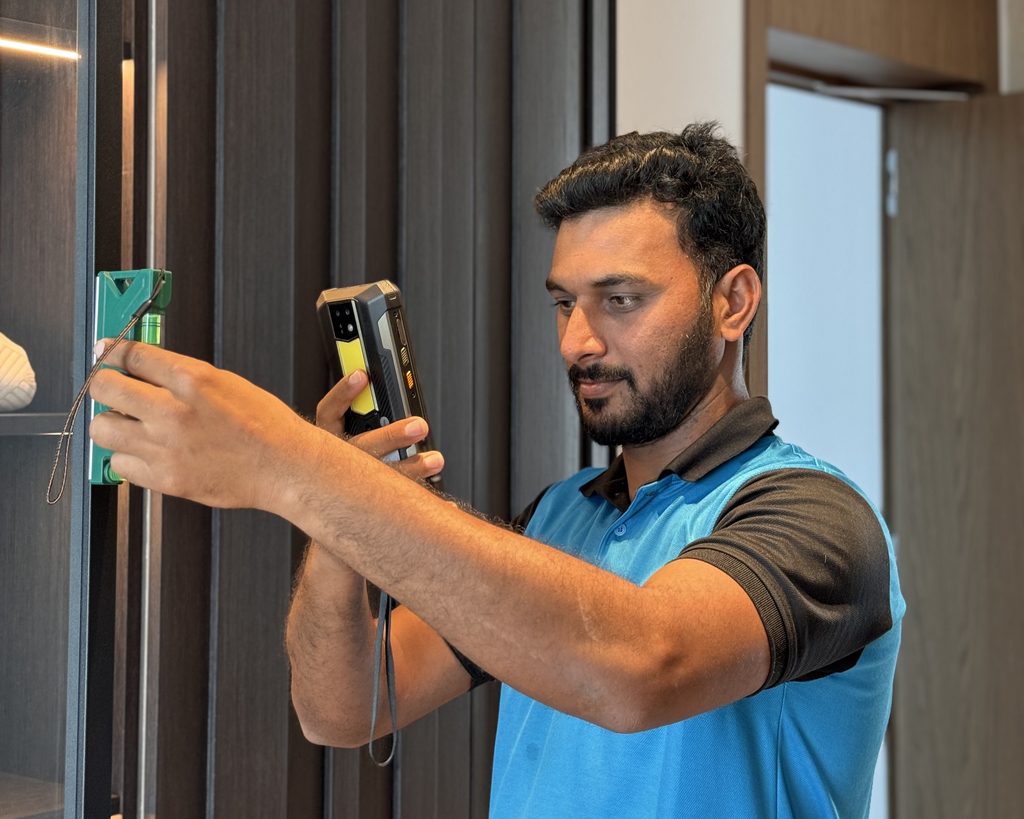
A proper inspection should cover the accessible areas of the property, not just the rooms that look most impressive.
The following checklist gives off-plan buyers a practical idea of what to expect.
Walls, Ceilings and Paintwork
Check for cracks, uneven surfaces, paint marks, damaged corners, stains and signs of moisture. Pay attention to ceiling areas around bathrooms, kitchens, air-conditioning units and other locations where water-related issues may develop.
A fresh coat of paint can make a room look finished, but it does not necessarily resolve the cause of a stain or damp patch.
Flooring and Tiling
Inspect floor finishes for chipped tiles, uneven surfaces, hollow-sounding areas, visible gaps and damaged grout. Check transitions between different flooring materials and look for unfinished edges.
Bathrooms and balconies require special consideration, as effective drainage and properly sloped floors are just as important as their appearance.
Doors, Windows and Glass
Open and close doors and windows several times. Check handles, hinges, locks, sliding mechanisms and visible seals. Look for scratches, damaged frames, gaps and difficulty operating the fittings.
Maintenance staff should ensure that windows close properly and inspect accessible seals for visible gaps or incomplete installation.
Kitchen and Cabinetry
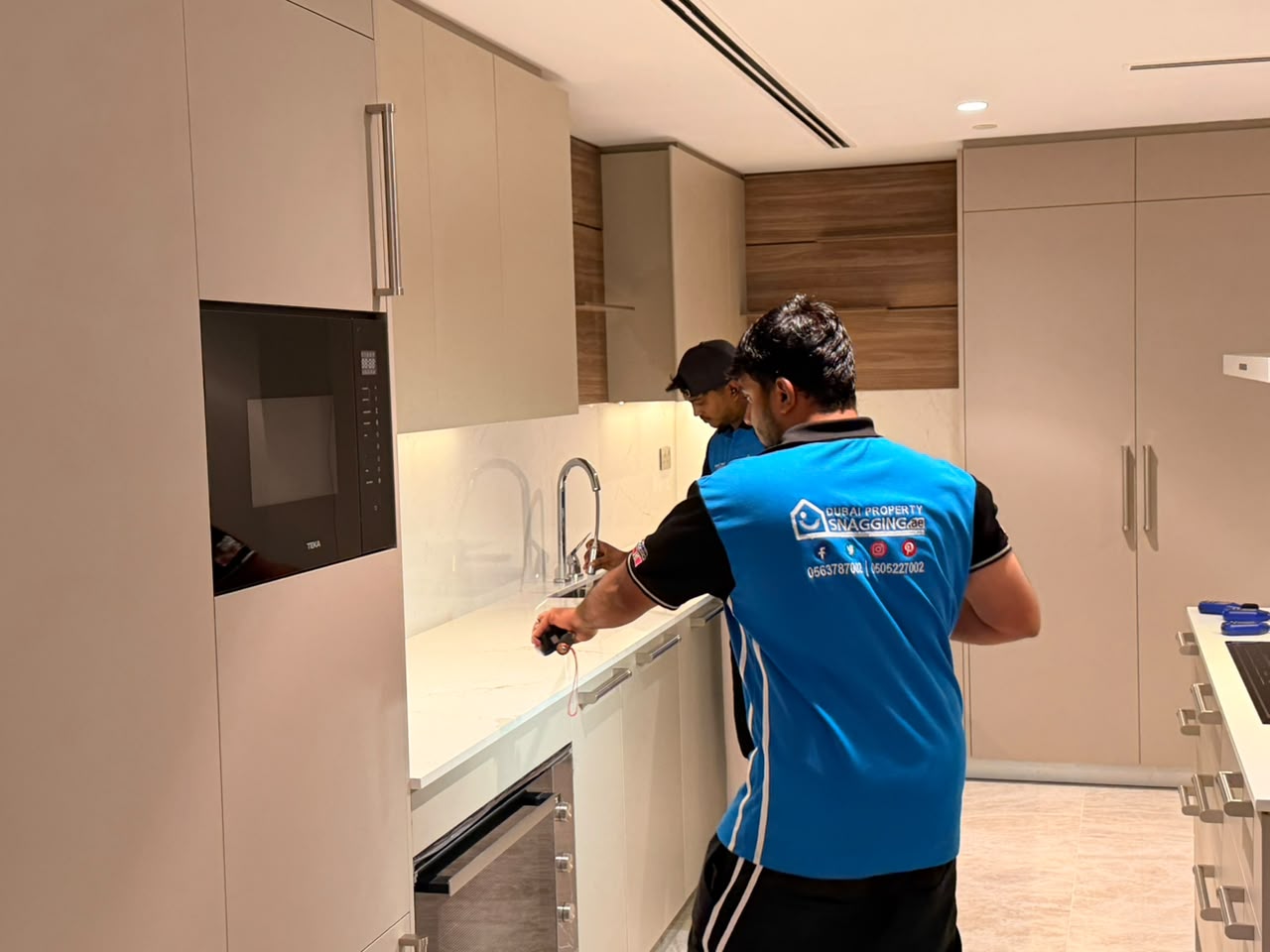
Check cabinet doors, drawers, hinges, handles, worktops and visible sealant. Look for scratches, loose fittings, uneven alignment and unfinished edges.
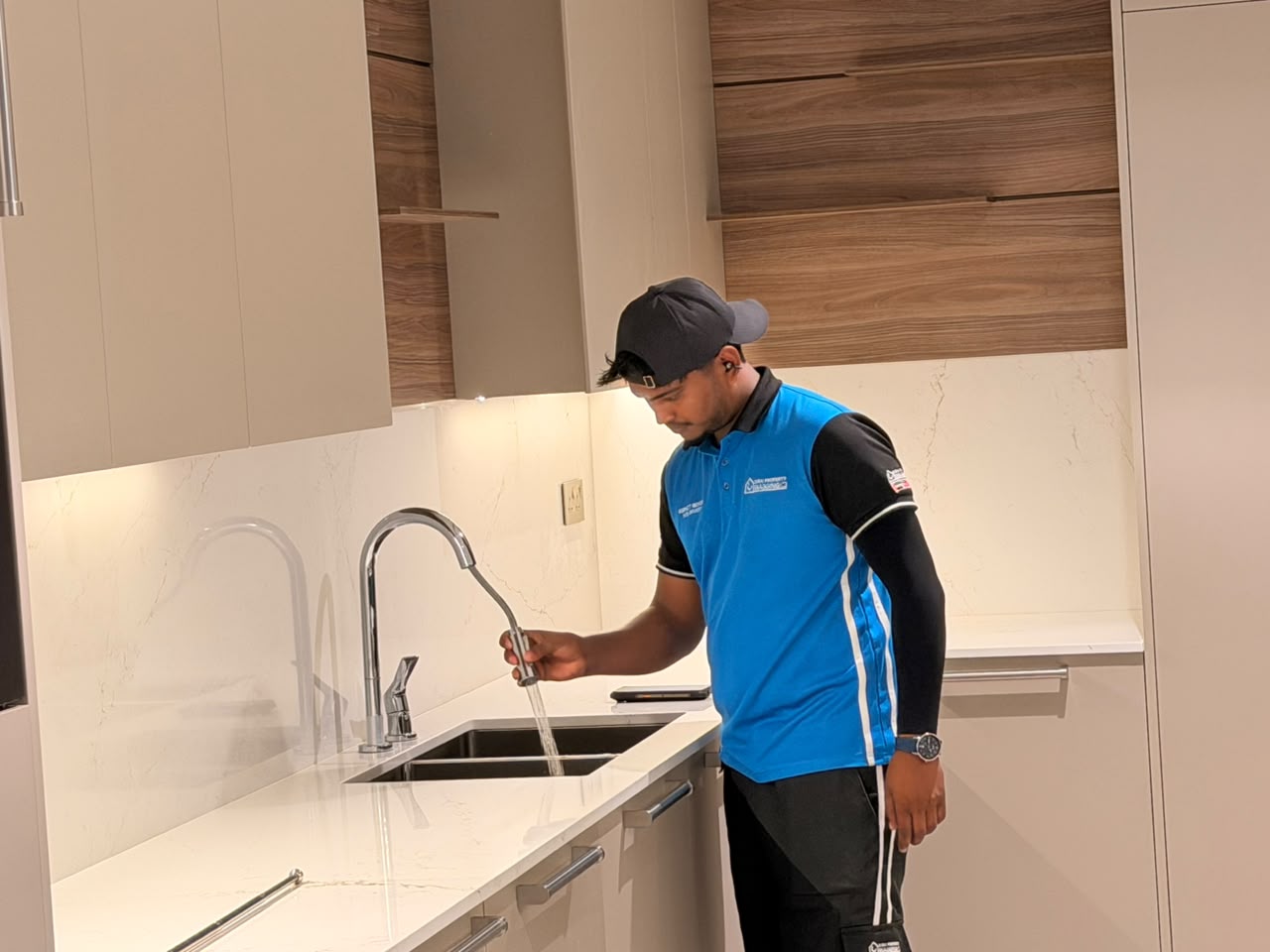
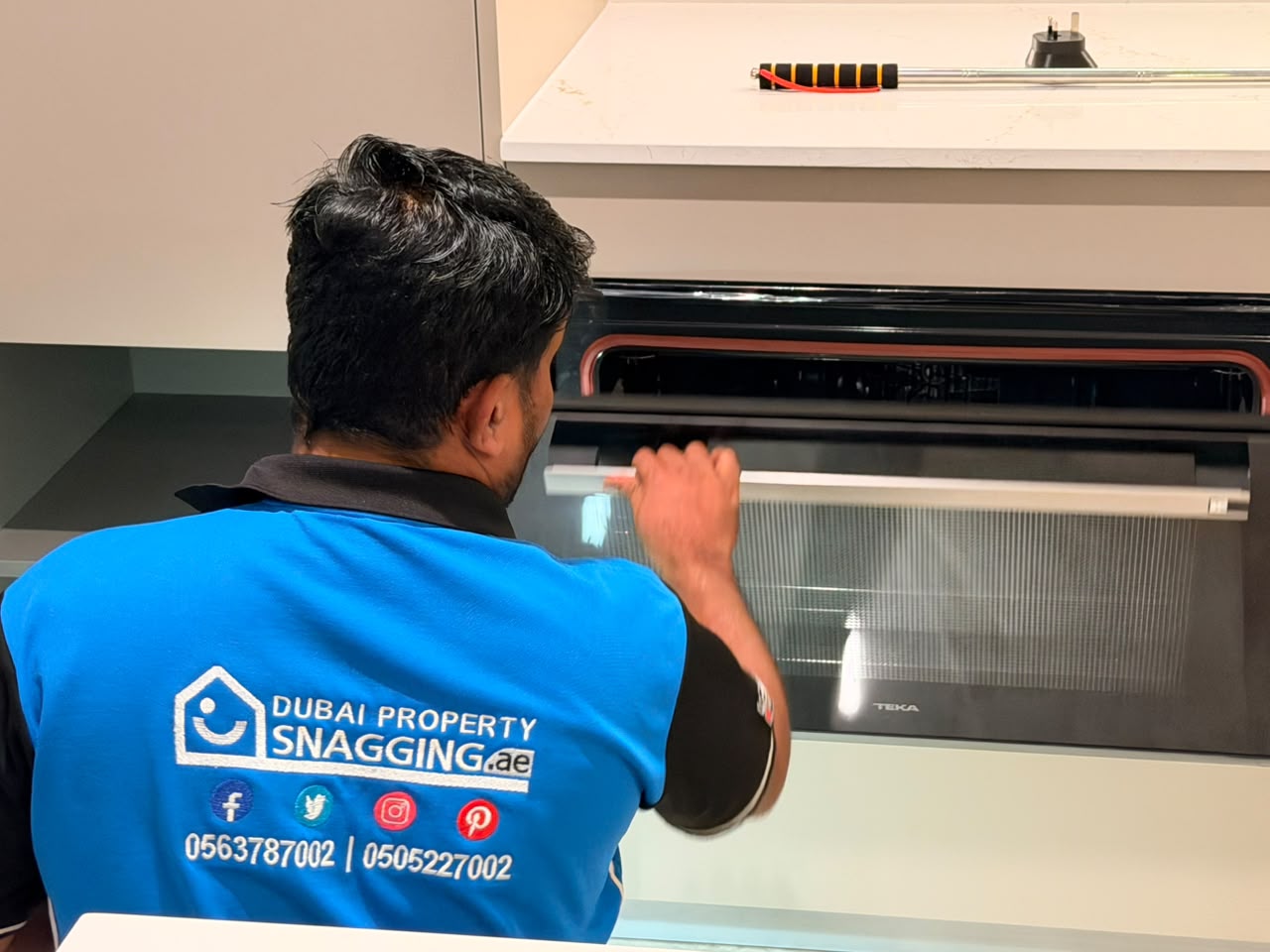
Test accessible taps and sinks, and look underneath the sink for visible signs of leakage. If appliances are included in the agreed specification, check their installation and operation where access and utilities permit.
Bathrooms and Plumbing
Inspectors should examine bathrooms carefully because small installation problems can lead to water damage over time.
Check taps, showers, toilets, basins, drainage, visible pipe connections and sealant. Look for slow drainage, loose fittings, dripping connections and water collecting in areas where it should drain away.
Electrical Fixtures and Air Conditioning
Test accessible switches, sockets and lighting points. Check whether the air-conditioning system operates and whether cooling is reasonably consistent across the rooms.
A more detailed inspection may also examine accessible distribution boards, ventilation outlets and installed controls. Professionals who are appropriately qualified should carry out electrical or specialist testing.
Balconies and External Areas
Check balcony doors, visible waterproofing details, drainage outlets, railings, external finishes and any accessible outdoor fixtures.
Water should not remain pooled in areas where the design provides for drainage. Report visible cracks, damaged finishes or signs of water entering the property.
What happens after you prepare the snagging report?
Once the inspection is complete, the next step is to review the report and submit the findings to the developer through the required channel.
A useful snagging report should be easy to understand and action. Ideally, it includes:
- The room or exact location of the defect.
- A clear description of the issue.
- Supporting photographs.
- A reference number for each item.
- An indication of the concern’s priority where appropriate.
Be as specific as possible. For example ‘Loose fitting in shower’, ‘Damage to tiles’ and/or ‘Gap in sealing’.
Give a written report. Save documentation (emails, portal reports, photographs, feedback from the Developer).
The Developer will usually respond to your report and tell you what will happen next as part of their Handover/Rectification process. Not every item raised counts as a defect. If you have clear evidence and refer to the agreed specifications it can be helpful during discussions.
For a more detailed explanation of the process, see our guide to Property Snagging Dubai: Step-by-Step Guide From Booking to Re-Inspection.
What to Do After Receiving the Keys
Receiving the keys marks an important milestone, but we should not treat it as the end of the inspection process.
Occupants notice some defects only after occupying the property or using its systems regularly. A drainage issue may appear after repeated use, an air-conditioning problem may become clearer during warmer days, or a small leak may only become visible after water has been running for some time.
After handover, take these steps to maintain a clear record of the property’s condition.
1. Retain inspection report
You can refer back to this to compare the developer’s remedial works with the issues originally found. Ensure you link any photos taken to the relevant items in the list.
2. Check completed works
After the developer completes the remedial work, you can gain access to check these items.
Don’t just take their word for it. Ensure you fully resolve the issue and verify that the remedial work did not damage surrounding finishes.
You may need to repaint after wall repairs in areas, and a new tile may finish differently from the rest. Or there may still be a slow leaking from plumbing work.
3. Arrange a De-Snagging Inspection
De-snagging is a follow-up inspection that checks whether the defects recorded in the original report have been properly rectified.
The inspector can revisit the original list, mark items as resolved or outstanding and record any new concerns caused during the repair process.
This step is particularly useful when a property has a long snag list or when repairs involve several contractors.
Read more about snagging inspection after handover to understand why follow-up checks matter.
4. Report New Problems Promptly
If you notice a new issue after moving in, document it as soon as possible. Take clear photographs or videos, note when the problem first appeared and inform the developer through the appropriate channel.
For water leaks, damp patches, electrical concerns or air-conditioning failures, avoid delaying the report. If you leave issues unattended, they can worsen.
Keep the communication factual and request written confirmation of the next steps.
Understanding the Defect Liability Period (DLP)
The Defect Liability Period, commonly called the DLP, is an important part of the post-handover discussion.
It generally refers to a period after completion or handover during which certain defects may remain the developer’s responsibility, subject to the applicable contract, project arrangements and legal requirements.
Off-plan buyers should review their purchase documents to understand the relevant warranty and defect-reporting arrangements. Do not assume the warranty will automatically cover every problem after moving in or that all defects share the same deadline.
A practical approach is to maintain a record of:
- The original handover date.
- The developer’s stated defect-reporting procedure.
- The applicable warranty or DLP terms.
- All defects reported after handover.
- Dates of repair visits and completed work.
- Photographs and supporting documents.
It is also sensible to arrange a further inspection before the relevant defect liability or warranty period expires. This gives you an opportunity to identify concerns that may not have been visible during the initial handover inspection.
The exact timing should be based on your contract and the developer’s written terms. For additional background, see our article on Property Snagging in Dubai: Snag Reports, the DLP Period and How to Choose a Company.
Common Mistakes Off-Plan Buyers Should Avoid
Even buyers who understand the importance of inspection can make avoidable mistakes during a busy handover period.
Signing before arranging an inspection: If the developer allows access before acceptance, use that opportunity to document defects. Consider the consequences of signing the handover documents, and avoid assuming every issue can be handled in the same way later.
Relying only on the developer’s inspection: The developer’s quality-control process and an independent buyer-focused inspection serve different purposes. An independent inspection gives you a separate record of the property’s condition.
Checking only visible finishes: A home can look attractive while still having problems with plumbing, electrical fixtures, drainage or cooling. Functional checks matter as much as cosmetic ones.
Failing to check the utilities: Without live services, important systems may remain untested. Record any inspection limitations and arrange follow-up checks.
Accepting verbal repair promises: Keep defect reports, acknowledgments and repair commitments in writing. This makes it easier to follow up on outstanding items.
Check the completed repair to verify the issue is resolved. Otherwise, you cannot tell whether we have properly resolved the original defect.
Ignoring problems after moving in: New issues should be documented and reported promptly in accordance with the developer’s procedures and applicable warranty terms.
Should You Hire a Professional Property Snagging Company?
A site walk-through can be very useful. However, if you do not understand various finishing systems, plumbing, electrics and maintenance within buildings, you may not spot all issues.
Choosing a professional inspection gives you a clear report. Consider what experience they have with Dubai apartments, villas and off plan handovers. Consider what is included in the inspection, what equipment is used and how clear the report is.
Ask if photos are taken, and specific defects in each room are described. Ask what can’t be tested due to access. Within the limits of your access, what can and can’t be tested?
A good inspection company will be able to clearly explain the limitations of the inspections. There is no guarantee that all hidden or future issues will be found.
For buyers who want to understand the inspection options available, our handover snagging service in Dubai explains how an inspection can fit into the key collection process.
A Practical Timeline for Off-Plan Buyers
The following timeline can help you organize the process without leaving everything until the day you receive the keys.
When construction is nearing completion: Review your purchase documents, specifications and expected handover arrangements. Ask the developer about access for an independent inspection.
When the handover notice arrives: Confirm the inspection appointment, verify the availability of utilities, and arrange a professional inspection before accepting the property, subject to access and the developer’s procedures.
During the inspection: Review the accessible areas and systems, document defects and request a clear written report.
After receiving the report: Submit it to the developer through the required process and keep proof of submission.
During rectification: Follow up on outstanding items and keep a record of repair appointments and developer responses.
After repairs: Arrange de-snagging to verify that the reported defects have been properly addressed.
During the post-handover period: Monitor the property, report newly discovered problems and review the relevant DLP and warranty deadlines.
This approach helps buyers manage the process in a more organized way and reduces the risk of overlooking important steps.
Frequently Asked Questions
1. When should we do a property snag?
It is best to do a Property Snag as soon as possible once you receive the hand-over notice from the Developer. This allows time to complete the snagging report and raise any problem. We must follow any guidelines set by the Developer regarding access to the Property.
2. Can a snag be done after hand-over?
Yes. It may highlight further problems that weren’t identified at the time. However if possible we recommend that you have a snag completed prior to hand-over, as the process and options may change once the property has been accepted.
3. What issues can we expect in a new property?
Problems could include cracked tiling, bad painting, loose fittings, dripping taps, faulty plug sockets, poorly closed windows, drainage and air conditioning. If possible we recommend a thorough inspection of external areas and installations within the property.
4. Will we benefit from an independent snagging report?
Yes. Having a report with photos, specific locations and details means that you have a clear list of issues to raise. These problems will be checked by the Developer in line with their procedures and contractual agreements.
5. What is a De-Snag?
A de-snag identifies whether problems highlighted in the first snagging report have been resolved correctly, following work being completed by the Developer. It will also highlight any outstanding issues.
6. Should we have another inspection before the DLP?
Having another inspection can be very useful to identify any new issues. Please check the terms of your Agreement to see how long we have to be made aware of issues (defects) and what we need to do within this period.
7. Can we do the inspection ourselves?
Whilst you can have a general walk round, it may be beneficial to have professionals carry out this task. This may find technical issues which may be difficult to identify without specialist knowledge and equipment.
8. Does a property snag mean the Developer will fix all the issues?
No. The Property Snag will just give an overview of the property condition and any issues. What issues are acknowledged and fixed in the property will be dependent on the contract, specification, warranty and requirements in place.
Final Thoughts: Make Snagging Part of Your Off-Plan Buying Plan
This is a great time to ensure that any issues are addressed. You can take note of any issues with the property and understand what solutions will be provided by the developer.
Ideally you should prepare in advance. Ensure all relevant documentation is in place, gain access to view the property, make sure key services are in place and if possible have an independent survey carried out. Once you have taken possession of the property, keep the survey with you. Monitor the property, ensure any works are completed as required and if necessary organize a de-snag.
We will help you identify key defects within the property. We will make a report of these defects in detail, and make practical suggestions to protect your investment.
If you are nearing a handover on your off plan property (apartment/ villa), we can help! Check below to see which snagging service suits your handover stage and book a snagging.